






Schedule a Call Back


IESA Backs Rs 625 billion PLI 2.0 for Electronics Manufacturing
 Industry News
- Jul 17,26
IESA has welcomed the Rs 625 billion PLI 2.0 scheme, citing its potential to sustain manufacturing growth and advance India’s US$400 billion electronics goal.
The India Electronics and Semiconductor Association (IESA),
India’s premier industry association representing the Electronics System Design
and Manufacturing (ESDM) and semiconductor ecosystem, has welcomed the
Government of India’s new Production Linked Incentive (PLI) Scheme, PLI 2.0
(MPMS).
Approved with an outlay of Rs 625 billion over five years,
IESA described the scheme as a timely and strategic intervention that will
sustain India’s manufacturing momentum and accelerate its ambition to become a
US$400 billion electronics manufacturing economy by fiscal 2030.
The first phase of the PLI scheme has been one of India’s
most successful industrial policy initiatives. Since its launch, the scheme’s
total incentive outlay has expanded from about Rs 1.9 trillion to nearly Rs 11.5
trillion.
Electronics exports, particularly mobile phone exports, have
grown more than eight-fold. Mobile phone manufacturing has increased nearly 28
times, making India the world’s second-largest mobile phone manufacturer and
transforming the country from a net importer into a significant smartphone
exporter.
The scheme has also attracted investments exceeding Rs 175
billion, generated production of more than Rs 11 trillion, created over 175,000
direct jobs and catalysed a vibrant Electronics Manufacturing Services (EMS)
ecosystem.
IESA has been an active partner in this transformation,
working closely with the Ministry of Electronics and Information Technology
(MeitY), the India Semiconductor Mission (ISM), state governments and industry.
Its efforts include providing policy recommendations, facilitating industry
dialogue and promoting investments, innovation, talent development and global
collaborations to strengthen India’s electronics and semiconductor ecosystem.
Ashok Chandak,
President, IESA and SEMI India, said, “The success of the first PLI scheme
has fundamentally transformed India’s electronics manufacturing landscape by
creating global-scale production capacity, attracting leading multinational
companies, generating employment and positioning India as a trusted global
manufacturing destination. MPMS comes at the right time to sustain this
momentum and move the industry towards its next phase of growth, with an
ambition to nearly double cumulative production to about Rs 39 trillion and
cumulative exports to about Rs 15 trillion, while creating 60,000 additional
direct jobs.”
He futher added, “The next phase of India’s electronics
journey must focus on strengthening the domestic value chain. While
manufacturing scale has grown significantly, domestic value addition has
increased from around 8–10 per cent to nearly 20 per cent. With the combined
implementation of the new PLI, the Electronics Components Manufacturing Scheme
(ECMS), the Semicon India Programme, the Electronics Manufacturing Clusters
(EMC) Scheme and the Rs 1 trillion Research, Development and Innovation (RDI)
Scheme, India has the opportunity to increase domestic value addition towards
40 per cent over the coming years. Together, these initiatives will encourage
component manufacturing, semiconductor packaging, indigenous product
development, advanced manufacturing technologies and design-led innovation,
creating a globally competitive and resilient electronics ecosystem.”
IESA said the new PLI scheme will encourage greater
investment across the electronics value chain, including consumer electronics,
industrial electronics, telecom equipment, automotive electronics, medical
electronics, strategic electronics and next-generation products enabled by
artificial intelligence, the Internet of Things, Industry 4.0 and edge
computing.
Navin Bishnoi,
Chairperson, IESA, said, “IESA believes the convergence of these
complementary policy initiatives marks the beginning of a new phase for India’s
electronics industry. While the SEMICON India Programme is establishing the
country’s semiconductor manufacturing capabilities, ECMS will accelerate the
localisation of electronic components, EMC will provide world-class
manufacturing infrastructure, and the RDI Scheme will strengthen indigenous
technology development and product innovation. Together with the new MPMS scheme,
these initiatives create a comprehensive roadmap for building an integrated
electronics value chain, spanning design and intellectual property creation,
components, semiconductors, manufacturing and exports.”
IESA also believes the next phase should focus on creating
globally competitive Indian products and technology companies. Alongside
manufacturing scale, greater emphasis on design, intellectual property
creation, deep-tech start-ups, skilled talent and indigenous innovation will
enable India to capture a larger share of the global electronics value chain.
Through policy advocacy, international partnerships,
start-up enablement, talent development and industry platforms such as the IESA
Vision Summit and SEMICON India, IESA will continue working with government and
industry to support this transformation.
India’s electronics demand is expected to grow rapidly over
the next decade, driven by AI, digitalisation, electric mobility, industrial
automation, telecommunications and smart infrastructure.
IESA believes the renewed policy support will further
enhance investor confidence, attract global supply chains, create high-value
employment and accelerate India’s emergence as a trusted global hub for
electronics design, manufacturing and innovation.
Ashok Chandak,
President, IESA and SEMI India, concluded, “India is no longer just a large
consumer market for electronics—it is emerging as a global hub for design,
manufacturing and innovation. The new PLI scheme, supported by ECMS, the
Semiconductor India Programme, EMC and the RDI Scheme, provides the policy
continuity needed to realise the vision of Atmanirbhar Bharat. Together, these
initiatives will accelerate India’s journey towards a US$400 billion
electronics manufacturing economy by 2030, while significantly increasing
domestic value addition and strengthening India’s position in global
electronics and semiconductor value chains.”
India electronics manufacturing
PLI 2.0
MPMS
IESA
semiconductor ecosystem
electronics value chain
domestic value addition
Atmanirbhar Bharat
Related Stories
Electrical & Electronics
IESA Backs Rs 625 billion PLI 2.0 for Electronics Manufacturing
IESA has welcomed the Rs 625 billion PLI 2.0 scheme, citing its potential to sustain manufacturing growth and advance India’s US$400 billion electronics goal.
Read moreMaterial Handling Equipment
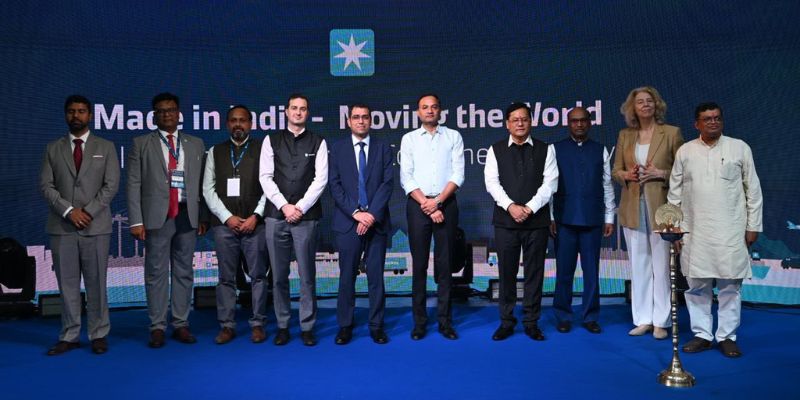
Maersk procures first India-made EXIM container
A.P. Moller – Maersk has become the first international shipping line to procure an EXIM container manufactured in India, with the inaugural unit unveiled at Dadri, Uttar Pradesh, in the presence ..
Read moreAerospace Defence
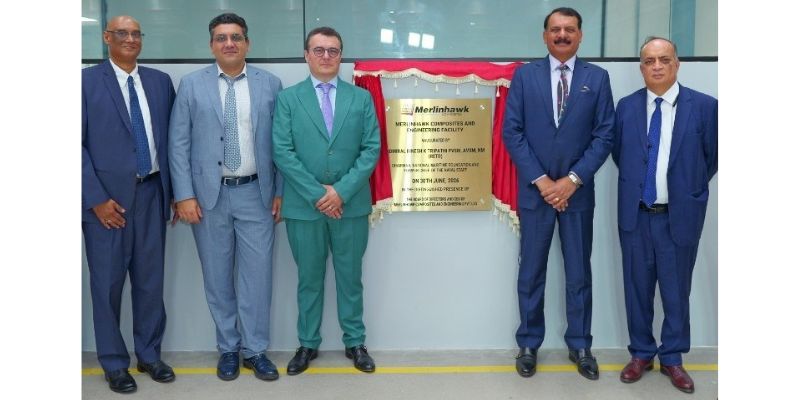
Merlinhawk Opens Advanced Composites Facility in Tamil Nadu
Merlinhawk Aerospace and Vega Composites have inaugurated an advanced composites facility at Shoolagiri to support aerospace and defence manufacturing in India.
Read moreRelated Products
Kusam-meco Handheld Thermal Camera Model- Km 300
ELECTRICAL & ELECTRONIC EQUIPMENT
KUSAM-MECO, the innovators of new products in the Test and Measurement field, have added a new Thermal Imager with Camera.
Read more
Ultra-slim Humidity/temperature Indicator With Large 4” Display
ELECTRICAL & ELECTRONIC EQUIPMENT
Countronics offers a wide range of ultra-slim humidity/temperature indicator with large 4” display – Model 7100-4W.
Read more
Integrated Electric Gripper S Series
ELECTRICAL & ELECTRONIC EQUIPMENT
IBK Engineers Pvt Ltd offers a wide range of integrated electric gripper S series.
latest News
Subscribe to iNoW

For Industry News on WhatsApp, Give a Miss Call on: +91 84228 74016