








Schedule a Call Back


Electronics, automation to drive India’s manufacturing growth: V Sriram Kumar
 Articles
- Mar 28,26
With India accelerating its push in electronics and semiconductor manufacturing, building a robust, self-reliant ecosystem has become critical. In this interaction with V. Sriram Kumar, CEO, ELCIA outlines the role of automation, collaboration and MSME enablement in driving innovation, strengthening supply chains and positioning India as a globally competitive manufacturing hub.

You bring more than three decades of experience in automation and manufacturing, including a long stint at FANUC India, along with over 25 years of association with ELCIA. How have these experiences shaped your perspective on building a stronger electronics manufacturing ecosystem in India?
Coming from a manufacturing background, I strongly believe that manufacturing forms the foundation of country’s economic growth, with services playing a supportive but critical role. Sectors such as engineering, automotive and industrial manufacturing are key contributors to a nation’s progress.
Today, there is significant focus on electronics manufacturing, EMS and semiconductors, supported by government initiatives such as Make in India and Viksit Bharat and various PLIs and DLIs. These efforts aim to make India self-reliant and strengthen its position as a global manufacturing hub. India is no more a second-choice country.
Electronics manufacturing will play a critical role in helping India achieve its ambition of becoming a $5 trillion and eventually a $10 trillion economy. While mobile manufacturing is currently leading the way, there is a large ecosystem of supporting industries producing electronic components and systems for a wide range of industries, including Aerospace and Defence.
In this context, automation is essential. Without automation, it is difficult to achieve global standards of quality and productivity as well as safety. Based on my three decades of experience, I firmly believe that electronics manufacturing and industrial automation will be central to India’s economic growth.
Having served ELCIA in various capacities over the years, what strategic priorities will guide your leadership as you step into the role of CEO at a time when India is accelerating its electronics and semiconductor ambitions?
Electronic City represents a unique ecosystem with over 200 companies across sectors such as IT, ITES, Biotechnology and manufacturing, including automotive, aerospace, defence, EMS and engineering, including services – colloquially called the Silicon Valley of India. Established in 1978 as an electronics manufacturing cluster, it is now home to a mix of large, medium, small, micro, start-ups and MNCs. It supports more than 2,00,000 direct jobs and a large number of indirect livelihoods. Estimated revenue generated out of Electronics City is in excess of $ 15 billion.
ELCIA, a 35-year-old Industry Association, has consistently focused on enabling business growth. Earlier, the emphasis was on building infrastructure and ease of doing business. With municipal functions now managed by the township authority (ELCITA), the focus has shifted towards promoting business expansion and facilitating industry needs, while supporting neighbouring social communities.
A key priority is addressing challenges faced by MSMEs, which constitute about 60 per cent of our members. Access to skilled manpower and finance remains critical. While many financial schemes support capital expenditure, MSMEs often struggle with operational expenditure (OPEX), including raw materials, workforce and day-to-day operations.
Rising input costs, dependence on imports for critical materials such as copper, nickel, cadmium and palladium, and geopolitical uncertainties further add to these challenges. At the same time, progressive MSMEs are investing in automation, IoT, Industry 5.0, ERP systems and AI to improve productivity and compete globally.
ELCIA plays a vital role by fostering collaboration—both within the cluster and with external organisations such as ESC, FIEO, FICCI, BCIC, FKCCI, KASSIA, MSME bodies and CII—while also building international partnerships. A collaborative, cluster-driven approach enables companies to share expertise, supply-chain and capabilities, strengthening the overall ecosystem. ELCIA’s Executive Committee led by Sujaya Shashikiran as President (and Chairperson of Hical Technologies Ltd) has the aim to help members progress into becoming the best in their field and go on to launch IPOs, become unicorns, etc., with a vision to adopt the Make in India, Design in India and ultimately contribute to the Viksit Bharat dream.
India is pushing strongly to expand its electronics manufacturing and semiconductor growth. In this context, how can Electronic City position itself as a key hub for electronics system design and manufacturing (ESDM)?
Electronic City can strengthen its position by continuing to create a conducive environment for manufacturing through access to infrastructure such as space, power, materials, finance and security. Excellent connectivity, multiple modes of public transport, IT infra and efficient self-governance are hall marks of Electronics City Industrial Area. The ELCIA family which includes ELCIA, ELCIA Trust, ELCIA Tech-Hub, ELCITA, ESDC, and e-COE work cohesively towards ease of doing business and elevated standards of working atmosphere in this unique, smart Industrial Township, an example of what can be achieved with the right intent and vision.
ELCIA actively supports manpower development through tie-ups with educational institutions and government apprenticeship as well as skilling programmes. It also enables MSMEs to participate in global platforms such as the Bangalore Tech Summit, Electronica+Productronica, India Electronics Expo, etc., providing market access to new markets and international exposure. Our ELCIA Tech Summit brings together thought leaders from various sectors to exchange innovative ideas, present disruptive technologies transforming the industrial landscape, and challenges that plague business growth, in addition to showcasing innovative products.
Additionally, ELCIA offers a consultancy network that supports MSMEs with services such as finance, legal, IR, HR, IP and marketing areas where smaller companies typically lack dedicated resources. These services are provided at subsidised costs or, in some cases, free of charge. ELCIA is a unique ecosystem which fosters a supportive environment for businesses to collaborate and co-create products. Policy advocacy to Govt is a key function whereby ELCIA presents a unified voice for the Electronics City cluster.
With increasing participation from large manufacturing companies, MSMEs stand to benefit through supplier relationships, contract manufacturing and collaborative growth. These initiatives collectively position Electronic City as a strong ESDM hub aligned with national manufacturing goals.
The ELCIA Centre of Excellence (e-COE) has been envisioned to support indigenous sensor development and IP creation. What role does this initiative play in strengthening India’s electronics design and manufacturing?
India’s sensor market is estimated at Rs 300 to 400 billion, with nearly 90 to 95 per cent of sensors currently imported. Given that modern devices rely heavily on multiple sensors ranging from pressure and temperature to motion and ambient sensors this represents a significant opportunity.
The e-COE aims to bridge the gap between academia and industry. Research institutions such as IISc, CMTI, CSIR, C-MET, and IITs have developed efficient sensor prototypes (TRL-4), which lab-ready. The challenge lies in accelerating the transition from lab (TRL 5) to commercial production (TRL-9).
ELCIA is working with these research organisations and industry bodies such as ELCINA and IESA to build an end-to-end ecosystem—from design and prototyping to manufacturing at scale and market deployment. The AI-powered ELCIA Center of Excellence for Sensors is designed on a PPP model involving the Government of Karnataka, the Central Government and ELCIA, awaiting final clearance.
The long-term objective is to progressively reduce import dependence by 10–15 per cent annually and eventually achieve 50–60 per cent self-reliance in the sensor market over a decade. This will significantly strengthen India’s electronics manufacturing and ESDM ecosystem. The spurt in growth of Semiconductor sector and AI will be a significant factor to the success of this initiative.
ELCIA is also strengthening platforms such as the ELCIA Skill Development Centre and the ELCIA Tech Hub. How will these facilities help startups and MSMEs collaborate with industry and accelerate product development?
The ELCIA Skill Development Centre focuses on bridging the industry’s skill gap through partnerships with ITIs, engineering colleges, and organisations such as NSDC, DGT and KSDC. It supports workforce development across manufacturing and allied sectors, including reskilling and upskilling programmes.
The initiative conducts outreach programmes, promotes alternative career pathways such as internships, apprenticeships and diplomas, raising awareness about manufacturing careers – training and placing nearly 5,000+ students with industries in the last 4-5 years.
The ELCIA Tech-Hub, Common Facility Centre provides critical high-quality infrastructure for prototyping, product development and collaborative manufacturing for MSMEs. Through hackathons and innovation programmes, the startups and MSMEs are supported in converting ideas into market-ready products.
A notable example is the Smart Police Booth developed collaboratively by three of our MSMEs members using the facilities at the ELCIA Tech-hub which integrates Ambient air monitoring, air purification, on an IoT platform, which includes surveillance and video-analytics.
ELCIA is also working towards establishing an SME Innovation Fund to support startups in scaling their innovations. These initiatives create a collaborative ecosystem that accelerates product development and innovation.
What role does ELCIA play in helping India move up the value chain in electronics—from assembly to deeper capabilities in design, component manufacturing and semiconductors?
Many EMS companies in India have traditionally focused on contract or ‘box’ manufacturing. However, with government support and ecosystem enablers like ELCIA, MSMEs are now moving towards product ownership, innovation and brand creation.
ELCIA plays a critical role in connecting stakeholders and empowering MSMEs to scale, innovate and explore opportunities such as creating IPs and launching locally developed products. Institutions of national importance like IIIT-B, C-DAC, C-DOT are playing a critical role in promoting start-ups, while ELCIA’s ecosystem supports them in moving up the value-chain.
At the same time, India must focus on developing indigenous technologies and manufacturing equipment, as many high-end machines and tools are still imported. Policies such as PLI have driven progress, but greater emphasis on encouraging indigenous innovation and manufacturing is required.
A combination of incentives, ecosystem support and reduced import dependence will help India move up the electronics value chain.
Given your background in robotics and industrial automation, how do you see technologies such as AI, automation and smart manufacturing shaping the future of electronics production in India?
Automation plays a critical role in improving quality, streamlining processes and enhancing productivity. It enables better supply chain management, minimises downtime, and ensures that Indian products can compete in both domestic and global markets.
India has already made progress in sectors such as machine tools, where it has grown to becoming 9th largest manufacturer globally; the shift from a consumption-based import-heavy industry to becoming a self-reliant, export-oriented market is significant. Indian-made machine tools are now exported worldwide, including to China, US and European countries. Electronics manufacturing also is experiencing a renaissance rising to Rs 11.3 trillion – a six-fold rise in a decade, aided by PLI schemes.
The concept of ‘lights-out manufacturing’—24×7 automated production, which many industries are adopting demonstrates how automation can significantly improve efficiency and revenues. Integration of I5.0 technologies has made it easier for companies to implement strategic tools for digitalisation of shopfloors.
While automation adoption has been strong in the automotive sector, similar advancements are needed across other industrial sectors. Greater focus on promoting latest trends in automation, supported by government and industry initiatives, will drive the next phase of growth in electronics manufacturing.
As India aims to emerge as a global hub for electronics manufacturing and semiconductors, what role do you see ELCIA playing in enabling innovation, capability development and long-term competitiveness?
ELCIA’s primary role is to enable business growth by fostering collaboration and co-creation among its members. By maintaining close engagement with companies, it facilitates sharing knowledge, best practices and resource optimisation.
The association also provides access to shared tools and platforms at subsidised costs, reducing the burden on MSMEs. Additionally, ELCIA actively collaborates with government bodies and international organisations to create opportunities for technology transfer, partnerships and market access.
Electronic City benefits from a diverse ecosystem, where IT, manufacturing and services coexist, enabling cross-sector collaboration. Platforms such as the ELCIA Tech Summit further strengthen industry engagement.
By creating a positive environment favourable for innovation, collaboration and global integration, ELCIA continues to support India’s ambition of becoming a leading electronics manufacturing hub.
V Sriram Kumar
ELCIA
Electronics manufacturing
SMEs
MSMEs
Indian manufacturing
semiconductor manufacturing
Electronic City
AI in manufacturing
EMS industry India
industrial automation India
Industry 5.0
Related Stories
Automation & Robotics
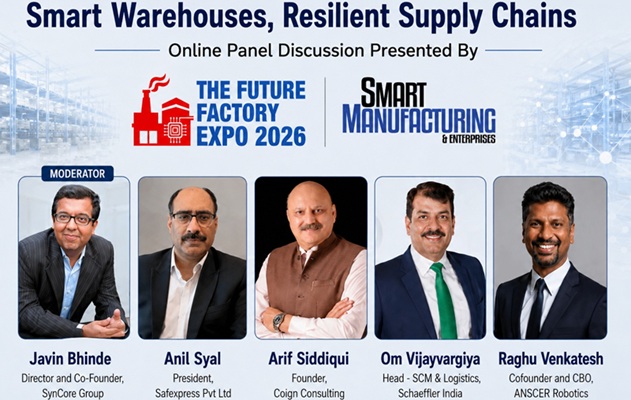
Future Factory Expo Webinar Series: Smart Warehouses for Resilient Supply Chains
In the run-up to Future Factory Expo 2026 (to be held on November 3-4 in Mumbai), Smart Manufacturing & Enterprises recently hosted the webinar exploring how automation, digitalisation, smart infras..
Read moreProcess Equipment

INOX India Q1 FY27 revenue rises 8.3% to ?3.82 bn
INOX India reported Q1 FY27 revenue of Rs 3.82 billion, with exports contributing 58 per cent, while its order book reached Rs 16.86 billion.
Read moreSmart Manufacturing
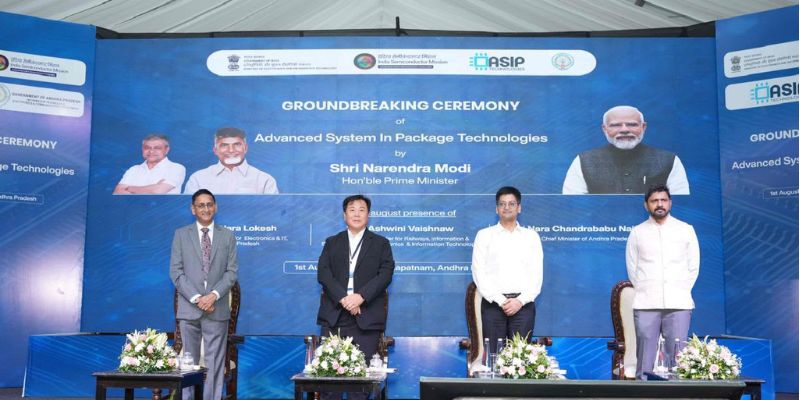
ASIP breaks ground on Rs 25 billion semiconductor facility in Vizag
The Visakhapatnam OSAT facility will produce 96 million chips annually and create over 1,000 direct and 1,600 indirect jobs.
Read moreRelated Products
Kusam-meco Handheld Thermal Camera Model- Km 300
ELECTRICAL & ELECTRONIC EQUIPMENT
KUSAM-MECO, the innovators of new products in the Test and Measurement field, have added a new Thermal Imager with Camera.
Read more
Ultra-slim Humidity/temperature Indicator With Large 4” Display
ELECTRICAL & ELECTRONIC EQUIPMENT
Countronics offers a wide range of ultra-slim humidity/temperature indicator with large 4” display – Model 7100-4W.
Read more
Integrated Electric Gripper S Series
ELECTRICAL & ELECTRONIC EQUIPMENT
IBK Engineers Pvt Ltd offers a wide range of integrated electric gripper S series.
latest News
Subscribe to iNoW

For Industry News on WhatsApp, Give a Miss Call on: +91 84228 74016