







Schedule a Call Back




Building the Future of Indian Manufacturing Through Automation
 Articles
- Jan 31,26
Make in India, industrial automation India, smart manufacturing, AI in manufacturing, Industry 5.0 India, manufacturing GDP growth, robotics and automation, Aatmanirbhar Bharat, Prateek Jain, Addverb Technologies

India stands at a decisive inflection point as its economic landscape has transformed significantly over the past decade. With the ambition of becoming a global manufacturing hub, the country has evolved from a services-led economy into an emerging manufacturing powerhouse. Government initiatives such as Make in India have driven infrastructure creation, policy reforms and capacity building across sectors. Even as the global manufacturing landscape evolves rapidly, Make in India, supported by innovation, has laid the foundation for a more resilient economy.
Evolving manufacturing landscape in India
India’s manufacturing sector currently contributes approximately 16–17 per cent to GDP and continues to show strong momentum, driven by rising domestic demand and export expansion. According to the Annual Survey of Industries, registered manufacturing units recorded double-digit growth in gross value added (GVA) at current prices, alongside expanding industrial output and employment growth of nearly 6 per cent year-on-year. Over the past decade, registered factories have added more than five million jobs, highlighting manufacturing’s role as a large-scale employment generator.
This growth is evident across core and emerging industries such as automotive, precision engineering, chemicals, pharmaceuticals and electronics. These sectors, despite being capital-intensive, quality-sensitive and technology-driven, continue to perform well. Automation has been critical in ensuring consistency and precision, while AI-powered smart automation has reduced production downtime by up to 30 per cent and improved defect detection by up to 40 per cent in pilot deployments across manufacturing segments.
These developments underline how advanced technology adoption can unlock India’s manufacturing potential. With appropriate interventions, manufacturing could contribute over 25 per cent to GDP, generate more than 100 million jobs, and significantly enhance productivity and export competitiveness.
Challenges for Indian manufacturers
Despite strong momentum, several structural challenges continue to impede long-term industrial ambitions. Manufacturers operate in complex environments characterised by productivity shortfalls, siloed infrastructure, limited digital integration and outdated operating models. Volatility in global demand further disrupts supply chains, affecting overall growth.
Addressing these challenges requires a fundamental reimagining of the manufacturing ecosystem, with greater emphasis on infrastructure strengthening, strategic adoption of frontier technologies and workforce readiness aligned with Industry 5.0.
Although India has a large workforce, a widening skills gap persists between available talent and the requirements of technology-driven manufacturing. Advanced production environments demand expertise in robotics, automation systems, data analytics and emerging technologies, while skill shortages in labour-intensive operations continue to impact throughput and quality.
Automation as an enabler and ROI accelerator
Automation has emerged as a critical accelerator of returns from initiatives such as Make in India. While government programmes and incentives have unlocked significant investment opportunities, value is realised only when manufacturers can scale rapidly while maintaining quality and compliance.
AI-powered automation and robotics address many structural challenges by reducing dependence on manual processes for repetitive, hazardous and precision-critical tasks. They improve consistency, safety, throughput and quality, all essential for global competitiveness and export-oriented production. Robotic systems deliver predictable cycle times and stable output, while automation minimises variability in labour-intensive operations.
The integration of IoT and predictive maintenance enhances asset utilisation and shortens payback periods on capital investments. Integrated automation systems also provide real-time visibility and digital traceability, enabling manufacturers to meet compliance requirements and achieve incentive-linked targets more reliably. Importantly, automation allows capacity expansion without proportional increases in manpower or complexity, preserving margins as volumes grow. In this way, automation translates policy intent into operational performance, delivering faster and more sustainable returns on investment.
From isolated automation to intelligent systems
With a projected CAGR of over 8 per cent between 2026 and 2034, India’s industrial automation market is expected to grow from USD 8.2 billion to USD 16.7 billion. This reflects a clear shift towards intelligent and connected manufacturing systems. The focus must move beyond isolated automation to integrated systems that connect machines, robots and software into unified operational frameworks. Such integration enables real-time optimisation, improved traceability and scalable operations, aligning Indian manufacturing with global Industry 5.0 standards while enhancing resilience and compliance.
Building an Aatmanirbhar manufacturing ecosystem
As global competition intensifies, advanced manufacturing must become a shared, long-term commitment. Digital transformation needs to progress from fragmented experimentation to coordinated action, supported by collaboration among government, industry, enterprises and academia. Over the next decade, this approach can redefine India’s role in the global economy as a leading manufacturing hub.
Industrial automation will be central to this transformation and a key enabler of Aatmanirbhar Bharat. Intelligent manufacturing systems support value-chain localisation by making complex, high-precision manufacturing economically viable in India. As the country advances towards competitive, innovation-led sectors, a self-driving manufacturing ecosystem becomes essential.
Self-reliance in critical manufacturing capabilities, a future-ready workforce and sustainable infrastructure for rapid technology adoption will define success.
Defining success for Make in India
The success of Make in India will increasingly be measured by the depth and effectiveness of industrial automation adoption. Competitiveness is no longer determined by capacity or cost alone. Reliability, speed, quality, flexibility and resilience have become decisive. The true impact of Make in India, powered by automation, will be reflected in the ability of Indian factories to deliver consistent global-quality output while remaining resilient in volatile markets.
Widespread adoption of industrial automation will enable India to lead manufacturing excellence through data-driven operations. It will support a shift from volume-led growth to quality-led manufacturing, where success is defined by how intelligently, reliably and sustainably the country produces—made possible through the integration of automation, robotics and advanced technologies.
About the author:
Prateek Jain is the Co-Founder & Chief Operations Officer of Addverb Technologies Limited. He is an experienced operations professional with a robust background in manufacturing and production management.
As India’s manufacturing sector gains momentum
industrial automation is emerging as the key enabler of productivity
resilience and global competitiveness under the Make in India vision
shares Prateek Jain
Co-Founder & COO
Addverb Technologies Limited.
Related Stories
Automation & Robotics
Building the Future of Indian Manufacturing Through Automation
Make in India, industrial automation India, smart manufacturing, AI in manufacturing, Industry 5.0 India, manufacturing GDP growth, robotics and automation, Aatmanirbhar Bharat, Prateek Jain, Addver..
Read moreRelated Products
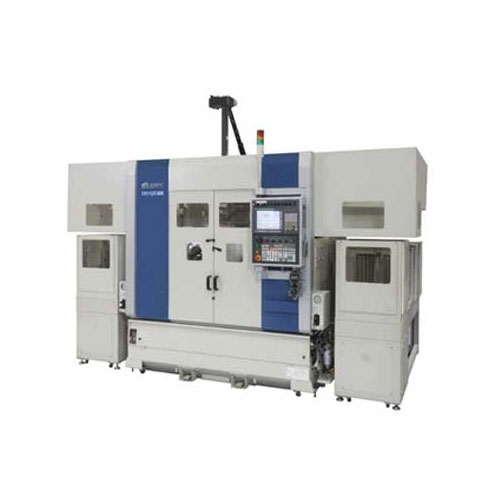
Compact Fmc - Motorum 3048tg With Fs2512
INDUSTRIAL AUTOMATION & TECHNOLOGY CONSULTANCY
Meiban Engineering Technologies Pvt Ltd offers a wide range of Compact FMC - Motorum 3048TG with FS2512.
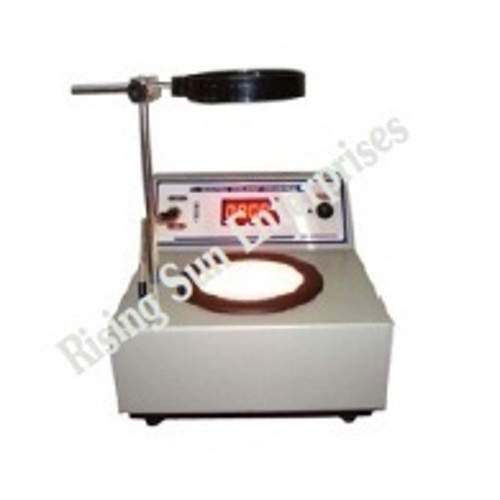
Digital Colony Counter
INDUSTRIAL AUTOMATION & TECHNOLOGY CONSULTANCY
Rising Sun Enterprises supplies digital colony counter.

Robotic Welding SPM
INDUSTRIAL AUTOMATION & TECHNOLOGY CONSULTANCY
Primo Automation Systems Pvt. Ltd. manufactures, supplies and exports robotic welding SPM.
latest News
Subscribe to iNoW

For Industry News on WhatsApp, Give a Miss Call on: +91 84228 74016