







Schedule a Call Back


3D Printing Strengthens the Foundations of Smart Manufacturing
 Articles
- Dec 21,25
The global 3D printing market was estimated at $30.55 billion in 2025 and is projected to reach $168.93 billion by 2033, growing at a compound annual growth rate of 23.9 per cent from 2026 to 2033.

Additive manufacturing, widely known as 3D printing, has evolved from a niche prototyping tool into a core pillar of modern manufacturing strategy. As highlighted in the Grand View Research industry analysis, the technology is now deeply embedded in the transition towards smarter, more agile and digitally driven production systems. Its growing adoption reflects a fundamental shift in how manufacturers respond to complexity, customisation and speed in an increasingly competitive industrial landscape.
The global 3D printing market was estimated at $ 30.55 billion in 2025 and is projected to reach $ 168.93 billion by 2033, growing at a compound annual growth rate of 23.9 per cent from 2026 to 2033. This strong growth outlook underlines how additive manufacturing is moving beyond experimentation to become an integral part of enterprise manufacturing models.
From prototyping to production relevance
At its core, 3D printing enables the creation of components layer by layer directly from digital designs. This approach contrasts sharply with traditional subtractive manufacturing methods and allows for greater design freedom, faster iteration cycles and reduced material waste. What makes this especially relevant for smart manufacturing is its seamless integration with digital design tools and connected production environments.
Initially adopted primarily for rapid prototyping, 3D printing is now increasingly used for functional parts and end-use components. Manufacturers across sectors are leveraging this capability to shorten development timelines, reduce tooling dependencies and bring products to market more quickly. The ability to move from a digital model to a physical part with minimal intermediate steps aligns closely with the principles of digital and intelligent manufacturing.
Market momentum driven by customisation
A major driver shaping the growth of the 3D printing industry is the increasing demand for customised products across industries such as healthcare, automotive, aerospace and consumer goods. Traditional manufacturing methods often struggle to deliver high levels of customisation without significant cost and time penalties. Additive manufacturing addresses this challenge by enabling highly tailored production without the need for complex tooling or long setup times.
This shift towards personalisation is pushing organisations to adopt 3D printing as a core element of their production strategy rather than a peripheral capability. Companies can rapidly design and deliver unique parts, prototypes or products that meet customer-specific requirements, supporting more responsive and flexible manufacturing models.
Industry adoption across key sectors
The Grand View Research analysis highlights strong adoption across several major industry verticals. In automotive manufacturing, 3D printing supports rapid prototyping, tooling and the production of specialised components, helping manufacturers accelerate innovation cycles. Aerospace and defence applications benefit from the ability to produce lightweight, complex structures that are difficult to manufacture using conventional techniques.
Healthcare continues to be a prominent growth area, with additive manufacturing used for implants, surgical devices and prosthetics. The ability to customise products to individual patient needs demonstrates how 3D printing is enabling new approaches to production that prioritise precision and adaptability.
Beyond these sectors, industrial manufacturing and consumer goods are also contributing to market expansion, as organisations explore how additive manufacturing can improve efficiency and design flexibility.
Component dynamics: hardware leads the way
From a component perspective, hardware dominated the 3D printing market in 2025, accounting for the largest share at 62.6 per cent. This reflects continued investment in industrial-grade 3D printers capable of meeting the demands of production environments. As manufacturers scale up additive manufacturing operations, the need for reliable, high-performance hardware remains critical.
Software also plays a central role in the additive manufacturing ecosystem. Within the software segment, design tools held a dominant position in 2025, underscoring the importance of digital design in unlocking the full potential of 3D printing. Design software enables engineers to create complex geometries, optimise structures and prepare models for additive production, forming the digital backbone of smart manufacturing workflows.
Materials complete the ecosystem, supporting a wide range of applications across industries. Advances in materials are expanding the scope of what can be produced using additive manufacturing, further strengthening its role in modern production systems.
Technology trends shaping the market
Based on technology, the stereolithography segment dominated the market in 2025. Its continued prominence reflects its suitability for applications requiring high precision and surface quality. The presence of multiple additive manufacturing technologies within the market highlights the versatility of 3D printing, allowing manufacturers to select processes that best align with their specific application needs.
Rather than converging around a single technology, the industry is characterised by a diverse set of solutions, each supporting different use cases. This flexibility is particularly valuable in smart manufacturing environments, where production systems must adapt to varying product requirements and volumes.
Regional performance and growth hotspots
Regionally, North America dominated the 3D printing industry in 2025, accounting for a share of 32.8 per cent. The United States held a leading position within the region, reflecting early adoption, strong industrial infrastructure and sustained investment in advanced manufacturing technologies.
While North America remains the largest market, Asia Pacific is identified as the fastest-growing region. This growth is closely linked to expanding manufacturing activity and increasing adoption of digital production technologies across the region. Europe also continues to play a significant role, supported by innovation-led industrial strategies.
These regional dynamics mirror broader shifts in global manufacturing, as companies seek to enhance resilience, reduce supply chain complexity and adopt more flexible production models.
Challenges alongside growth
Despite its strong momentum, the 3D printing industry faces several challenges. High initial costs associated with advanced equipment and materials can limit adoption, particularly for smaller enterprises. In addition, the effective use of additive manufacturing requires specialised skills, from digital design to process control, creating a need for a skilled workforce.
As additive manufacturing moves further into production environments, consistency, quality assurance and compliance become increasingly important. Addressing these challenges will be essential for sustaining long-term growth and ensuring that 3D printing delivers on its promise within smart manufacturing ecosystems.
Competitive landscape and strategic focus
The industry is characterised by the presence of established global players focused on innovation, partnerships and market expansion. Competition increasingly centres on building integrated solutions that combine hardware, software and materials into cohesive ecosystems. This approach reflects the evolving needs of manufacturers, who seek end-to-end capabilities rather than isolated technologies.
By aligning additive manufacturing with digital design, automation and data-driven decision-making, leading players are positioning 3D printing as a foundational element of smart manufacturing strategies.
The role of 3D printing in smart enterprises
For smart manufacturing and enterprise-focused organisations, 3D printing represents more than a new production method. It embodies a shift towards digitally connected, flexible and responsive manufacturing systems. The ability to translate digital designs directly into physical products supports faster innovation, reduced lead times and greater customisation.
As highlighted in the market analysis, the rapid growth of the 3D printing industry underscores its increasing strategic importance. With strong market expansion projected through 2033, additive manufacturing is set to play a central role in shaping the future of industrial production.
In the evolving landscape of smart manufacturing, 3D printing stands out as a technology that not only enhances efficiency but also redefines how enterprises think about design, production and value creation in a digital-first world.
3D printing
additive manufacturing
smart manufacturing
customisation
prototyping
hardware
software
stereolithography
digital production
industry adoption
Related Stories
Automation & Robotics

LTTS Launches Agenticiq AI Platform for Engineering and Manufacturing
LTTS has launched AgenticIQ, an end-to-end Agentic AI platform designed to enable autonomous, multi-agent workflows across engineering, manufacturing and industrial operations.
Read moreAuto & Auto Components

Electrogenic acquires TREMEC Electric GT, establishes US base
British EV technology firm Electrogenic has acquired TREMEC Electric GT, establishing a permanent US base in Huntington Beach, California, to support its North American expansion.
Read moreAutomation & Robotics

Future Factory Expo Webinar Series: Smart Warehouses for Resilient Supply Chains
In the run-up to Future Factory Expo 2026 (to be held on November 3-4 in Mumbai), Smart Manufacturing & Enterprises recently hosted the webinar exploring how automation, digitalisation, smart infras..
Read moreRelated Products
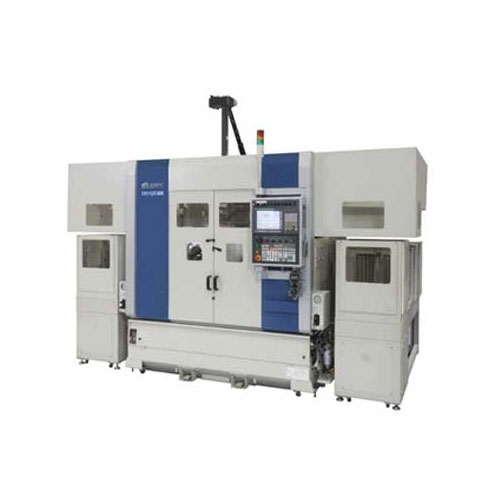
Compact Fmc - Motorum 3048tg With Fs2512
INDUSTRIAL AUTOMATION & TECHNOLOGY CONSULTANCY
Meiban Engineering Technologies Pvt Ltd offers a wide range of Compact FMC - Motorum 3048TG with FS2512.
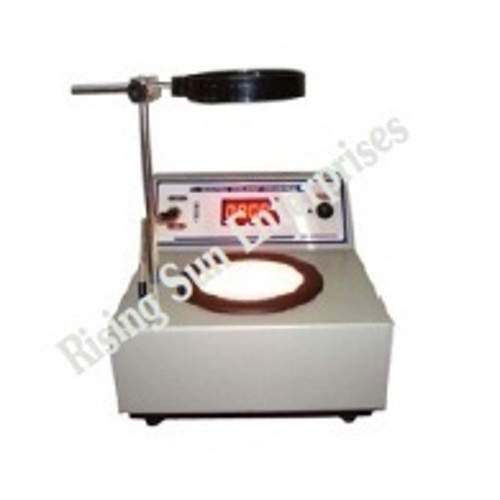
Digital Colony Counter
INDUSTRIAL AUTOMATION & TECHNOLOGY CONSULTANCY
Rising Sun Enterprises supplies digital colony counter.

Robotic Welding SPM
INDUSTRIAL AUTOMATION & TECHNOLOGY CONSULTANCY
Primo Automation Systems Pvt. Ltd. manufactures, supplies and exports robotic welding SPM.
latest News
Subscribe to iNoW

For Industry News on WhatsApp, Give a Miss Call on: +91 84228 74016