






Schedule a Call Back


Wings, Wars, Wealth
 Articles
- May 19,26
West Asia conflicts have exposed the power of low-cost drones. Ashlin Rajan examines how this creates a major manufacturing opportunity for India, but success will depend on scaling components, talent, testing and exports.
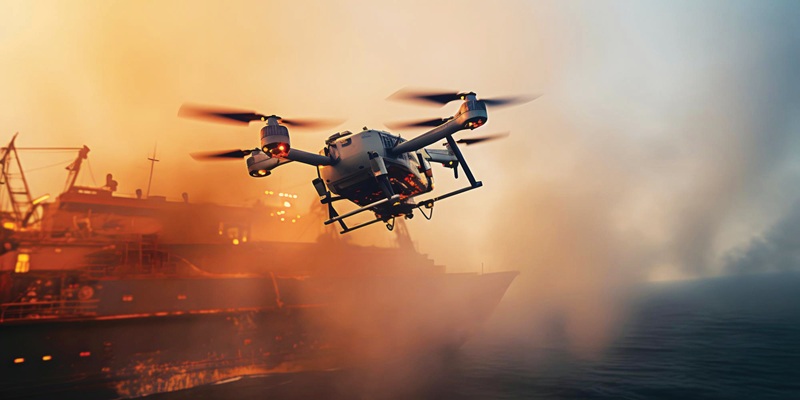
A $20,000 drone forcing a
$4 million interceptor response is changing the economics of warfare, and
creating one of the biggest defence manufacturing opportunities of the decade.
The wars in West Asia,
including the latest Iran-related escalation, have shown how relatively
low-cost unmanned systems can stretch expensive air-defence networks, disrupt
critical infrastructure and force militaries to rethink procurement priorities.
The cost imbalance is now
driving global demand for drones, loitering munitions and counter-drone
systems. Militaries are shifting towards layered fleets of cheaper expendable
and reusable drones for surveillance, strike and logistics roles, while
spending on radar systems, jammers, directed-energy weapons and integrated command
platforms continues to rise.
For India, the
implications go beyond geopolitics. Instability in West Asia affects energy
flows, shipping costs and broader security planning, while also underscoring
the strategic and industrial urgency of building domestic drone capabilities.
As Arth Chowdhary, CEO,
InsideFPV, put it, “What West Asia has made very clear is that low-cost
drone can now defeat extremely expensive military assets. That has forced every
defence establishment in the world to rethink how they spend their procurement
budgets.”
The policy backdrop has also
changed. India’s Ministry of Defence has been allocated Rs 7.85 trillion for
2026–27, according to PRS, while the government has increased capital
allocation for the armed forces to Rs 2.19 trillion, including Rs 1.85 trillion
for capital acquisition.
That gives India fiscal room to
modernise defence capabilities, including unmanned and counter-unmanned
systems. Recent procurement patterns also show increasing interest in
indigenous platforms, tactical drones, anti-drone systems and rapid prototyping
through start-up participation.
India backs the drone push
India’s policy framework is
increasingly aligning with the changing character of warfare. At an iDEX
innovation event in October 2025, it was emphasised that future wars would be
shaped by algorithms, autonomous systems and artificial intelligence, while
drones, anti-drone systems, quantum computing and directed-energy weapons would
define coming battlefields.
The shift is visible in spending trends.
Domestic defence capital acquisitions rose from Rs 740 billion in FY22 to Rs
1.2 trillion in FY25, reflecting stronger preference for indigenous procurement,
according to PIB. India’s defence innovation ecosystem is also expanding
rapidly, with over 650 iDEX winners emerging.
India’s wider defence industrial
base is also growing, with production reaching Rs 1.5 trillion and exports
crossing Rs 230 billion in the last financial year. However, despite more than
100 unicorns across sectors, India still has no defence unicorn, underlining
the commercial opportunity ahead for drone and deep-tech companies.
Policy momentum, industrial gaps
India’s domestic drone ecosystem
is expanding, but from a developing base. According to the Press Information
Bureau, as of 9 February 2026, 38,575 drones had been registered and issued
Unique Identification Numbers, 39,890 Remote Pilot Certificates had been
issued, and 244 Remote Pilot Training Organisations had been approved by DGCA.
These numbers suggest that the
ecosystem is broadening beyond defence into surveying, mapping, agriculture,
logistics, inspection and training services.
Policy has played a major role.
The Drone Rules 2021 replaced a more restrictive regime and simplified
approvals, licensing and operating requirements. This significantly lowered
entry barriers for manufacturers, service operators and training institutions.
The drone import policy notified in February 2022 prohibited import of drones
in completely built-up, semi-knocked down and completely knocked down form,
with exceptions for R&D, defence and security, while allowing free import
of drone components.
The intent was clear: prevent
dependence on finished imports while encouraging local assembly and component
ecosystems.
The PLI scheme for drones and
drone components, with an approved outlay of Rs 1.2 billion, was designed to
support high-value domestic manufacturing. PIB states that the scheme has
helped create 2,650 jobs, while future-skills courses under the Craftsmen
Training Scheme enrolled 1,423 candidates in Drone Pilot and Drone Technician
trades between 2023 and 2025.
India has also benefited from
defence innovation mechanisms such as iDEX, which have helped connect start-ups
with military users and accelerate prototype testing.
Industry leaders say the next
challenge is no longer regulation but industrial execution. “What is needed now
is not just innovation enablement but enabling scale,” said Vamsi Vikas
Ganesula, Founder & Managing Director, Raghu Vamsi Aerospace Group.
However, interviews with industry
executives suggest that India is still stronger in assembly, airframes and
integration than in deep component manufacturing. Critical gaps remain in
flight controllers, sensors, propulsion systems, secure communications,
batteries, chipsets, IMUs and GPS modules.
“The honest answer is that the
dependency is still significant,” said Arth
Chowdhary, referring to imports of critical components.
Satyabrata Satapathy, Co-founder
& CEO, BonV Aero, was more direct, “The deeper
problem is that India is largely still assembling drones, not manufacturing
them.”
This means that even when final
products are assembled in India, strategic dependency may remain embedded
inside sub-systems. For a sector linked to defence preparedness, that is a
structural vulnerability.
The manufacturing bottleneck
War has changed the manufacturing
requirement. Defence drones are not consumer electronics. They need repeatable
quality, configuration control, battlefield reliability, environmental testing,
durability, and secure supply chains.
Many Indian firms can build
prototypes, but fewer can move quickly into production-grade, defence-grade
manufacturing. “India has no shortage of drone startups, but scaling from
prototype to production-grade, repeatable manufacturing is a completely
different challenge,” said Satyabrata
Satapathy.
Moving from 20 units to 2,000
units requires supplier consistency, test documentation, quality audits,
tooling, calibration systems and after-sales support.
According to Satyabrata Satapathy, “Building
defence-grade UAVs at volume requires precision tooling, environmental testing
rigs, and robust quality assurance systems.”
Testing infrastructure remains
another bottleneck. Certified drone corridors, electronic warfare simulation
ranges, payload test zones and BVLOS trial spaces are still limited relative to
future demand. Without this infrastructure, product validation cycles slow down
and commercialisation gets delayed.
“India simply does not have
enough certified testing ranges for serious drone development,” said Arth Chowdhary.
Talent is equally important.
India has strong software and engineering talent, but the drone sector requires
specialised capabilities in embedded systems, avionics, flight dynamics,
battery systems, autonomous controls, AI vision and defence-grade electronics.
“Specialised engineers in
embedded systems and autonomous flight are hard to find,” Arth Chowdhary added.
Disruptions in the supply chain
The West Asia conflict has
exposed a second challenge: supply chain resilience. Drones depend on
electronics, semiconductors, batteries, motors, composites and navigation
systems. Any disruption in shipping lanes, sanctions exposure, export controls
or component availability can slow production.
Iran was replenishing and upgrading
missile and drone launchers faster than before the recent conflict, showing
that sustained unmanned capability depends not only on design but on production
depth.
This is a critical industrial
lesson. Winning drone wars is partly about manufacturing endurance, the ability
to replenish fleets rapidly, adapt designs quickly and sustain spare parts
under pressure.
For India, maritime routes
through the Gulf and Red Sea remain commercially significant. Any escalation
that raises freight costs, delays cargo or restricts electronics supply can
affect domestic manufacturers, especially firms dependent on imported chips,
batteries or sensors.
“Policy frameworks alone don't
build supply chains. Companies have to make the harder choice of investing in
indigenisation even when importing is cheaper and faster,” said Satyabrata Satapathy.
Technologies shaping the next
phase
The next generation of drones
will be shaped by autonomy, not just airframes. Interviewees identified
GPS-denied navigation, edge AI, sensor fusion, encrypted communications, swarm
coordination, modular payloads and terminal guidance under jamming as decisive
technologies.
Battery performance is another
frontier. Longer endurance, faster charging, thermal safety and payload
efficiency will decide many future commercial and military applications.
Industry participants also note
that reliability may matter more than headline specifications. “Reliability and
lifecycle support have become crucial distinguishing factors,” said Vamsi Vikas.
While defence dominates
headlines, civilian use may create the broadest manufacturing base. A large
civilian market can help Indian manufacturers scale production, reduce unit
costs and improve export competitiveness. This is the path followed by several
global hardware sectors where defence innovation and commercial scale reinforce
each other.
“The next wave of opportunity for
Indian drone companies is wider than most people appreciate, and it spans both
defence and civilian applications in equal measure,” says Satyabrata Satapathy.
India has made a strong start
through Drone Rules 2021, import restrictions, PLI incentives and training
growth, but the next phase will require deeper execution.
Industry stakeholders indicate
that priority areas include accelerating component localisation for
controllers, sensors, batteries, motors and secure communication modules;
expanding certified test ranges, BVLOS corridors and defence-grade validation
centres; shortening procurement cycles so successful prototypes translate into
actual orders faster; building a stronger skills pipeline through dedicated
diploma, ITI and university pathways in drone systems engineering; and
developing an export strategy that positions India as a trusted supplier to
South Asia, Africa and other friendly markets seeking cost-effective drone
systems.
“The Drone Rules 2021 were the
most important structural change,” said Arth Chowdhary, while adding that
faster BVLOS certification, shared testing infrastructure and stronger
vocational skilling remain necessary.
The conflicts in Iran and West
Asia have shown that drone superiority is shaped long before a battlefield
confrontation begins. It depends on resilient supply chains, component
ecosystems, testing infrastructure, manufacturing depth and clear policy
support.
India now has many of the
essential building blocks, a supportive regulatory framework, rising domestic
demand and an expanding innovation ecosystem. The real challenge ahead is
execution: converting this momentum into scalable, secure and globally
competitive drone manufacturing that strengthens national security while
creating a major new industrial growth opportunity.
India drone manufacturing
Drone Rules 2021
Defence manufacturing India
Arth Chowdhary
InsideFPV
Satyabrata Satapathy
BonV Aero
Vamsi Vikas Ganesula Raghu Vamsi Aerospace Group
Counter-drone systems
West Asia conflict drones
Drone manufacturing
Related Stories
Aerospace Defence
Wings, Wars, Wealth
West Asia conflicts have exposed the power of low-cost drones. Ashlin Rajan examines how this creates a major manufacturing opportunity for India, but success will depend on scaling components, tale..
Read moreAerospace Defence

Low-cost drones defeat costly military assets: Arth Chowdhary
In this interaction Arth Chowdhary, CEO, InsideFPV says, low-cost drone warfare in West Asia is driving urgent demand for domestic drones, counter-drone systems, localisation and next-generation def..
Read moreAerospace Defence

India’s drone future needs scale, reliability, localisation: Vamsi Vikas Ganesula
In this interview Vamsi Vikas Ganesula, Founder and Managing Director, Raghu Vamsi Aerospace Group outlines how conflicts, localisation, emerging technologies and policy support are reshaping Indiaâ..
Read moreRelated Products
Troop Comforts revolutionises military gear with indigenous innovations
Aerospace & Defence
Troop Comforts Ltd (TCL), a state-owned defence corporation, has recently received a request for proposal (RFP) from the Northern Command of the Indian Army for its indigenously developed military gea Read more
latest News
Subscribe to iNoW

For Industry News on WhatsApp, Give a Miss Call on: +91 84228 74016