







Schedule a Call Back


Virtual Testing for Safer Spaceflight
 Articles
- May 20,26
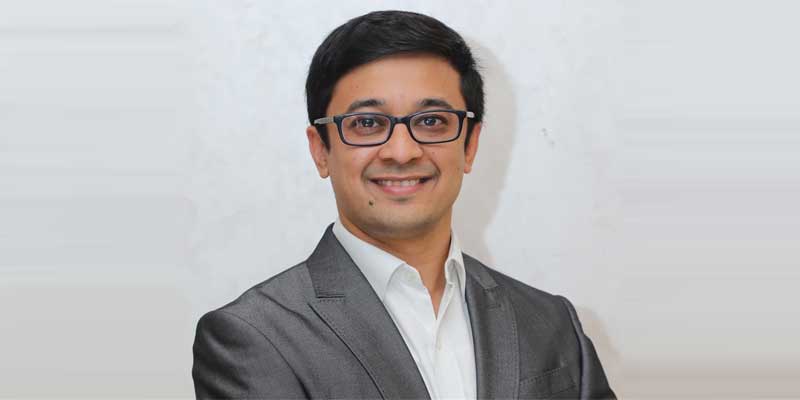
As India advances Gaganyaan and BAS, digital engineering is becoming central to human-rated spacecraft safety, reliability and mission assurance, writes Hardik Asawa, Technical Leader, Synopsys.
Space exploration has changed, humans are once again returning to space. Artemis II brought its crew home safely in April 2026. SpaceX and China now run regular crewed flights. India is preparing to launch the Gaganyaan programme, its first step towards the permanent Bharatiya Antriksh Station (BAS).
Building a human-rated spacecraft leaves zero room for error. Survival must be guaranteed through violent launch vibrations, extreme orbital temperatures, intense cosmic radiation and brutal re-entry conditions. Digital engineering provides the foundational architecture to manage this complexity, replacing physical trial-and-error with deterministic, physics-based certainty.
The rules of survivability
Human-rating demands strict compliance. Global standards such as NASA NPR 8705.2 require spacecraft to actively protect crew members during a disaster. India’s supply chain, including ISRO, large system integrators and agile deep-tech startups, must meet these exacting requirements.
Building physical prototypes to test every possible failure mode is expensive and time-consuming. Instead, engineers use digital models to mathematically prove that a component can survive extreme stress long before manufacturing begins.
Launch and abort
Rockets generate massive acoustic energy. During an emergency, the Crew Escape System (CES) must fire instantly. Engineers use computational fluid dynamics (CFD) to map the exact physics of this separation. They model motor plumes and air resistance digitally to ensure the CES can pull astronauts safely away from a failing rocket.
Power systems, propulsion and orbital reliability
Operating dynamic mechanical systems in a vacuum introduces extreme failure modes. During orbital rendezvous, Reaction Control System (RCS) thrusters pulse rapidly. Without atmospheric convective cooling, localised ‘heat soak’ causes internal polymeric seals to swell, physically choking propellant flow. Since static Earth-based vacuum chambers struggle to capture these dynamic thermo-mechanical failures, engineers use multi-physics digital twins, coupling CFD with thermal-structural simulations, to mathematically map heat dissipation before hardware is machined.
Massive solar arrays present equally severe mechanical hazards. Earth-based deployment tests are inherently flawed because gravity-cancelling counterweights mask true dynamic behaviour. Engineers therefore rely on multi-body dynamics simulations to map zero-gravity kinematics, ensuring panels lock without inducing fatal torque. Once deployed, the arrays endure severe thermal shock in low Earth orbit, with temperatures shifting from 120°C to -120°C every 45 minutes. By using thermo-structural coupling, engineers predict ‘thermal jitter’ and material fatigue years in advance, helping guarantee continuous mission power.
Avionics, radiation and life support
The Environmental Control and Life Support System (ECLSS) manages oxygen and temperature. In space, an electrical short or software crash can be fatal. Protecting avionics requires control over highly complex Electromagnetic Environmental Effects (E3).
During launch and ascent, vehicles face the severe threat of lightning. While direct strikes erode exterior materials, indirect effects are far more dangerous for avionics. A strike generates intense Electromagnetic Pulses (EMPs) and transient currents that couple to spacecraft wiring. This can trigger major sensor malfunctions and corrupt critical telemetry.
Once in orbit, vehicles face unique Spacecraft EMC, or Electromagnetic Compatibility, challenges. Modern spacecraft are densely packed with electronics. Power cables for heavy systems and data lines are placed close together. To prevent communication loss or cascading failures, engineers digitally simulate shielding, grounding and filtering to verify performance.
The environment also creates severe Spacecraft Charging. As the vehicle interacts with space plasma, energetic particles and solar photoemission, it accumulates an electrical charge. This can cause differential charging, where varying structural potentials create strong electric fields. If unchecked, this leads to Electrostatic Discharges (ESD) that can instantly damage internal circuits and corrupt data.
Crew and avionics are also continuously bombarded by Space Radiation, including Solar Energetic Particles (SEPs) from solar flares, persistent radiation trapped in the Van Allen belts and highly energetic Galactic Cosmic Rays. When these particles penetrate the hull, they induce single-event effects in microprocessors and can cause severe DNA damage to astronauts.
For precise Radiation Hardening, legacy engineering relied on adding heavy, dead-weight shielding. Today, engineers use high-fidelity electromagnetic and particle transport simulations. By digitally calculating radiation doses, estimating surface potentials and evaluating ESD risks across the spacecraft’s full 3D geometry, teams can target shielding exactly where it is needed before launch.
Aviation authorities also require strict safety standards such as DO-178C Level A for embedded software and algorithms. To meet this requirement, engineers use Model-Based Systems Engineering (MBSE) tools such as Ansys SCADE. The software generates flight code automatically, removing human typing errors and ensuring that life-support systems run exactly as intended.
Telemetry and deep space communications
Maintaining continuous communication is a matter of life and death. The NASA Artemis programme demonstrates how digital engineering addresses this challenge. NASA had to ensure the Orion spacecraft would not lose contact with Earth during its 1.3-million-mile journey. Manually calculating the RF link budget was impossible because of the spacecraft’s complex geometry and rotating trajectory.
Engineers used high-frequency electromagnetic solvers such as Ansys HFSS to model exact 3D antenna radiation patterns on the capsule. They fed this data into Systems Tool Kit (STK) to simulate the full orbital flight path. This digital model proved that Orion’s antennas would execute smooth handovers between the Near Space Network and the Deep Space Network at every critical manoeuvre. For India’s Gaganyaan module, engineers must apply the same digital RF link budget calculations to ensure uninterrupted telemetry with the Indian Deep Space Network (IDSN), especially while navigating the plasma blackout zone during atmospheric re-entry.
The Bharatiya Antriksh station
While Gaganyaan is a short-duration mission, the Bharatiya Antriksh Station requires permanent habitation. This introduces the high-stakes physics of orbital docking.
Connecting modules at orbital speeds of 7.8 km/s requires exact precision. A minor calculation error in closure rate can transfer massive kinetic energy directly into the station’s structure, risking catastrophic hull depressurisation. Since physically testing such scenarios on Earth is extremely difficult, engineers use transient structural simulations to map contact mechanics before hardware is built. This ensures docking latches absorb kinetic impact without puncturing the hulls.
BAS also requires closed-loop life support to recycle water and air continuously over several years. Digital twins model these fluid and chemical reactions over the long term, predicting equipment fatigue before any component is launched.
Re-entry and splashdown
Re-entry generates intense heat and kinetic energy. The plasma surrounding the capsule blocks radio signals. Mission planners use high-frequency electromagnetic models to position antennas correctly, maintaining contact with the IDSN.
When the capsule splashes down, the impact is violent. Engineers run fluid-structure interaction simulations to map the forces of hitting the water. These models help design shock absorbers that keep deceleration below the physiological limits of the Brinkley Dynamic Response Model.
Table 1: Digital Engineering for Human-Rated Safety
Mission Phase | Threat | Safety Standard | Digital Simulation |
Launch Abort | Rocket failure | NASA NPR 8705.2 | CFD for escape motor trajectory. |
Propulsion | Vacuum heat accumulation | NASA Human-Rating | Thermal-structural coupling for seal deformation. |
Orbit (Avionics) | Electromagnetic interference (EMI) | MIL-STD-461G | Electromagnetic modeling for cable routing. |
Orbit (Radiation) | Single-Event Upset (SEU) | ISRO Guidelines | 3D particle transport simulation for spot shielding. |
Space Station | Fabric hull burst under pressure | NASA Human-Rating | Structural solver for softgood creep and burst limits. |
Comms (RF Link) | Telemetry blackout | Deep Space Network | HFSS and STK for antenna patterns and trajectory mapping. |
Splashdown | High G-forces | NASA-STK-3001 (Brinkley Model) | Fluid-Structure Interaction for shock attenuation. |
Digital engineering does not eliminate physical testing; it perfects it. Under strict aerospace certification standards, hardware must still be validated on the ground. However, by leveraging digital twins for Software-in-the-Loop (SIL) and Hardware-in-the-Loop (HIL) testing, engineers can plug physical flight computers into simulated orbital environments. This helps ensure first-pass success when final hardware is placed on a vibration table or inside a thermal vacuum chamber.
By eliminating the costly loop of physical trial-and-error, the Indian space ecosystem can ensure that its operations meet the most rigorous engineering standards beyond Earth. Ultimately, deterministic digital engineering secures the most critical metric of all: bringing the crew home safely.
About the author
Hardik Asawa is a Technical Leader in the Aerospace & Defense sector at Simulation & Analysis vertical, Synopsys. With over 16+ years of domain expertise in RF/Microwave engineering, electromagnetic systems, and mission-level digital twins, he advises India’s aerospace ecosystem on surviving zero-margin environments.
Gaganyaan
Bharatiya Antriksh Station
digital engineering
human-rated spacecraft
ISRO
Ansys
space safety
spacecraft simulation
Hardik Asawa
Synopsys
Related Stories
Automation & Robotics
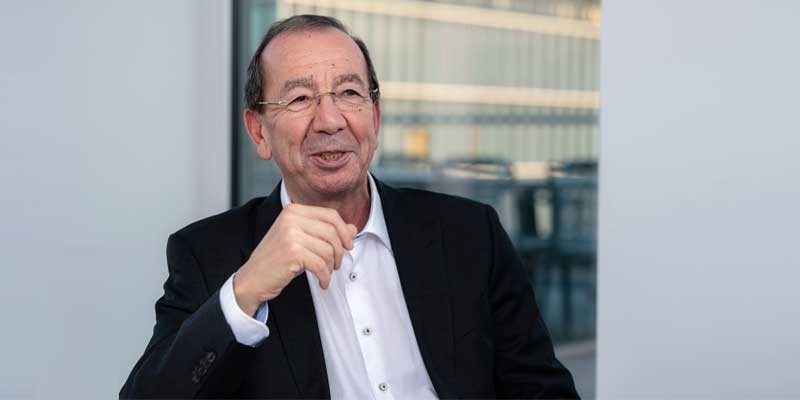
India plays a central role in Eplan´s strategy: Haluk Menderes
In this interview with Rakesh Rao, Haluk Menderes, MD, Eplan GmbH & Co KG, outlined the company’s strategic focus on innovation, automation, and seamless customer experience
Read moreAerospace Defence
Virtual Testing for Safer Spaceflight
As India advances Gaganyaan and BAS, digital engineering is becoming central to human-rated spacecraft safety, reliability and mission assurance, writes Hardik Asawa, Technical Leader, Synopsys.
Read moreMachine Tools & Accessories
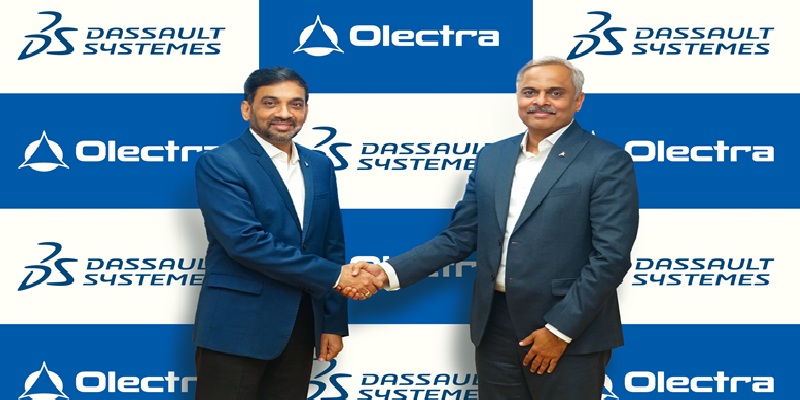
Olectra adopts 3DEXPERIENCE for EV development
Olectra Greentech will adopt Dassault Systèmes’ 3DEXPERIENCE platform to build a digitally integrated product development ecosystem for electric mobility.
Read moreRelated Products
Troop Comforts revolutionises military gear with indigenous innovations
Aerospace & Defence
Troop Comforts Ltd (TCL), a state-owned defence corporation, has recently received a request for proposal (RFP) from the Northern Command of the Indian Army for its indigenously developed military gea Read more
latest News
Subscribe to iNoW

For Industry News on WhatsApp, Give a Miss Call on: +91 84228 74016