





Schedule a Call Back


The human-machine symbiosis: Why Industry 5.0 is the future of manufacturing
 Articles
- Sep 29,25
Industry 5.0 marks a shift from pure automation to human-machine collaboration. Dijam Panigrahi, Co-founder and COO, GridRaster Inc, explains how technologies like robot rentals, cobots, AR/VR, and AI-driven digital twins are transforming the future of manufacturing.

At a time that is now defined by significant technological change and persistent economic pressures, manufacturing executives continue to face a new set of operational challenges. Traditional models, once the bedrock of industrial success, are no longer sufficient to navigate labor shortages, supply chain volatility, and the relentless demand for customization and efficiency.
For many, especially the small and medium-sized businesses (SMBs) that form the backbone of the American industrial landscape, these hurdles can seem insurmountable. Yet, a new paradigm is emerging—Industry 5.0—that offers a powerful solution, not by replacing the human workforce, but by augmenting it through a revolutionary collaboration with machines.
Overcoming today's manufacturing challenges
Today’s modern manufacturing executive contends with a perfect storm of industry challenges. First, there's the pervasive issue of labour scarcity. Finding and retaining skilled workers for repetitive, physically demanding, or dangerous tasks has become a critical bottleneck. This often forces companies to turn down orders and limits their growth potential. The issue is particularly acute for SMBs, which may not have the brand recognition or resources to compete with larger corporations for talent.
Second, the upfront capital investment required for automation has historically been a non-starter for smaller firms. The cost of purchasing and integrating traditional industrial robots, coupled with the need for specialized technical expertise, has created a significant barrier to entry. This has led to a technological divide, where large corporations rapidly automate, while smaller companies remain stuck in a more manual, and often less productive, operational model.
Finally, there is the fundamental need for agility and adaptability. Today's markets demand faster production cycles and greater customization. Traditional assembly lines, built for mass production, often lack the flexibility to pivot quickly to new products or changing consumer tastes. This inflexibility can leave businesses vulnerable to market shifts and unable to seize new opportunities.
The rise of the robot rental model
The robot rental model is the single most transformative force addressing the capital investment challenge. It democratizes access to advanced robotics, making automation a predictable operational expense rather than a prohibitive capital one. Manufacturers can lease a robot for a specific period or project, testing its capabilities and realizing immediate productivity gains without the long-term financial commitment.
This "rent-a-bot" approach allows SMBs, which comprise over 90 per cent of US manufacturers, to automate specific, high-impact tasks and quickly see a return on their investment. This newfound accessibility levels the playing field, allowing smaller players to boost their output, improve quality, and compete more effectively with larger, more heavily automated rivals.
Workforce enablement: The heart of Industry 5.0
The true power of this new industrial revolution lies in its focus on workforce enablement. Industry 5.0 is not about replacing human workers with robots; it is about creating a symbiotic relationship where humans and machines—specifically collaborative robots (cobots)—work side-by-side to enhance each other's capabilities. This human-centric approach transforms the manufacturing floor into a more productive and engaging environment.
Augmented and Virtual Reality (AR/VR) for training and guidance is at the forefront of this shift. Instead of relying on complex manuals or lengthy in-person training, new hires can use immersive AR/VR simulations to learn how to operate and program cobots. Once on the job, smart glasses can provide real-time overlays with instructions, ensuring precision and reducing errors. This not only accelerates the learning curve but also makes it easier for workers without a technical background to contribute effectively.
Intuitive Interfaces further break down the barriers between human and machine. New programming methods, such as graphical drag-and-drop systems and hand-guided programming, allow workers to "teach" cobots new tasks simply by physically moving them through the desired motions. This eliminates the need for complex coding, making robot integration a task that any shop floor employee can master, fostering a sense of ownership and empowerment.
Finally, the integration of data and artificial intelligence (AI) provides the intelligence behind the collaboration. Digital twins—virtual replicas of the manufacturing environment—allow executives to run simulations and optimize workflows before physical changes are made. AI-driven data analytics provide real-time performance monitoring, identifying bottlenecks and allowing cobots to adapt to dynamic changes in the production line. This continuous optimization not only boosts efficiency but also helps ensure a safer, more productive workflow for both human and robotic workers.
A vision for the future
Industry 5.0 represents a strategic pivot from pure automation to human-machine collaboration. By leveraging accessible technologies like robot rentals and workforce enablement tools, manufacturers can address their most pressing challenges: filling labor gaps, overcoming capital constraints, and building a more agile and resilient operation. This new era of manufacturing empowers employees to move from repetitive manual labor to higher-value roles that require creativity, problem-solving, and critical thinking. For manufacturing executives, embracing this human-centric vision is not just about adopting new technology; it is about investing in the future of their workforce and securing a competitive advantage in a rapidly evolving global market.
About the author
Dijam Panigrahi is Co-founder and COO of GridRaster Inc., a leading provider of cloud-based platforms that power compelling high-quality digital twin experiences on mobile devices for enterprises.
Industry 5.0
Dijam Panigrahi
GridRaster Inc
human-machine collaboration
Collaborative robots
cobots
Robot rental model
AR/VR in manufacturing
Digital twins
AI-driven manufacturing
US manufacturing
Related Stories
Automation & Robotics
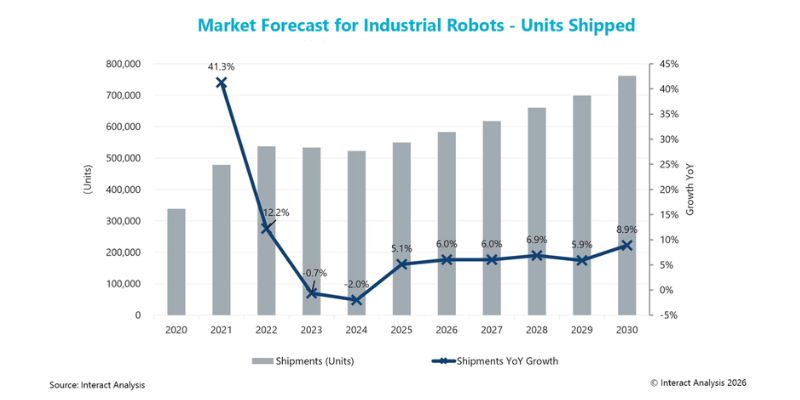
Industrial robot shipments to reach 760k units in 2030, India to see highest growth
Industrial robot shipments are forecast to rise steadily to 2030, supported by reshoring, electronics demand and wider automation adoption.
Read moreAutomation & Robotics
Why smart factories are struggling to unlock AI’s full value
Smart factories can unlock the full value of AI only when manufacturers strengthen data infrastructure, integrate legacy systems, plan for exceptions and define clear human-machine decision framewor..
Read moreAutomation & Robotics

Automation is the base for smart manufacturing: Sunil Mehta
With Mitsubishi Electric’s experience in factory automation, Sunil Mehta, Assistant Vice President, Mitsubishi Electric India Pvt Ltd, speaks to Ashlin Rajan on how automation is reshaping Indian ..
Read moreRelated Products
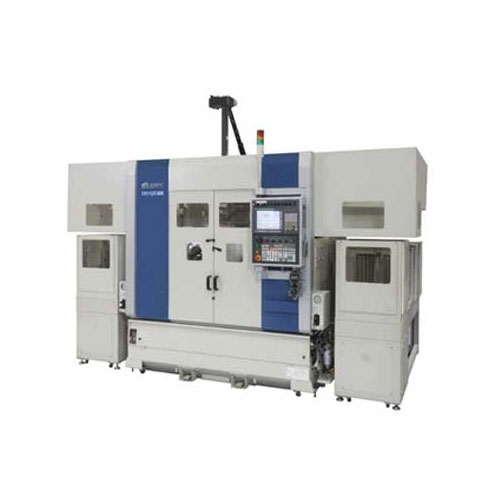
Compact Fmc - Motorum 3048tg With Fs2512
INDUSTRIAL AUTOMATION & TECHNOLOGY CONSULTANCY
Meiban Engineering Technologies Pvt Ltd offers a wide range of Compact FMC - Motorum 3048TG with FS2512.
Digital Colony Counter
INDUSTRIAL AUTOMATION & TECHNOLOGY CONSULTANCY
Rising Sun Enterprises supplies digital colony counter.

Robotic Welding SPM
INDUSTRIAL AUTOMATION & TECHNOLOGY CONSULTANCY
Primo Automation Systems Pvt. Ltd. manufactures, supplies and exports robotic welding SPM.
latest News
Subscribe to iNoW

For Industry News on WhatsApp, Give a Miss Call on: +91 84228 74016