





Schedule a Call Back


Rewarding Manufacturing Resilience
 Articles
- Jan 02,26
Effective January 1, 2026, Mexico imposed import duties ranging from 5 per cent to 50 per cent on a broad set of goods from non-free trade agreement (FTA) countries, including India, China, South Korea, Thailand and Indonesia.

The Indian auto components industry entered FY26 on the back of strong export momentum, but a sudden escalation in trade barriers across key markets has sharply altered the operating environment. New tariff actions in the US and Mexico—together accounting for a significant share of India’s automotive exports—have injected uncertainty into a sector that had been steadily strengthening its position within global supply chains.
Effective January 1, 2026, Mexico imposed import duties ranging from 5 per cent to 50 per cent on a broad set of goods from non-free trade agreement (FTA) countries, including India, China, South Korea, Thailand and Indonesia. While Mexico contributes just about 1 per cent to India’s overall merchandise exports, its importance to automotive trade is disproportionately large. In FY25, India exported vehicles and auto components worth nearly $1.95 billion to Mexico, with components alone accounting for $834 million. Exports of auto components reached another $370 million in the first half of FY26. Mexico absorbs close to 13 per cent of India’s passenger vehicle exports and around 12 per cent of two-wheeler exports by value, ranking it among India’s most critical automotive destinations after the US and Europe.
This exposure is now under strain. Mexico’s tariff escalation coincides with the US imposing customs duties of up to 50 per cent on select Indian auto components. The early impact is visible in trade data, with India’s exports to Mexico declining 10 per cent year-on-year to $3.17 billion during the first seven months of FY26. While this slowdown cannot be attributed solely to automotive products, the sector is among the most affected given the scale and immediacy of the tariff shock.
The near-term outlook remains challenging with export volumes to the US and Mexico likely to stay subdued as higher landed costs dampen demand and global OEMs diversify sourcing. However, the auto components industry’s inherently long switching cycles—typically nine to 12 months—mean the full impact will unfold gradually rather than abruptly. This provides Indian suppliers a narrow but valuable window to recalibrate strategies.
Over the medium term, the disruption could accelerate structural realignment. A stronger focus on niche, high-value components, deeper engagement with European and Middle Eastern markets, and closer integration with domestic OEM supply chains could help reduce overdependence on a limited set of export destinations. Ultimately, the industry’s ability to diversify markets, move up the value curve and leverage trade diplomacy will determine whether it emerges weakened—or more resilient—from this period of volatility.
Against this backdrop, Smart Manufacturing & Enterprises (SME) will host the SME Conference & Awards 2026 on February 11, 2026, in Mumbai, under the theme ‘Scaling India’s Manufacturing in Volatile Times’. The conference will bring together industry leaders, policymakers and technology enablers to examine pathways for strengthening manufacturing resilience, accelerating technology-led transformation and unlocking the full potential of SMEs as drivers of India’s global manufacturing ambitions. The SME Awards for Fastest Growing Engineering Companies in India will recognise enterprises that exemplify agility, innovation and scalable excellence in an uncertain global environment. The event will also mark the unveiling of the 54th Annual Edition of Smart Manufacturing & Enterprises.
To participate or know more about SME Conference & Awards, simply scan the QR code below.
As we step into 2026, SME extends its warm wishes to all readers for a resilient, progressive and prosperous New Year.

Indian auto components industry
ACMA
US tariff
new Mexico tariff
US–Mexico trade
Automotive exports
SMEs and ancillaries
Global trade uncertainty
Smart Manufacturing & Enterprises
SME Conference & Awards
SME Awards for Fastest Growing Engineering Companies
54th Annual Edition of SME
Related Stories
Automation & Robotics
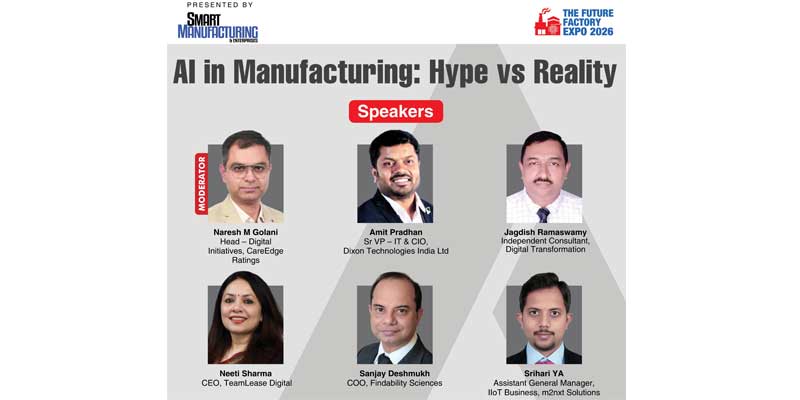
Future Factory Expo webinar explores real-world AI use in factories
Future Factory Expo (FFE) recently hosted a webinar bringing together senior leaders from manufacturing, digital transformation and workforce development to decode artificial intelligence's role on ..
Read moreSmart Manufacturing
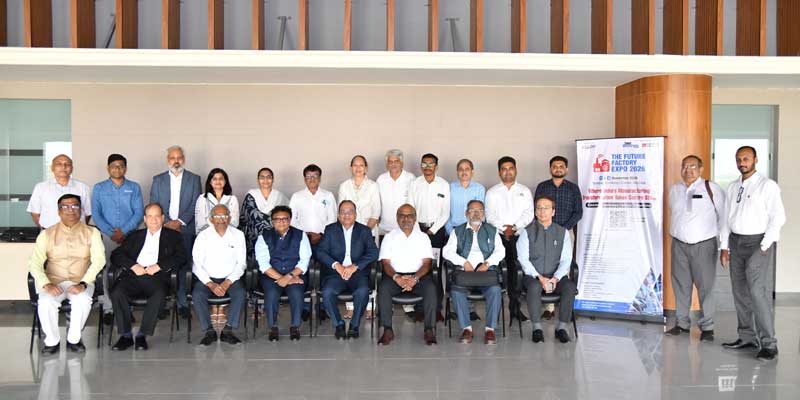
Future Factory Expo charts roadmap for smarter Indian factories
Roundtable discussion, hosted by Future Factory Expo (FFE) in Pune, explored how Indian factories can become smarter, efficient and globally competitive through automation, digitalisation and future..
Read moreAerospace Defence
Bharat Forge reports strong Q4 recovery
Bharat Forge posted a strong Q4 FY26 recovery, supported by improved exports, resilient domestic automotive demand, and continued momentum across industrial and defence businesses.
Read moreRelated Products

Automotive Oil Pump
AUTO COMPONENTS & ACCESSORIES
Kalpak Auto Pvt Ltd offers a wide range of
automotive oil pump.
Tata Motors unveils facilities for development of Hydrogen propulsion tech
AUTO COMPONENTS & ACCESSORIES
Tata Motors, India?s largest automobile company, unveiled two state-of-the-art & new-age R&D facilities for meeting its mission of offering sustainable mobility solutions. The unveilings constitute of Read more
Tata Motors plans petrol powertrain for Harrier and Safari SUVs
AUTO COMPONENTS & ACCESSORIES
Tata Motors is in the process of developing a new petrol powertrain for its premium sports utility vehicles, the Harrier and Safari, as confirmed by a senior company official. Currently, these models Read more
latest News
Subscribe to iNoW

For Industry News on WhatsApp, Give a Miss Call on: +91 84228 74016