









Schedule a Call Back


Reimagining Project Management in India’s Construction Sector
 Articles
- Dec 10,25
While infrastructure investments have surpassed $ 850 billion in India, nearly 60 per cent of projects suffer cost or schedule overruns. Hence, it is important to drive efficiency, collaboration, and digital adoption for a resilient future, write Hitesh Tharwani and Abhijeet Jain.

India’s construction industry stands on the brink of a major transformation. With infrastructure investments surpassing $ 850 billion and the National Infrastructure Pipeline propelling projects across highways, metro systems, airports, and smart cities, the sector has emerged as the backbone of India’s growth story. However, as project volumes multiply, the sector faces a paradox: while capital flow and opportunity are surging, productivity and project efficiency remain constrained.
According to NITI Aayog, nearly 60 per cent of Indian infrastructure projects suffer cost or schedule overruns. The root causes are familiar—fragmented planning, limited digital adoption, unclear risk ownership, and an overstretched workforce. For India to achieve its $ 8 trillion GDP ambition by 2030, project management must evolve from a process-driven approach to a performance-oriented culture.
The industry is projected to face a deficit of nearly 150 million skilled workers by 2030. Currently, 85 per cent of the Indian workforce is minimally skilled, yielding a Return on Labour Employed (ROLE) of only Rs 1–3 lakh per person per month. When analysed in depth, the Profit After Tax (PAT) contribution per man-hour is surprisingly equivalent to the cost of a cup of tea.
This article explores the anatomy of the workforce crisis in India’s infrastructure sector and examines how technology integration—combined with targeted human resource strategies—can create a balanced ecosystem to propel infrastructure growth. The insights stem from an extensive SPJIMR–PGEMP capstone project, which concludes that while workmen welfare and skilling initiatives provide incremental relief, they cannot resolve the structural problem entirely.
The Workforce Transformation Imperative
India’s construction sector, employing over 51 million people and contributing nearly 9 per cent to GDP, faces acute skill shortages and shifting aspirations. Harsh site conditions, migration fatigue, and limited career mobility have made the sector less appealing to young Indians seeking tech-centric careers. Nearly 30 per cent of India’s youth now aspire for digital-first roles rather than manual site-based jobs.
Traditionally, construction hubs relied heavily on rural-to-urban migration to meet manpower demands. However, improved rural amenities and welfare schemes are reducing the incentive for physical migration. A study conducted with one of India’s leading infrastructure companies revealed that while large-scale training programs and welfare initiatives—such as better housing and healthcare—have improved retention in select areas, they fail to address the core aspiration gap. Young professionals increasingly prefer semi-technical, air-conditioned office roles to physically demanding site jobs. As adjacent industries accelerate digital adoption, construction risks are falling behind in competitiveness and attractiveness.
It is high time that construction embraced a hybrid model of human and technological productivity. A career in infrastructure development should no longer mean hardship—it should symbolise innovation, safety, and pride. By integrating digital technologies, offering continuous upskilling, and ensuring welfare, the sector can attract the next generation through a fusion of tech-driven and human-centered ecosystems.
Challenges and the Policy Role
Transitioning to a digital and collaborative paradigm is not without obstacles. Cultural inertia, fragmented ownership, and inconsistent data practices continue to hinder adoption. Leadership commitment is essential—organisations must align incentives, redefine KPIs, and treat digital transformation as a strategic agenda rather than an IT initiative.
Government policies can play a catalytic role. Offering tax incentives for digital adoption, promoting robotics and skill development with common data standards, and mandating. BIM for large public projects can accelerate modernisation across the ecosystem.
Five Transformative Pillars for Future-Ready Construction
1. Digital-First Project Planning
The adoption of Building Information Modelling (BIM), 4D/5D simulation, and Common Data Environments (CDE) must evolve from aspiration to standard practice. Projects that utilise these tools have demonstrated up to 20 per cent reduction in rework and faster decision cycles.
2. Predictive Risk and Performance Intelligence
AI- and IoT-enabled project dashboards allow managers to foresee risks instead of reacting to them. Predictive analytics can detect schedule bottlenecks, safety anomalies, and equipment failures before they escalate.
3. Contracting Models that Reward Collaboration
Traditional contracts distribute risks unevenly, fostering adversarial relationships between stakeholders. Modern frameworks such as Integrated Project Delivery (IPD), target-cost contracts, and performance-linked incentives foster shared accountability and transparency.
4. Workforce Capability Building at Scale
With 51 million workers, most of whom are unskilled, upskilling in digital tools, safety technologies, and lean practices will be decisive in closing productivity gaps. Continuous capability development through AR/VR-based training can attract younger, tech-savvy professionals.
5. Integrated Project Controls Office (IPCO)
Large EPC players are realising the importance of a centralised command center that synchronises schedule, cost, risk, quality, and vendor performance. The IPCO acts as a real-time control hub, improving predictability and client confidence.
From Brick-and-Mortar to Click-and-Mortar
Technology, deployed thoughtfully, is a great equaliser. It reduces dependence on unskilled labor, improves predictability, and transforms construction into a career of innovation and pride.
Robotics & Automation: Automated rebar fabrication, robotic welding, and brick-laying systems can cut manpower requirements by 30–50 per cent, reduce cycle times, and enhance accuracy and site safety. On marquee rail and metro packages, robotic rebar-cage welding has achieved up to 50 per cent labour reduction and 80 per cent cycle-time compression while minimising material waste.
AI + IoT for Predictive Project Control: Connected equipment and AI models forecast breakdowns, schedule slippages, and safety risks—enabling proactive management. Leading EPC firms now operate dozens of AI-driven use cases across contracts, design, supply chain, and field execution, with thousands of IoT-enabled assets transmitting real-time telemetry for predictive maintenance and utilisation.
Modular Construction & 3D Printing: Factory-built systems such as precast, PPVC, and 3D printing can reduce on-site work by 40–50 per cent while ensuring precision and consistency. India’s first 3D-printed post office and rapid housing modules exemplify how modularisation is redefining project timelines.
BIM, Digital Twins & Immersive Learning: BIM-linked Digital Twins function as live navigation tools for construction, improving coordination, clash detection, and owner visibility. AR/VR transforms safety and skills training into interactive, gamified experiences that resonate with Gen-Z professionals.
The Augmented Workforce: Humans + Machines
The future of construction lies in augmentation, not replacement. Skilled operators will manage robotics and BIM dashboards, while young professionals leverage AI and IoT for real-world challenges. This hybrid model—smaller but more skilled—will deliver higher throughput, fewer injuries, and less rework.
Such an approach could potentially boost ROLE to Rs 3–5 lakh per person per month and reduce project delays by up to 20 per cent. India cannot build its future with yesterday’s methods. While skilling and welfare may offer temporary relief, the demographic and aspirational shifts are irreversible.
Tech + Talent for Viksit Bharat @2047
Skilling and welfare remain essential, but the future demands a tech-driven, human-centered operating model. If India can combine its engineering depth with automation, analytics, and modularity, the nation will not only build faster but also smarter, safer, cleaner, and with dignity.
The legacy of today’s builders will not just be measured in kilometers of highways or megawatts of power—but in the empowered, future-ready workforce they create.
About the authors:
Hitesh Tharwani is the Construction Manager at L&T, and Abhijeet Jain is the Senior DGM at L&T.
Construction sector
infrastructure investments
NITI Aayog
BIM and digital twins
skilled labour gap India
EPC modernisation
construction workforce India
L&T
Hitesh Tharwani
Abhijeet Jain
digital infrastructure transformation
construction automation
Related Stories
Smart Manufacturing
L&T EPS to invest Rs 50 bn in electronics push, targets EV mobility for growth
L&T Electronic Products & Systems (LTEPS) is accelerating its mobility ambitions with indigenous EV motors, motor control units, ADAS and connected vehicle solutions as part of its Rs 50 billion ele..
Read moreProcess Equipment

L&T Onshore Secures Major EPCC Order from Petronet LNG at Dahej
L&T Onshore wins a large turnkey order from Petronet LNG for LNG, ethane and propane storage facilities at Dahej.
Read moreConstruction Equipment
Reimagining Project Management in India’s Construction Sector
While infrastructure investments have surpassed $ 850 billion in India, nearly 60 per cent of projects suffer cost or schedule overruns. Hence, it is important to drive efficiency, collaboration, an..
Read moreRelated Products
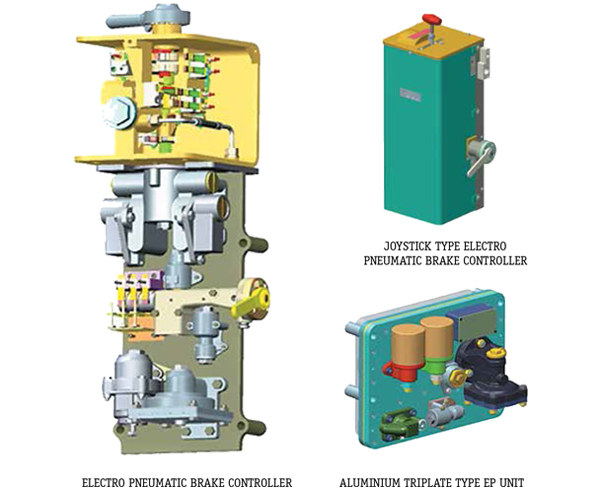
Electro - Pneumatic Brake System for Emu
CONSTRUCTION, MINING & EARTH MOVING EQUIPMENT
Escorts Kubota Limited offers a wide range of electro - pneumatic brake system for EMU.

Indef Powered Crane Kit
CONSTRUCTION, MINING & EARTH MOVING EQUIPMENT
Hercules Hoists Ltd offers a wide range of Indef powered crane kit.
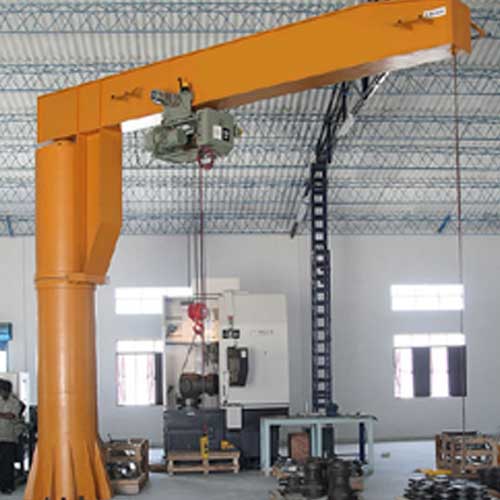
Jib Crane
CONSTRUCTION, MINING & EARTH MOVING EQUIPMENT
DC Hoist & Instruments Pvt Ltd offers a wide range of Jib crane.
latest News
Subscribe to iNoW

For Industry News on WhatsApp, Give a Miss Call on: +91 84228 74016