








Schedule a Call Back


India's Long-Term Foreign Investment Outlook Strong despite Recent Dip: DPIIT secretary
 Industry News
- Dec 18,23
Rajesh Kumar Singh, the secretary in the Department for Promotion of Industry and Internal Trade (DPIIT), emphasised that ongoing geopolitical conflicts and economic challenges in advanced economies would not significantly impact foreign direct investment (FDI) flows to India.
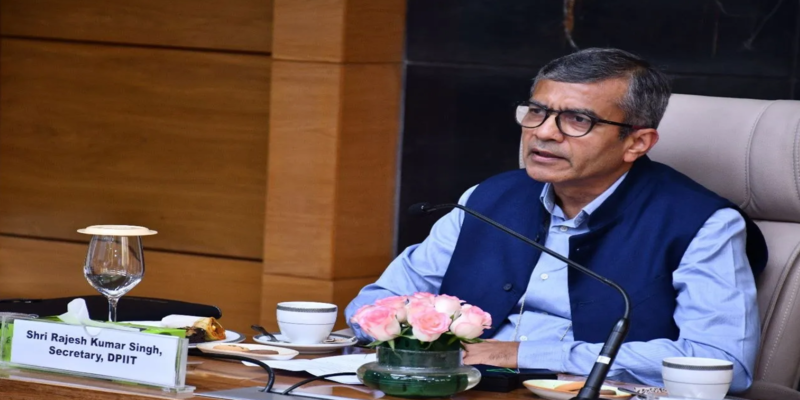
Despite a recent decline, India's foreign investment inflows are expected to remain robust in the long term, according to a high-ranking official. Rajesh Kumar Singh, the secretary in the Department for Promotion of Industry and Internal Trade (DPIIT), emphasised that ongoing geopolitical conflicts and economic challenges in advanced economies would not significantly impact foreign direct investment (FDI) flows to India. Singh highlighted India's strong growth trajectory as a key factor contributing to its attractiveness for foreign investment.
Addressing the "China-plus-one" strategy, Singh acknowledged China's substantial manufacturing capabilities and the concentration of 30% of the global supply chain in the country. He emphasised that the shift from China to India would not occur overnight but expressed optimism about initiating the process.
Global economic slowdown and tighter interest rates in advanced Western economies have affected FDI inflows into India. In the September quarter, FDI equity inflows decreased by 7.7% annually to $9.5 billion, with total FDI declining by 7.8% annually to $15.3 billion. Singh noted that while challenges in developed economies could have a short-term impact on FDI, India's long-term growth story would continue to attract substantial investments.
Singh outlined strategies for boosting manufacturing in India, including production-linked incentive (PLI) schemes and aggressive pursuit of new free trade agreements. He expressed confidence that these measures, coupled with stringent value addition clauses under the PLI schemes, would enhance the share of manufacturing in India's GDP from the current 15% to the targeted 25%.
Despite expert opinions suggesting a time lag before the PLI schemes yield desired results and India competes with China in manufacturing, Singh remained optimistic. He pointed to the Indian economy's impressive 7.6% GDP growth in the September quarter and highlighted the resilience of long-term investment flows into India. Singh concluded by affirming India's status as one of the world's preferred investment destinations for years to come.
Source: Mint
Related Stories
Automation & Robotics
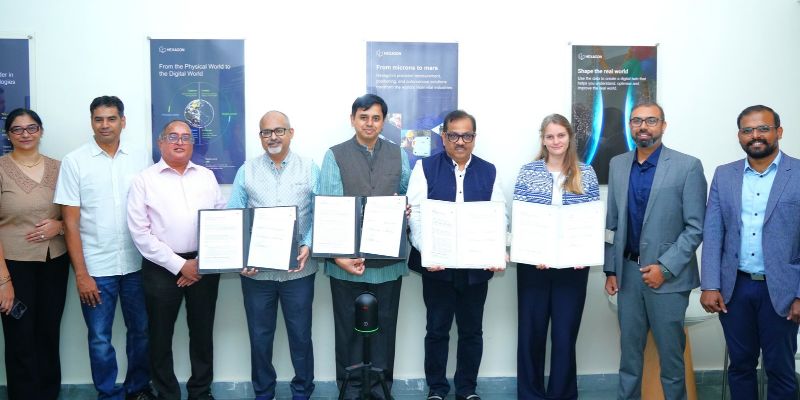
IIIT Hyderabad, Hexagon Set Up Digital Twin Centre of Excellence
IIIT Hyderabad and Hexagon R&D India are establishing a Digital Twin CoE to advance AI-led research, education and industry applications in computer vision and spatial computing.
Read moreConstruction Equipment

SDLG India Plans Rs 15 bn Investment, Adds 3,000-Unit Capacity
SDLG India plans to invest Rs 15 billion in India, starting with a Rs 3 billion Gujarat plant with phased capacity of 3,000 units annually.
Read moreElectrical & Electronics
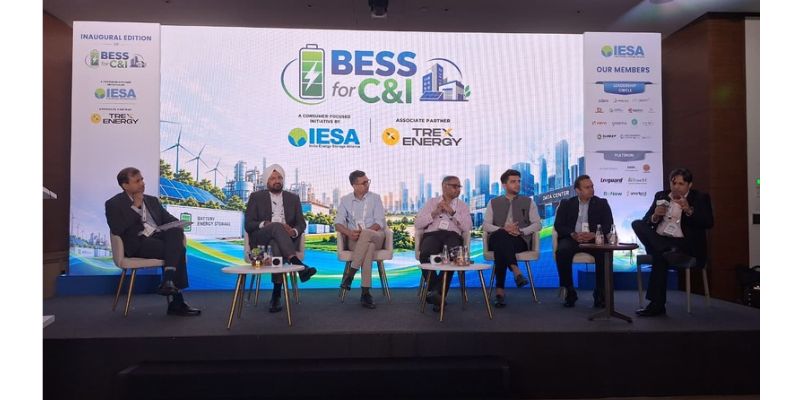
IESA Launches BESS Initiative to Accelerate C&I Energy Storage Adoption
IESA’s new “BESS for C&I” initiative aims to accelerate commercial and industrial battery storage adoption by addressing cost, policy and awareness challenges.
Read moreRelated Products
latest News
Subscribe to iNoW

For Industry News on WhatsApp, Give a Miss Call on: +91 84228 74016