





Schedule a Call Back


How is AI shaping the future of cement milling?
 Articles
- Jan 08,26
AI is transforming cement milling by enabling dynamic, data-driven control that improves energy efficiency, stabilises throughput and enhances asset reliability. By leveraging real-time data, predictive analytics and digital twins, AI delivers measurable gains in cost, sustainability and operational resilience, says Emily Newton.
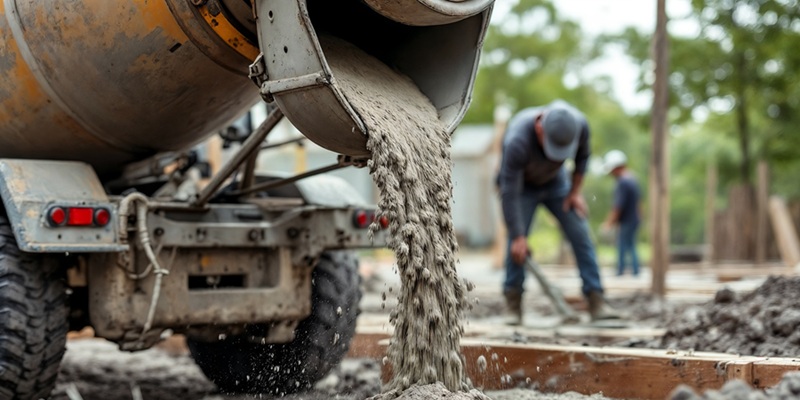
Cement plant optimisation begins in the milling stage, where high energy demand meets tight operating margins. Milling systems consume significant power, and even small inefficiencies quickly erode profitability. Cost pressure and raw material variability have pushed operators to rethink how control and optimization work at scale.
Artificial intelligence (AI) adoption accelerated as traditional approaches struggled to keep pace with these constraints. Instead of acting as a black-box replacement, AI functions as an operational intelligence layer. It augments the existing control system and supports faster, data-driven decisions under changing conditions.
The limits of traditional control systems in milling operations
Static rule-based control dominates much of the cement milling process, yet it depends on narrow operating windows that rarely reflect real conditions. Feed variability and changing material grindability constantly shift process dynamics. At the same time, energy use contributes 40 to 50 per cent of total cement production cost, making efficiency central to energy sustainability.
PID loops and expert systems struggle in this environment because they assume linear, predictable behavior. Milling dynamics change too quickly for fixed rules and manually tuned parameters. As variability increases, these systems react late and leave significant energy and performance gains unrealized.
AI-driven cement plant optimisation
Machine-learning models interpret real-time signals alongside years of historical operating data. Cement producers hold extensive records generated over long periods of operation and service, capturing shifts in materials and process behavior. These data-rich environments allow AI systems to identify patterns that static models often miss.
Using these insights, AI continuously adjusts mill speed and separator efficiency in response to changing conditions. This dynamic control stabilizes throughput and reduces energy consumption without sacrificing product quality. Over time, plants achieve tighter process control and more consistent milling performance.
Advanced sensor function and data infrastructure
Modern AI systems integrate vibration, acoustic, power draw and temperature data into a unified view. These signals capture mechanical condition and material response in real time. When combined, they reveal process changes that single-sensor monitoring often misses.
Edge analytics processes time-critical data close to the mill, while centralized AI platforms handle deeper pattern analysis and long-term optimization. Both approaches depend on synchronized, high-frequency operational data. Without reliable data quality, even advanced models struggle to deliver consistent value.
Predictive maintenance and asset health intelligence
AI models identify early indicators of bearing and liner degradation. Small shifts in vibration patterns and power draw reveal developing issues that traditional monitoring often overlooks. This deeper visibility allows teams to intervene before failures disrupt production.
Maintain strategies that increasingly move away from fixed schedules toward condition-based planning. With fewer unplanned shutdowns, plants extend component life and improve maintenance efficiency. These improvements strengthen reliability while keeping milling operations stable and predictable.
Digital twins and simulation-driven decision-making
Digital twins create virtual replicas of the cement milling process using historical and live operational data. These models mirror real-world behavior with high fidelity, which allows engineers to explore how changes affect performance before implementation. This capability turns simulation into a daily decision-support tool.
Manufacturing facilities also use digital twins for at-scale customisation by generating potential product variants, whether style or feature changes. Scenario testing happens without production risk, reducing disruption and uncertainty. Over time, these insights support debottlenecking efforts and more accurate long-term capacity planning.
Energy efficiency, emissions and sustainability gains
AI-enabled grinding optimization strengthens cement plant optimization by lowering Kilowatt-hour per ton without sacrificing output quality. More precise control over particle size distribution reduces wasted energy while maintaining consistent mill performance. These gains translate directly into lower operating costs.
Finer particles offer a larger surface area relative to their volume, which enhances efficiency and reactivity in chemical processes. Improved separator control prevents over-grinding and unnecessary energy use. These capabilities help plants meet tightening carbon limits and environmental, social and governance expectations with measurable results.
Integration challenges and organisational readiness
Data silos continue to challenge the cement milling process as operational and information technology (OT and IT) systems remain loosely connected. Control systems and analytics platforms often store data in separate environments, which limits visibility and slows model performance. Effective integration requires aligned architecture and shared data ownership.
A skills gap further complicates adoption, since automation engineers and data scientists approach problems differently. Industry estimates suggest up-skilling demand could approach 70 per cent of workers needing some level of skills upgrade. Strong governance and operator trust help ensure AI supports daily operations rather than disrupting them.
Cybersecurity and model resilience in ai-driven milling systems
Protecting AI models and control layers becomes increasingly important as digital systems expand across operations. Cyber and operational risks rise when AI interfaces with control systems and enterprise networks. Strong security practices help preserve model integrity and process stability.
Securing data pipelines across OT and IT and environments supports consistent, trustworthy decision-making. Model resilience also matters during network failures or abnormal conditions. Fallback logic and continuous validation help maintain reliable operation under stress.
AI as a competitive advantage in the cement milling process
AI continues to strengthen cement plant optimization by improving performance and energy efficiency across milling operations. Cement milling stands out as a prime candidate for industrial AI maturity due to its data richness and sensitivity to operating conditions. As adoption deepens, AI-driven systems will define competitive advantage in modern cement production.
About the author:
Emily Newton is a tech and industrial journalist and the Editor-in-Chief of Revolutionized magazine. Subscribe to the Revolutionized newsletter for more content from Emily.
Image Courtesy: www.freepik.com
Artificial Intelligence
AI
Cement milling
cement industry
Plant optimisation
Energy efficiency
Predictive maintenance
Digital twins
Process control
Sustainability
Industrial automation
Emily Newton
Related Stories
Automation & Robotics

LTTS Launches Agenticiq AI Platform for Engineering and Manufacturing
LTTS has launched AgenticIQ, an end-to-end Agentic AI platform designed to enable autonomous, multi-agent workflows across engineering, manufacturing and industrial operations.
Read moreAuto & Auto Components

Electrogenic acquires TREMEC Electric GT, establishes US base
British EV technology firm Electrogenic has acquired TREMEC Electric GT, establishing a permanent US base in Huntington Beach, California, to support its North American expansion.
Read moreAutomation & Robotics

Honeywell expands AI and cybersecurity skilling initiative in India
Under Saksham, Honeywell Technologies aims to equip over 300,000 students with skills in AI, cybersecurity, sustainability and advanced technologies by 2030.
Read moreRelated Products
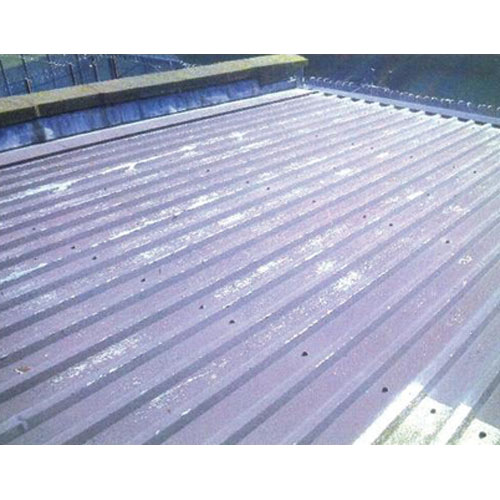
Polysiloxane Anti Corrosion Coating
CERAMICS, COATINGS & PAINTS
Clean Coats offers polysiloxane anti corrosion coating.
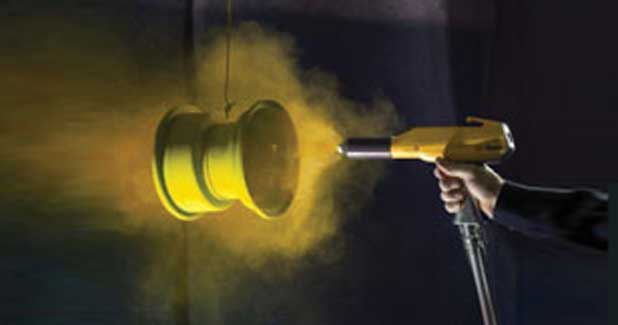
Powder Coating Services
CERAMICS, COATINGS & PAINTS
Jekmin Industries offers a wide range of powder coating services Read more
Painting Equipments
CERAMICS, COATINGS & PAINTS
We are a renowned manufacturer and supplier of a wide range of Blasting and Painting Machines, Testing Instruments and Abrasive Products. The products offered by us are manufactured using high-grade r Read more
latest News
Subscribe to iNoW

For Industry News on WhatsApp, Give a Miss Call on: +91 84228 74016