






Schedule a Call Back


How automation is redefining efficiency in manufacturing
 Articles
- May 08,26
Aayaan Bery, Sales and Global Marketing Director at KSP Inc, says manufacturing efficiency now depends on automation, data visibility, workforce readiness and export competitiveness. Indian manufacturers must decide what to automate, how fast, and how to sustain the advantage.

Manufacturing efficiency has always mattered. What has changed is everything around it, the speed at which market demands shift, the complexity of global supply chains, labour cost dynamics across geographies, the precision requirements that sophisticated export markets now routinely impose, and the data tools now available to operators who want to understand what is actually happening inside their production systems. Against that backdrop, automation has moved from being a capital investment conversation to a strategic survival question for a growing number of manufacturers. The question is no longer whether to automate, but which aspects to automate first, at what pace, and with what surrounding changes to process and people.
What efficiency means today
The traditional definition of manufacturing efficiency, output per unit of input, measured in simple throughput terms, has become inadequate. A production line that runs at 90 per cent capacity but generates significant rework, unpredictable quality variance and high raw material waste is not efficient in any sense that matters to a modern exporter. Real efficiency now encompasses yield consistency, material utilisation, energy consumption, equipment uptime, cycle time per unit, and the ability to respond to design changes or order variations without losing days of production to reconfiguration.
Automation addresses each of these dimensions differently. Robotic assembly improves repeatability and cycle time. Machine vision improves quality consistency at a speed and accuracy that no human inspection line can match at scale. Automated material handling reduces movement inefficiencies and handling damage that accumulate invisibly across a large facility. Predictive maintenance software addresses unplanned downtime, which is among the most expensive forms of manufacturing waste because it cascades across the entire production system.
The value of each intervention is real but partial. What generates the largest efficiency gains is the integration of multiple automation layers into a coherent production system, supported by data that flows in real time across machines, processes and management.
The role of data in automation’s efficiency promise
One of the most significant shifts automation enables, often underappreciated until experienced, is the transformation of manufacturing from an intuition-driven to a data-driven discipline. Experienced production managers develop powerful instincts over years of working a specific process. Those instincts are valuable, but limited: a person can monitor only a handful of variables at a time, cannot process sensor data from hundreds of machines simultaneously, and cannot hold a full historical dataset of production variations in mind when making a real-time decision.
Automated systems generate and process that data continuously. A manufacturing execution system connected to the production floor can identify specific conditions, a particular machine operating at a slightly elevated temperature, a batch of incoming material at the edge of specification tolerance, or a shift pattern that consistently produces slightly higher defect rates, that precede quality problems. Acting on those signals before they become production failures is worth more, in most facilities, than any single process optimisation. The value of automation is not just in what machines do instead of people. It is in what becomes visible that was previously invisible.
Labour, skills and workforce change
The labour question is where automation conversations in India tend to become most sensitive and, often, least productive. The concern that automation displaces workers is real and deserves serious consideration. But the relationship between automation and employment in manufacturing is considerably more complex than simple displacement, and the evidence from manufacturing economies that have automated aggressively over the past twenty years does not support a straightforward jobs-destruction narrative.
What automation typically changes is the composition of labour rather than the total. Roles built around repetitive physical tasks, press operation, manual assembly, inspection and material handling, are the ones most directly affected. But these reductions are accompanied by growth in roles that require different skills: machine programming and operation, system maintenance and troubleshooting, quality system management, and production data analysis. The net effect on total employment varies significantly by facility, product type and the degree of output expansion automation enables. Manufacturers who automate and grow their business frequently employ more people than before, just in different roles.
The more pressing challenge, in practice, is skills transition, ensuring that the workforce can adapt to what automated production environments require. This is a genuine challenge in a country where vocational and technical training infrastructure has historically lagged behind industrial need. Manufacturers who invest in internal skills development alongside their automation investments consistently report better outcomes than those who treat them as separate concerns. The machine and the person operating it effectively are inseparable elements of the same efficiency equation.
Export competitiveness dimension
For Indian manufacturers with significant export markets, automation has a competitive dimension that goes beyond internal efficiency. Global buyers, particularly in mature markets, have raised their standards on product quality, dimensional consistency, certification requirements and traceability. A furniture fitting or hardware component sold into a European or American retail chain must meet specifications that leave almost no tolerance for the natural variance of fully manual production. The ability to demonstrate process control, quality consistency and production data is increasingly a qualification requirement, not just a differentiator.
Automation is what makes those standards achievable at commercial production volumes. A manually operated press cannot hold dimensional tolerances to the same consistency as a servo-driven automated press. A human inspector cannot catch defects at the speed that machine vision inspection operates. The investment in automation, viewed from this angle, is not a cost, it is the price of remaining in a market worth being in.
India’s position and the gap ahead
Indian manufacturing has made meaningful progress on automation adoption over the past decade, particularly in automotive, pharmaceuticals, textiles and electronics assembly. But the adoption curve is highly uneven across the rest of the sector. Mid-sized manufacturers, those large enough to serve significant export volumes but not large enough to have dedicated automation engineering teams, face the hardest challenge. The capital investment is not trivial. The technical expertise required to specify, integrate and maintain automated systems is not always available locally. And the ROI calculation, while positive in most structured analyses, requires confidence about future volumes and pricing that volatile market conditions make difficult to sustain.
The government’s Production Linked Incentive schemes and the push towards Make in India have created favourable conditions, but the deeper infrastructure of automation literacy, skilled technicians, local integrators and financing structures suited to mid-market manufacturers still needs development. Manufacturers who have pushed through these constraints and built automated production capability are reporting outcomes that validate the investment. Those who have not yet started are finding the gap between their production economics and those of their more automated competitors increasingly difficult to close through labour cost alone.
The pace is the question
Automation in manufacturing is not a destination. It is a continuous process of identifying where the next constraint lies, what technology or system can address it, and how the organisation needs to change to realise the efficiency that technology makes possible. The most automated factory in the world is still being improved because markets, materials, customer requirements and available technologies do not stand still. What separates manufacturers that build durable competitive positions from those that struggle to hold margins over time is not whether they automate, but whether they build the organisational capability to keep improving as the environment around them changes.
The efficiency conversation in manufacturing is never finished. The goal is to stay ahead of it.
About the author
Aayaan Bery, is the Sales and Global Marketing Director at KSP Inc. Since joining the company in 2023, he has been instrumental in strengthening KSP’s global commercial strategy, with a focus on expanding international market presence, building long-term customer relationships, and driving sustainable sales growth.
manufacturing automation
smart factory
industrial efficiency
predictive maintenance
machine vision
Indian manufacturing
export competitiveness
production systems
Aayaan Bery
KSP Inc
Related Stories
Automation & Robotics
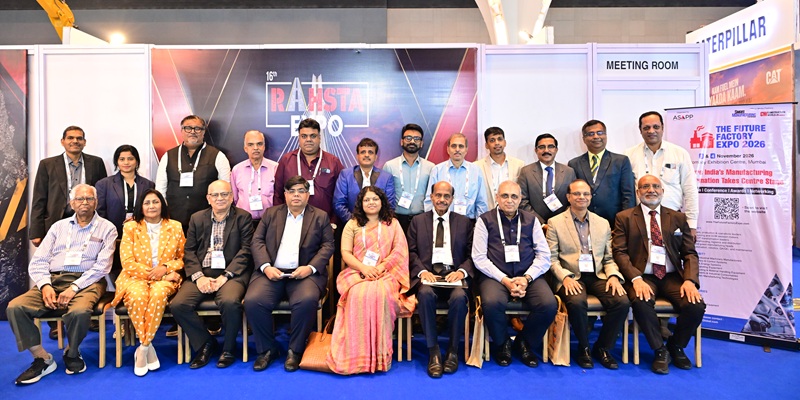
Future Factory Expo CXO Roundtable Charts Smart Transformation for SMEs
During the roundtable, hosted by Smart Manufacturing & Enterprises (SM&E) and The Future Factory Expo 2026, industry leaders outlined how SMEs can use practical digitisation, automation, skilling an..
Read moreSmart Manufacturing

Adoption of electric material handling equipment is accelerating: Jai Sancheti
In this interview, Jai Sancheti, Vice President, Material Handling Equipment Solutions, SILA Group, explains emerging trends in material handling sector and how SILA is supporting this transition wi..
Read moreOther Industrial Products
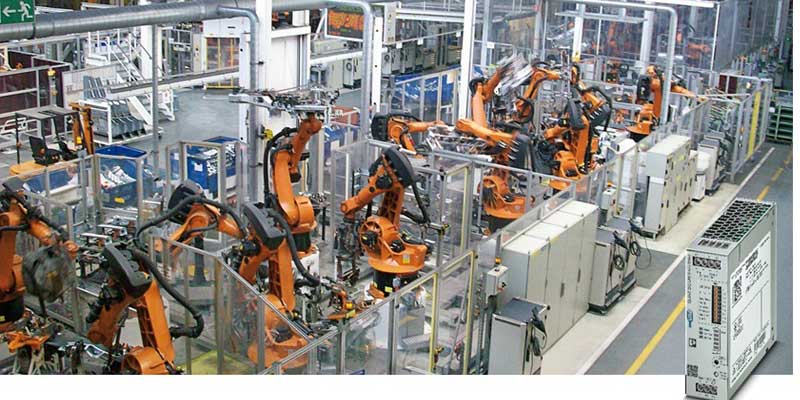
Phoenix Contact's QUINT4- DC UPS engineered for industrial automation & robotics
QUINT4?UPS is an intelligent uninterruptible power supply solution designed to ensure continuous system operation in industrial automation, robotics, and test & measurement systems.
Read moreRelated Products
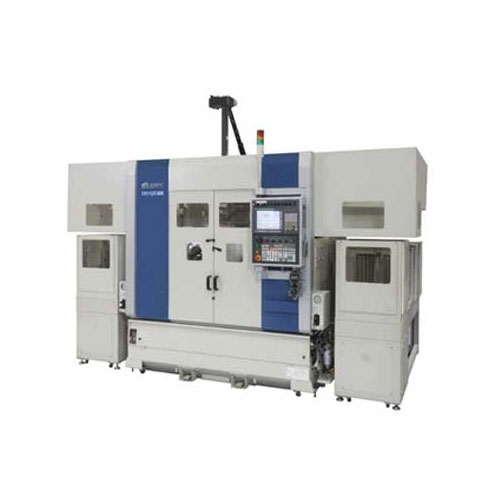
Compact Fmc - Motorum 3048tg With Fs2512
INDUSTRIAL AUTOMATION & TECHNOLOGY CONSULTANCY
Meiban Engineering Technologies Pvt Ltd offers a wide range of Compact FMC - Motorum 3048TG with FS2512.
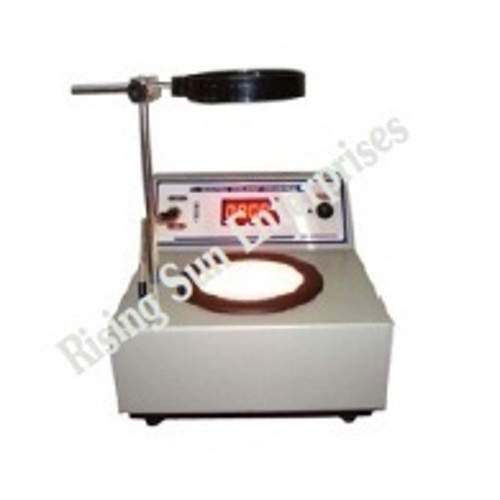
Digital Colony Counter
INDUSTRIAL AUTOMATION & TECHNOLOGY CONSULTANCY
Rising Sun Enterprises supplies digital colony counter.

Robotic Welding SPM
INDUSTRIAL AUTOMATION & TECHNOLOGY CONSULTANCY
Primo Automation Systems Pvt. Ltd. manufactures, supplies and exports robotic welding SPM.
latest News
Subscribe to iNoW

For Industry News on WhatsApp, Give a Miss Call on: +91 84228 74016