









Schedule a Call Back


Five Trends That Will Define the Evolution of Quick Commerce in 2026
 Articles
- Dec 05,25
Multi-city footprints expanded, service levels tightened, and fulfilment networks scaled from small clusters to nationwide grids.

If you zoom out for a moment, the story of quick commerce in
India didn’t begin with 15-minute delivery promises. It started long before
that, with a simple truth: India’s consumer economy was accelerating faster
than the infrastructure meant to support it. Food, pharma and retail brands
were expanding across the country, but the temperature-controlled backbone
needed to protect sensitive products lagged behind.
For years, the industry ran on bulk movement. You stored,
you moved, you waited. Then consumer behaviour shifted, and the country began
demanding something different—throughput at scale. Speed instead of stack.
Network instead of nodal. That shift set the stage for what would become one of
the fastest-growing retail categories in India: quick commerce.
By 2020, when the world locked down, the model snapped into
place. Fifteen-minute delivery wasn’t a marketing stunt; it became an operating
philosophy. Platforms needed partners and systems capable of moving perishables
with precision. The ones who understood velocity, accuracy and
temperature-controlled movement were the ones who could keep up.
Since then, quick commerce has gone from experiment to
expectation. Multi-city footprints expanded, service levels tightened, and
fulfilment networks scaled from small clusters to nationwide grids. What began
as a convenience has turned into a default mode of consumption for millions. And
now, the category is entering its next phase.
Here are the five trends that will define quick commerce in
2026.
1. Quick commerce
moves beyond groceries
The category is no longer limited to fruits, biscuits and
kitchen essentials. It’s rapidly expanding into healthcare, specialised
proteins, home care, beauty, pet supplies and more. Consumers aren’t
browsing—they’re assuming availability. They’re placing orders expecting them
to arrive within the hour.
This shift requires a system that doesn’t just store goods
but constantly circulates them. Less warehouse, more conveyor. Less stockpiling,
more flow.
2. Predictive supply
chains become the norm
Quick commerce can’t operate on backward-looking analytics.
The winners will be those who forecast demand by the hour, not the week. That
means spotting spikes early, optimising dark store replenishment and preventing
stockouts before they hit the shelf.
As data becomes richer and machine-guided planning matures,
decision-making will shift from reactive to predictive. Every dispatch and
every movement becomes a signal that sharpens the next one.
3. Hyperlocal
fulfilment overtakes centralised warehousing
Dark stores, micro-fulfilment centres and zonal hubs will
continue to multiply. The engine behind them will be high-frequency
replenishment networks capable of servicing these nodes multiple times a day.
The traditional “big box” warehouse mindset doesn’t fit this
world. What emerges instead is a distributed, city-level mesh—denser
footprints, shorter routes and fulfilment infrastructure that behaves more like
a living grid than a static facility.
4. Throughput
engineering becomes the real differentiator
In 2026, the conversation won’t be about storage capacity.
It’ll be about flow. How quickly goods enter, move through and exit the system
without breaking temperature, quality or timing.
This calls for a fundamental redesign of infrastructure:
pallets built for processing, layouts designed for velocity, workflows
engineered for quick intake and quicker dispatch. Think e-commerce logic
applied to cold chain and FMCG essentials—faster movement, fewer touchpoints,
fewer errors.
It’s not storage alone. It’s motion.
5. Reliability
becomes a competitive edge
Quick commerce is unforgiving. A missed delivery hits
confidence instantly. A stockout loses a customer in seconds. A broken cold
chain compromises trust.
As delivery windows tighten further, reliability stops being
a KPI—it becomes the product. High fill rates, consistent availability and
near-zero error tolerance will separate leaders from everyone else.
Conclusion:
Quick commerce is only getting deeper and more complex. What
began as a convenience category is turning into a core layer of urban
consumption. Essentials, care products, fresh proteins, specialised
foods—everything is moving toward faster, tighter, more predictable fulfilment.
The next phase belongs to systems built for velocity.
Networks designed for high-trust movement. Infrastructure that treats time,
temperature and accuracy as non-negotiable.
2026 will be a defining year for quick commerce. The players
who treat this as a high-velocity engineering problem—not just a delivery
business—are the ones who will set the pace.
About the author:
Sameer Varma is the Executive Director of ColdStar Logistics
and has over 10 years of experience in the shipping, logistics and
transportation infrastructure space spread across Asia. Prior to his current
role, he worked at the Indian Head Office of Maersk Line, responsible for the
trade between India and the Americas.
Quick Commerce
India
Predictive Supply Chains
Cold Chain
Demand Forecasting
Dark Stores
Urban Consumption
Sameer Varma
ColdStart
Related Stories
Automation & Robotics

Synopsys, COEP and CADFEM India establish Ansys Digital Twin & Multiphysics Lab
Synopsys, COEP Technological University and CADFEM India have launched an Ansys Digital Twin & Multiphysics Lab to advance engineering education, simulation research and industry-ready talent develo..
Read moreAuto & Auto Components
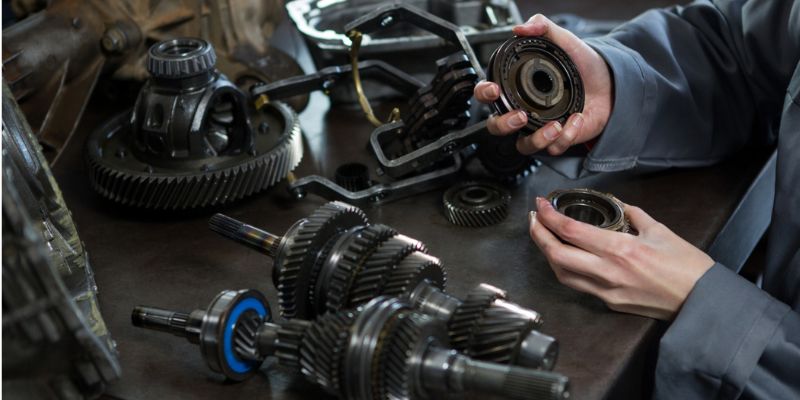
India’s lightweighting market may reach Rs 100 billion by FY31: Equirus
Indian auto-component makers could tap a Rs 90-100 billion lightweighting market by FY31, supported by tighter fuel-efficiency norms, higher vehicle content and exports.
Read moreElectrical & Electronics
TARIL secures first nuclear power order from NPCIL’s Kaiga Units 5 & 6
TARIL has secured its first nuclear power sector order to supply generator transformers for NPCIL’s 1,400 MW Kaiga Units 5 & 6 project in Karnataka.
Read moreRelated Products
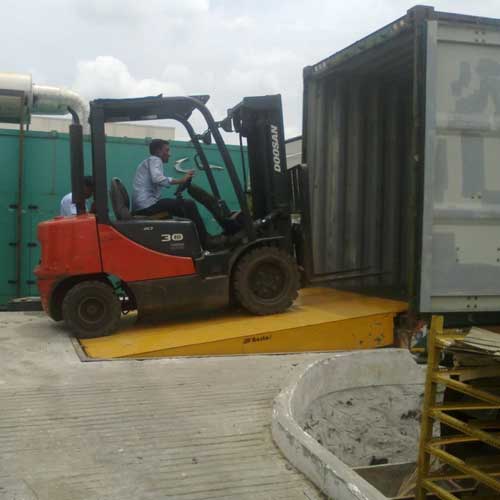
Dock Leveller
MATERIAL HANDLING EQUIPMENT & STORAGE SYSTEMS
Besto Material Handling Equipments offers a wide range of dock leveller.
Multi Tire
MATERIAL HANDLING EQUIPMENT & STORAGE SYSTEMS
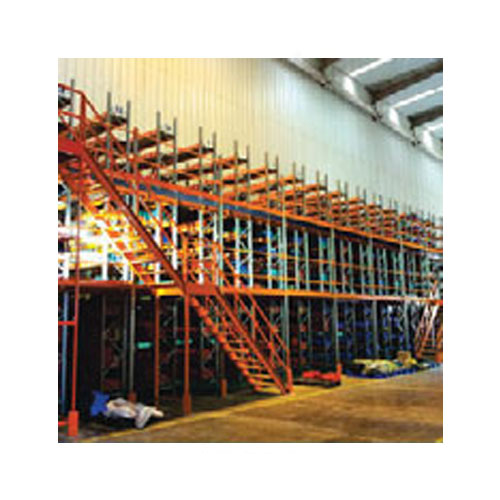
SCI Storage Solution offers a wide range of multi tire.
Industrial Lifting Equipment
MATERIAL HANDLING EQUIPMENT & STORAGE SYSTEMS
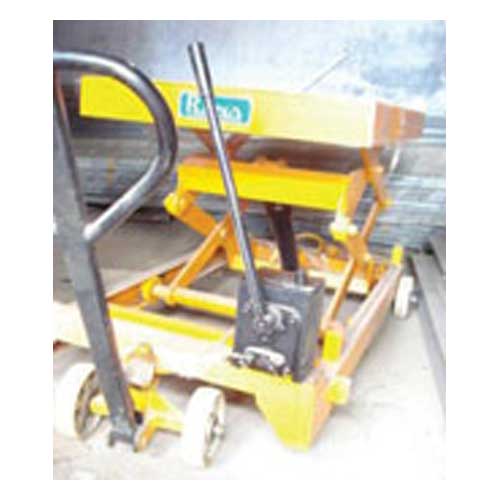
Rana Material Handling Equipments Pvt Ltd offers a wide
range of industrial lifting equipment.
latest News
Subscribe to iNoW

For Industry News on WhatsApp, Give a Miss Call on: +91 84228 74016