




Schedule a Call Back


Automation and mechanisation will co-exist in Indian manufacturing: Vivek Prasad
 Articles
- Dec 01,25
In this interview, Vivek Prasad, Executive Director, Avalon Consulting, explains how AI-led automation is elevating manufacturing efficiency and reshaping the future of smart, competitive production in India.

How is automation—spanning industrial robots, collaborative robots, AI-driven systems, and digital manufacturing tools—reshaping India’s manufacturing landscape?
Industrial automation is not new to India because industries like automotive, consumer durables and pharmaceuticals have been early adopters. India continues to be a labour centric and mechanisation driven market in large parts of the manufacturing sector especially in the SME segment. However, with movements like Make-in-India and China-plus-one which aim to integrate Indian manufacturing into global supply chains, it is expected that changes like automation, industry 4.0 and digitalisation will make an impact through –
- Improved efficiency - given the large capacities that China (and some other countries) have built in many key industries, improving capacity utilisation and throughput are imperative for Indian companies to compete
- Greater Flexibility - being nimble enough to pivot and pursue opportunities as they materialise rather than having to reconfigure from scratch every time is critical while playing catch up in global supply chains
- Better unit economics - offering an economically compelling value proposition is vital to gaining a foothold in global supply chains
- Enhanced sustainability - remaining ecologically responsible while pursuing hyper growth is important given the ambitious environmental targets that India has committed to in the long run
What are the principal barriers that continue to slow down automation adoption across Indian industries?
There are many hurdles that deter the adoption of automation in Indian manufacturing plants. Lack of awareness is one of the most significant hurdles. Most companies have limited or inaccurate information about the extent of impact that automation can have on their operations. The cost benefit analysis generally does not cover all aspects of value or cost. The fact that automation is not a one-size-fits-all-solution but needs to be customised to a specific situation is generally ignored while making decisions.
Some other hurdles include lack of trained resources to support implementation, social concerns due to job loss or redundancy and technical concerns around systems integration of fit-for-purpose equipment
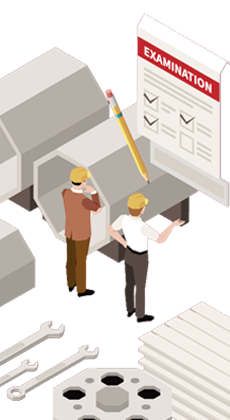
All of these hurdles can be overcome simply by selecting the right partner and building a suitable business case for automation through a structured process of examination and decision making
From both a hardware and software standpoint, what notable automation trends are emerging on Indian shopfloors (overall factory) and machinery level?
Many companies are waking up to the benefits of automation and digitalisation. They are doing the right thing by starting with small proof-of-concepts (PoC)and experiments rather than making grand plans which are difficult to get buy-in for internally. PoCs could include retrofitting equipment with sensors to capture digital inputs, energy consumption monitoring to manage and optimise cost, creating digital twins where there is adequate data to analyse and model outcomes
Digital twins are a powerful method for companies to use historical data to model equipment behaviour as an early warning sign for a variety of issues. This is especially beneficial for companies that have mission critical equipment for which its difficult to create total redundancy.
In your view, what will the next generation of automated factories in India look like?
For industrial automation to really take root in India, the SME segment in the manufacturing sector needs to embrace it. This can happen only when some of the myths surrounding automation like high initial cost, either zero-or-hundred percent and nothing in between, automation translates into job loss, etc. are dispelled.
Various stakeholders in the automation ecosystem (OEMs, system integrators, consultants, users) need to come together to educate customers about the benefits of automation and demonstrate its power through experiments, pilots and business cases. As more and more companies begin to adopt automation in areas where it benefits them, they will realise that automation and mechanisation will co-exist in the Indian manufacturing sector at least in the foreseeable future.
Smart manufacturing
Automation in India
Advanced robotics
AI in manufacturing
Digitalisation
Automation trends
Digital transformation in India
Vivek Prasad
Avalon Consulting
Robotics and automation
Related Stories
Machine Tools & Accessories
AMTEX 2026 and Fastener Fair India to Showcase Next-Gen Manufacturing Technologies
AMTEX 2026 and Fastener Fair India 2026 will bring together 650+ exhibitors and 4,000+ visitors at India Expo Mart, Greater Noida, showcasing advanced manufacturing and fastening solutions.
Read moreAutomation & Robotics
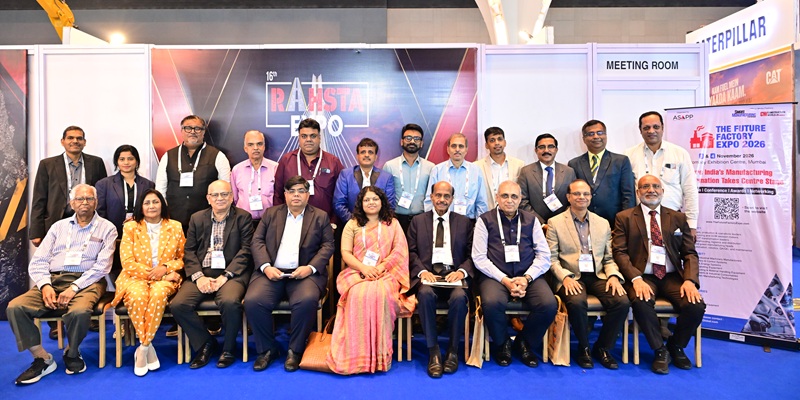
Future Factory Expo CXO Roundtable Charts Smart Transformation for SMEs
During the roundtable, hosted by Smart Manufacturing & Enterprises (SM&E) and The Future Factory Expo 2026, industry leaders outlined how SMEs can use practical digitisation, automation, skilling an..
Read moreAutomation & Robotics
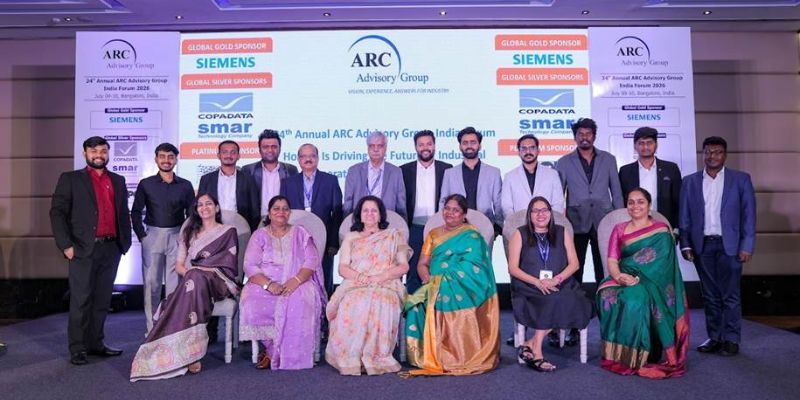
ARC India Forum Spotlights AI-Led Industrial Transformation
ARC Advisory Group’s 24th India Forum brought together 300-plus leaders to examine how AI is transforming industrial operations, manufacturing and supply chains.
Read moreRelated Products
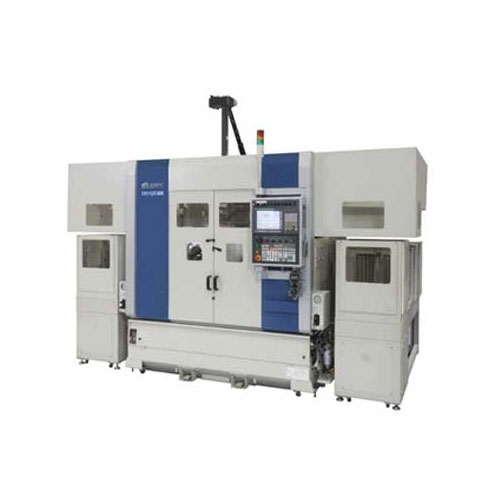
Compact Fmc - Motorum 3048tg With Fs2512
INDUSTRIAL AUTOMATION & TECHNOLOGY CONSULTANCY
Meiban Engineering Technologies Pvt Ltd offers a wide range of Compact FMC - Motorum 3048TG with FS2512.
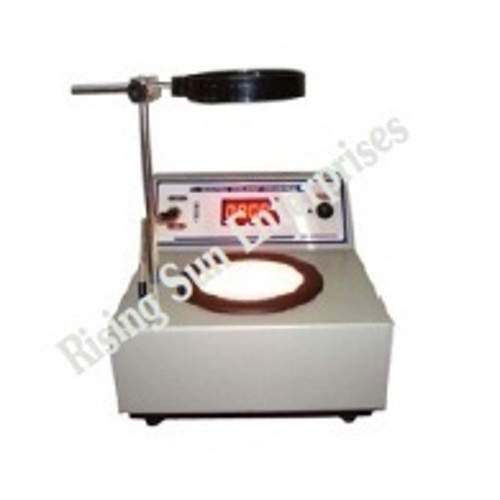
Digital Colony Counter
INDUSTRIAL AUTOMATION & TECHNOLOGY CONSULTANCY
Rising Sun Enterprises supplies digital colony counter.

Robotic Welding SPM
INDUSTRIAL AUTOMATION & TECHNOLOGY CONSULTANCY
Primo Automation Systems Pvt. Ltd. manufactures, supplies and exports robotic welding SPM.
latest News
Subscribe to iNoW

For Industry News on WhatsApp, Give a Miss Call on: +91 84228 74016