





Schedule a Call Back


A premium growth market for motion controls
 Articles
- May 26,26
Humanoid robotics is creating a new growth channel for servo motors, drives and integrated motion systems as deployments move from prototypes to pilots, writes Clara Sipes, Market Analyst, Interact Analysis
Humanoid robots have become one of the most closely watched frontiers in automation, promising a fundamental shift in how machines interact with the physical world. Today, the market remains small and largely confined to proof-of-concept deployments, but momentum is building as companies move toward pilot programs and scalable production. At the same time, advances in AI are accelerating progress, enabling these complex mechanical systems to perform increasingly dynamic, real-world tasks.
Despite all the attention on humanoid platforms, a critical enabler is often overlooked: motion control. Each humanoid robot integrates dozens of servo motors, drives, and control systems, making servo components one of the most direct beneficiaries of future market growth. As a result, motion control demand tied to humanoid applications is forecast to grow at an average annual rate of 102 per cent from 2023 through 2029. While this number is partially driven by a low-base effect, it also signals the early formation of a new demand channel within industrial automation.
Although humanoids have yet to reach large-scale commercial deployment, their evolution from prototype to profitable deployment has the potential to reshape motion control markets in the years ahead.
Small market, fast growth
The year 2025 marked a notable turning point for the humanoid robotics market, with shipments reaching 20,000 units, compared with 2,000 units in 2024. While more than 200 companies are now developing humanoid platforms, real-world deployments (defined as robots actively operating in the field) have only increased to approximately 2,500 units.
The primary challenge for the industry remains commercial deployment at scale. Currently, real-world applications account for a minority of total deployments, with many systems still concentrated in academic, R&D, and pilot-stage environments.
Real-world deployments will unlock a much larger wave of investment from warehouse operators, manufacturers, and commercial users beyond niche research settings. The long-term humanoids forecast indicates that growth will accelerate sharply in the 2030s.

Why motion control matters?
While AI captures much of the attention surrounding humanoid robotics, motion systems remain the foundation that makes them functional.
Because humanoids are designed to replicate human movement, they require a high number of actuated joints across the hands, arms, legs, torso, and neck. We estimate that a typical humanoid robot requires approximately 30 servo motors to achieve full-body actuation.
Beyond motors, motion controllers are essential for coordinating complex multi-axis movement while maintaining safe operation in environments shared with humans. Real-time feedback, synchronised motion, and embedded safety functions are all critical requirements.
These systems must also deliver human-like movement through high torque density, precise speed control, smooth acceleration and deceleration, and efficient operation within a compact footprint. As a result, humanoid robotics will be a premium motion control application, aligning closely with two trends central to premium motion products: integrated motor-drive systems and advanced embedded safety solutions.
Integrated motor-drive products find another high-growth application
Integrated motor-drive products continue to gain market share across the motion control sector. This is particularly the case in robotics applications, where compact design, simplified wiring, and system efficiency are critical. These advantages are especially relevant for humanoid robots, as space constraints, weight reduction, and thermal efficiency directly impact overall performance.
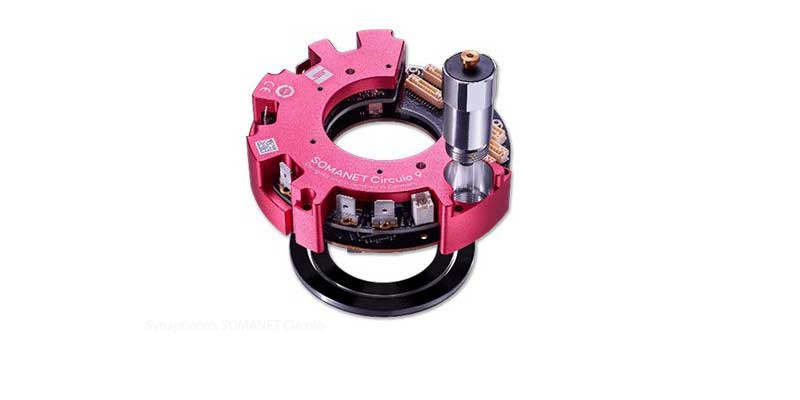
By integrating the motor, drive electronics, encoder feedback, and related functions into a compact architecture, these products are a natural fit within the joints of a humanoid robot.
Synapticon’s Circulo platform (pictured), which combines encoder feedback, braking, and safety functionality into an integrated drive solution, is designed to fit naturally within a robotic joint. Many companies have followed Synapticon’s lead, including emerging Chinese motion control vendor Leadshine, which has taken the concept a step further by integrating it directly into a precision gear unit. By moving early into humanoid-focused architectures, manufacturers like Synapticon and Leadshine may establish valuable positions within proof-of-concept and pilot-stage deployments.
Non-joint centric integrated products are also likely to see increased usage as a result of humanoid growth. Products like Maxon’s IDX integrated motor and drive product have already begun to scale within AGV & AMR applications. Humanoids could very well be a natural extension of that trend. Notably, Maxon, the third largest vendor of <60v integrated motor & drive products, acquired a strategic stake in Synapticon in 2025. This appears to signal where Maxon expects to find growth within integrated products in the future.
Safety functions becomes even stronger
Safety is another increasingly important trend within motion control, and one that is poised to become central to humanoid robotics adoption. As humanoids move into environments shared with human workers, functional safety becomes a baseline requirement for motion systems used in these machines.
Standard functions such as Safe Torque Off (STO) are increasingly becoming standard practice, while more advanced Safe Motion capabilities, such as safe speed monitoring, safe position control, and safe stop functions, are gaining relevance in collaborative environments.
Standards bodies, such as ANSI and ISO, have begun addressing the regulatory framework surrounding humanoid robotics, similar to the way in which industrial robot standards evolved during their pilot phase. However, humanoids remain more difficult to classify under existing frameworks due to their varied form factors, mobility, and potential deployment in non-industrial settings, such as homes or public environments.
A key thing to watch is how existing standards, particularly ISO 10218-2 and related robotic safety frameworks, are updated or expanded to address humanoid systems. For motion suppliers, this creates an opportunity not only to sell higher-value products, but also to differentiate through certification.
Why economic viability is getting closer for humanoids
From an engineering perspective, humanoid robots have progressed beyond isolated prototypes towards increasingly credible proof-of-concept deployments. The next stage for the industry is to demonstrate repeatable return on investment (ROI) in real-world environments.
This progress has triggered an influx of investment from both public agencies and major technology firms, accelerating development cycles across the industry. Increased funding is translating into prototype builds, pilot deployments and early commercial rollouts, each supporting rising demand for motion control products.
As performance improves and costs decline, the path to market viability is becoming clearer. This reinforces long-term forecasts for humanoid adoption and suggests that commercialisation should take place within the forecast outlined in the humanoid robots report.
What’s next?
While the adoption of humanoid robots is still in its early phases, motion control demand is becoming a reality now. Motion control manufacturers should watch this market closely and engage with emerging humanoid OEMs today, as supply chains are established ahead of significant commercialisation.
Companies that move early and establish themselves as reliable partners are well-positioned to benefit from the strong growth expected over the next decade.
About the author

Clara Sipes is a Market Analyst specialising in the Industrial Automation sector. With a degree in International Business and a minor in Risk Management from the McCombs School of Business at the University of Texas at Austin, she leverages a strong academic background and analytical skills to drive insights and strategies in the industry.
Humanoid robots
motion control
servo motors
industrial automation
integrated motor drives
robotic safety
humanoid deployment
servo components
Clara Sipes
Interact Analysis
Related Stories
Machine Tools & Accessories

AMTEX 2026 and Fastener Fair India to Showcase Next-Gen Manufacturing Technologies
AMTEX 2026 and Fastener Fair India 2026 will bring together 650+ exhibitors and 4,000+ visitors at India Expo Mart, Greater Noida, showcasing advanced manufacturing and fastening solutions.
Read moreElectrical & Electronics
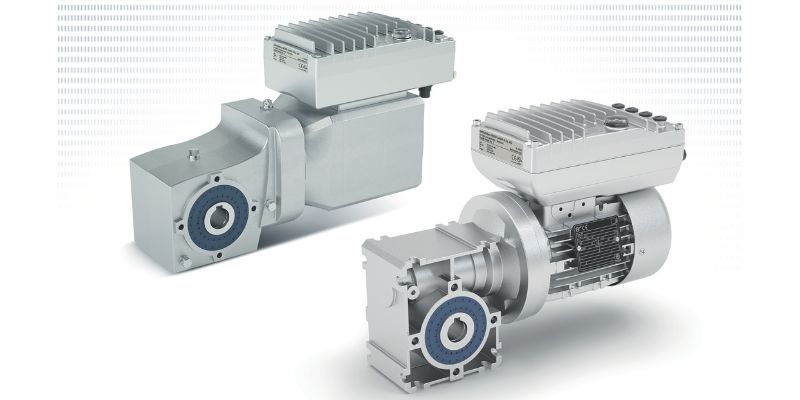
Nordac On Gains Expanded Functional Safety for Automation
Nord Drivesystems has expanded the Nordac On inverter with new safe motion functions for improved control and monitoring in automated production environments.
Read moreAutomation & Robotics

ARC India Forum Spotlights AI-Led Industrial Transformation
ARC Advisory Group’s 24th India Forum brought together 300-plus leaders to examine how AI is transforming industrial operations, manufacturing and supply chains.
Read moreRelated Products
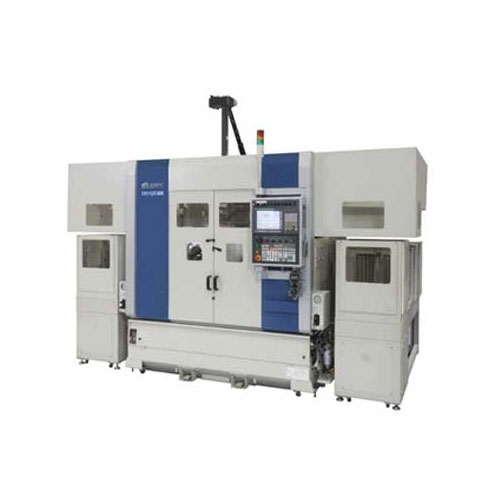
Compact Fmc - Motorum 3048tg With Fs2512
INDUSTRIAL AUTOMATION & TECHNOLOGY CONSULTANCY
Meiban Engineering Technologies Pvt Ltd offers a wide range of Compact FMC - Motorum 3048TG with FS2512.
Digital Colony Counter
INDUSTRIAL AUTOMATION & TECHNOLOGY CONSULTANCY
Rising Sun Enterprises supplies digital colony counter.

Robotic Welding SPM
INDUSTRIAL AUTOMATION & TECHNOLOGY CONSULTANCY
Primo Automation Systems Pvt. Ltd. manufactures, supplies and exports robotic welding SPM.
latest News
Subscribe to iNoW

For Industry News on WhatsApp, Give a Miss Call on: +91 84228 74016