





Schedule a Call Back


Role of Automation in Driving Scalable Manufacturing in India
 Articles
- Mar 27,26
As India strengthens its role as a global manufacturing hub, the focus is shifting from capacity expansion to scalable, precision-driven production. Abhishek Malik, Executive Director, Calcom Vision Limited, explains how automation is transforming manufacturing into machine-led, data-driven systems built for speed, consistency and operational control.

Why Automate?
- Automation drives scalability: Reduces per-unit costs, increases efficiency, and improves quality.
- AI and robotics: Vital in sectors like automotive and LED lighting for high-volume, precision manufacturing.
- India's future competitiveness: Automation plays a crucial role in India’s ambition to become a global manufacturing hub under Atmanirbhar Bharat.
Manufacturing has undergone a structural transformation over the past decade. Activities such as product marking, inspection, assembly, and finishing, once heavily dependent on manual labour, were constrained by variability, limited throughput, and quality inconsistencies. Today, these same functions are increasingly executed through automated systems including laser marking, robotic assembly, and machine-vision inspection.
Automated laser marking, for instance, delivers high-precision output at significantly higher speeds while operating continuously enabling levels of throughput that manual processes cannot sustain. This shift reflects a broader industrial reality: scale in modern manufacturing is driven not merely by workforce expansion, but by systems engineered for speed, repeatability, and operational control.
Current scenario: Scalable manufacturing
Scalable manufacturing refers to the ability to expand or contract production volumes without proportionally increasing costs, complexity, or operational risk. Achieving this demands process standardization, predictable quality outcomes, and real-time visibility across operations. Manual production environments struggle to meet these criteria at scale due to inherent variability and reliance on human intervention. Automation mitigates this limitation by embedding consistency within the production architecture, enabling replication across multiple lines, facilities, and geographies while preserving uniform quality standards.
Economic and workforce transformation
The economic implications of automation extend beyond efficiency gains. As production volumes increase, automation reduces per-unit costs, enhances energy efficiency, and stabilizes operating margins critical advantages in industries characterized by intense price competition and compressed product lifecycles.
Equally important is its impact on the workforce. Rather than eliminating human roles, automation redefines them. Labour increasingly shifts toward supervision, quality assurance, system optimisation, and predictive maintenance. Automated systems also improve workplace safety by reducing exposure to repetitive, hazardous, or ergonomically strenuous tasks. In this context, automation becomes not merely a technological upgrade, but a structural enabler of sustainable industrial growth.
Automation as the engine of industrial scale
Automation replaces variability with precision. Robotics, sensor networks, and software-driven controls enable stable output even as production volumes rise. Globally, manufacturers adopting advanced automation consistently report improvements in productivity, quality consistency, and asset utilisation benefits that compound as scale increases.
In India, this momentum is accelerating. According to the International Federation of Robotics (IFR), India recorded approximately 9,100 industrial robot installations in 2024, reflecting 7% year-on-year growth. This has elevated India to sixth place globally in annual robot installations, positioning it ahead of several mature manufacturing economies and just behind Germany.
Automation and India’s manufacturing ambition
Automation is central to India’s aspiration of becoming a global manufacturing hub under the Atmanirbhar Bharat vision. As global supply chains diversify, India’s competitiveness will increasingly depend on its ability to deliver high-quality, cost-efficient, and scalable production.
Large-scale automation strengthens domestic manufacturing capabilities, reduces dependency on imports, enhances quality compliance for exports, and improves reliability across global value chains. In this sense, automation directly supports India’s objective of building resilient, self-reliant industrial ecosystems capable of serving both domestic demand and international markets.
India’s automation growth: Automotive as a catalyst
The automotive sector remains the principal driver of automation adoption in India. In 2024, automotive manufacturing accounted for approximately 45% of all industrial robot installations in the country. High production volumes, stringent quality benchmarks, and precision requirements in welding, painting, and assembly make automation indispensable for automotive manufacturers operating at scale.
This automotive-led adoption is generating spillover effects across adjacent industries including electronics, electrical equipment, lighting, and energy-efficient products, where similar automation strategies are being deployed to enhance consistency and throughput.
AI, vision systems, and predictive control
Automation today extends beyond fixed, rule-based programming. Artificial intelligence has enabled systems to inspect, learn, and optimize in real time. AI-enabled vision systems can detect micro-defects with a speed and accuracy that surpasses manual inspection, reducing scrap and rework as production volumes expand.
Predictive maintenance further enhances scalability. By continuously analyzing parameters such as vibration, temperature, and performance metrics, predictive models anticipate equipment failures before they occur. This minimizes unplanned downtime, extends equipment lifespan, and allows manufacturers to scale output without proportionate increases in maintenance expenditure or buffer capacity.
Automation in electronics and lighting manufacturing
Precision-intensive sectors such as electronics and LED lighting exemplify automation’s role in scalable production. LED manufacturing requires stringent control over chip placement, soldering integrity, thermal management, optical alignment, and testing parameters. Minor deviations can significantly impact lumen output, efficiency, or product longevity.
Automated surface-mount technology (SMT) lines, robotic assembly systems, and inline optical inspection are now integral to large-scale LED production. High-speed binning and testing based on brightness, colour temperature, and efficiency ensure uniformity across large production batches. Simultaneously, flexible automation enables mass customization. Production lines can transition between different wattages, drivers, optics, and configurations with minimal downtime—allowing manufacturers to maintain both scale and adaptability.
Connectivity, data, and the digital factory
Modern automation is increasingly defined by connectivity. IoT-enabled machinery generates continuous data on yield, energy consumption, cycle times, and defect rates. Integrated with manufacturing execution systems and digital twins, this data allows manufacturers to simulate capacity expansion, identify bottlenecks, and optimize investment decisions before physical implementation. For Indian manufacturers, digital factories present a strategic pathway to scale rapidly while maintaining cost competitiveness and quality reliability in global markets.
Challenges to scaling automation in India
Despite strong momentum, automation scaling in India faces structural challenges. High initial capital expenditure remains a barrier, particularly for small and mid-sized enterprises. The demand for skilled automation engineers, data specialists, and maintenance professionals continues to outpace supply.
Additionally, integrating legacy equipment into connected environments and safeguarding operational technology from cybersecurity risks require long-term planning and investment. Addressing these issues through phased automation strategies, workforce upskilling, and policy support will be critical to sustaining industrial growth.
Conclusion
Automation has become foundational to scalable manufacturing. Across industries, empirical evidence demonstrates consistent improvements in productivity, quality, uptime, and cost efficiency when automation is implemented strategically.
From high-volume industrial production to precision-driven LED manufacturing, automation enables growth that is repeatable, resilient, and globally competitive. As India advances toward its ambition of becoming a leading manufacturing hub, the alignment of automation investments with digital infrastructure, workforce capability, and long-term strategic vision will determine the pace and sustainability of industrial scale.
About the author:

As the Executive Director of Calcom Vision Limited, Abhishek Malik plays a crucial role in shaping the company’s strategic direction and operational efficiency. He has diverse experience, having consulted with the Big4, managed marketing in an LED lighting manufacturing company, overseen retail management in consumer lighting, and most recently co-founded a startup in the automotive space in India.
Abhishek Malik
Calcom Vision Limited
Automation
Industrial Robots
LED Lighting
AI in Manufacturing
Atmanirbhar Bharat
Automotive Manufacturing
Predictive Maintenance
Related Stories
Automation & Robotics

India is a vital market for Schneider Electric: Neil Elliott Smith
In this interview with Rakesh Rao, Neil Elliott Smith, Segment President, Consumer Packaged Goods, Schneider Electric, highlights the company’s solutions for CPG sector and India’s growing influ..
Read moreAutomation & Robotics

Automation to drive India’s manufacturing future: Dr Sanjeev Srivastava
In this interview with Rakesh Rao, Dr Sanjeev Srivastava, Head Industrial Automation, Delta Electronics India Pvt Ltd, highlights the changing dynamics of Indian manufacturing sector and growing imp..
Read moreAuto & Auto Components
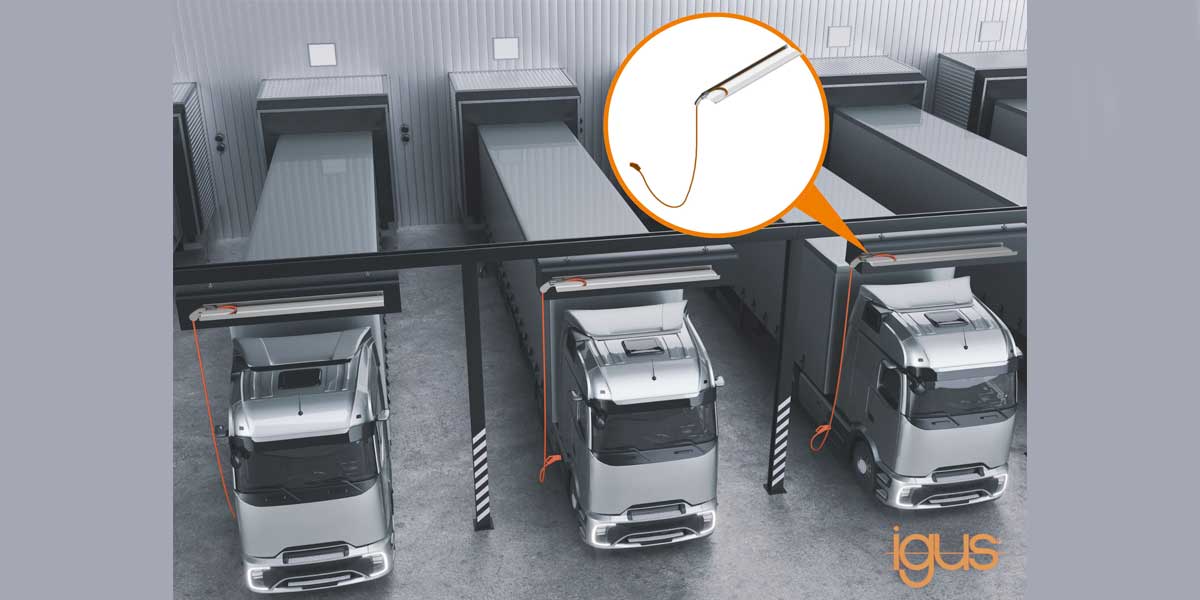
igus Launches Overhead Cable Guide to Ease E-lorry And E-car Charging
igus introduces e-tract horizontal, an overhead cable guide for DC and AC systems, making charging safer, ergonomic, and theft-resistant for electric vehicles.
Read moreRelated Products
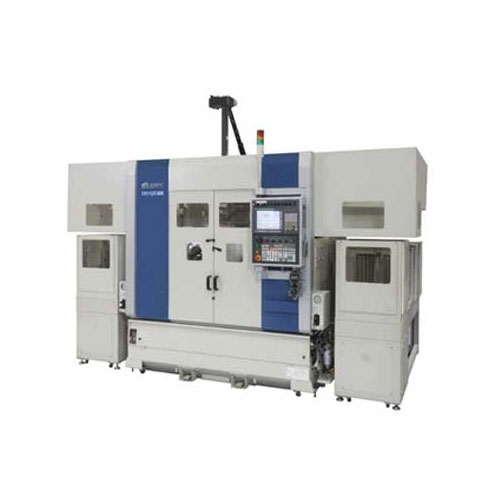
Compact Fmc - Motorum 3048tg With Fs2512
INDUSTRIAL AUTOMATION & TECHNOLOGY CONSULTANCY
Meiban Engineering Technologies Pvt Ltd offers a wide range of Compact FMC - Motorum 3048TG with FS2512.
Digital Colony Counter
INDUSTRIAL AUTOMATION & TECHNOLOGY CONSULTANCY
Rising Sun Enterprises supplies digital colony counter.

Robotic Welding SPM
INDUSTRIAL AUTOMATION & TECHNOLOGY CONSULTANCY
Primo Automation Systems Pvt. Ltd. manufactures, supplies and exports robotic welding SPM.
latest News
Subscribe to iNoW

For Industry News on WhatsApp, Give a Miss Call on: +91 84228 74016