







Schedule a Call Back


Enhancing Industrial AI Integration for Real-World Impact
 Articles
- Mar 28,26
Insights from Raunak Bhinge, Managing Director and Co-founder, Infinite Uptime highlight how industrial AI systems often fail to deliver measurable results, pointing to gaps in contextualization, trust, and integration with operational workflows.

Artificial intelligence in industries is central to the digital transformation of manufacturing. Over the past decade, significant investments have been made in sensors, analytics platforms, and predictive maintenance systems, all designed to predict equipment failures. Despite these advancements, the operational impact of AI investments has been uneven.
A recent study by MIT Sloan Management Review India, in partnership with Infinite Uptime, investigates why many industrial AI projects fail to deliver quantifiable results. According to the report, "The Trust Architecture of Industrial AI: Context and Prediction Accuracy", a structural disconnect exists between AI-generated insights and the decisions made by maintenance and operations departments.
The Detection–outcome disconnect
Today, industrial plants generate more data and alerts than ever before, but improved detection has not necessarily led to improved outcomes. The study finds that 81 per cent of maintenance professionals rate their AI systems as only moderately effective at converting insights into actionable steps. Many predictive systems successfully identify anomalies, but the resulting recommendations are often not acted upon. Without translating alerts into operational decisions, these technologies provide information without measurable reliability improvements.
The contextualisation gap
The study identifies a core issue: the Contextualisation Gap. Many AI models analyse equipment signals without operational context. While they may detect abnormal patterns in vibration, temperature, or acoustic data, these insights often lack visibility into the broader plant environment. The research shows that 62 per cent of organisations run AI models on fragmented or siloed datasets. In 71 per cent of deployments, models lack visibility into safety limits or throughput commitments. Moreover, 59 per cent of plants rely on paper logs or undocumented operational knowledge rather than structured digital maintenance records. When models operate without these critical contextual inputs, their predictions can miss operational realities.
Where the industry stands
The findings suggest the industrial sector is not lagging in AI experimentation but in operational integration. The study identifies three stages of adoption across organisations:
- 35 per cent operate predictive AI systems that generate alerts but cannot prescribe corrective actions.
- 29 per cent have integrated insights into operational workflows but only partially track outcomes.
- 9 per cent have fully integrated prescriptive AI systems into plant operations, where recommendations are always acted upon.
This highlights a significant gap between the capabilities of AI technology and its execution in operations.
Why trust is the real threshold
The study also uncovers a behavioural aspect of AI adoption: trust. AI trust is not built gradually with improved accuracy, but rather when operators see consistent, reliable performance under actual operating conditions. Currently, 44 per cent of participants are neutral about AI systems, neither fully trusting nor rejecting them. This conservative approach stems from the operational risks of relying on unreliable recommendations. False positives, identified by 56 per cent of respondents as the most damaging issue, play a key role in shaping this perception. In complex industrial environments, anomalies often indicate operational changes rather than mechanical faults, and repeated false alerts erode trust in AI systems.
Designing the trust architecture for industrial AI
To address these issues, the study proposes a structured operational framework, "The Trust Architecture of Industrial AI". Instead of focusing solely on predictive accuracy, this framework emphasises transforming insights into operational outcomes.
- The first stage is contextualisation. Plants must integrate sensor data with process variables, operating modes, and historical maintenance records, forming a solid foundation for reliable predictions.
- The second stage is transitioning detection to prescription. Maintenance teams must understand why a failure may occur and what corrective action should be taken. Clear recommendations increase the likelihood that operators will act on AI insights.
- The third stage involves implementation. Recommendations must align with production schedules, safety requirements, and resource availability. Effective systems integrate AI outputs into maintenance processes, allowing human validation and ensuring that insights become operational tasks.
- The final stage is structured validation. Organisations should create clear links between AI suggestions and operational improvements, systematically recording and verifying results at the equipment level. Without validation, AI benefits remain anecdotal, limiting further investment.
Where the system works
The study provides a real-world example of successful AI implementation at Star Cement. The system, integrated across four plants and using 19 existing data sources, delivered impressive results: eliminating 46 hours of unplanned downtime, increasing throughput by 10 tons per hour, improving specific heat use by 920,000 kilocalories, and increasing mean time between failures by 5 per cent. Most notably, 99 per cent of AI-generated prescriptions were processed and confirmed by plant teams, demonstrating the crucial role of trust in AI integration.
The strategic question ahead
The results indicate that the future of industrial AI lies not in algorithm sophistication but in system architecture. AI will deliver quantifiable results when contextualisation, prescription clarity, workflow integration, and outcome validation are prioritised. For organisations already invested in AI infrastructure, the next stage of change will focus on bridging the contextualisation gap and integrating AI insights into operational processes. The true value of industrial AI is not more alerts or dashboards, but the ability to make decisions that enhance reliability, efficiency, and throughput on the plant floor. The next phase of AI adoption will be less about new algorithms and more about building the operational architecture to support them.
About the author:
Raunak Bhinge is the Managing Director and Co-founder of Infinite Uptime, where he leads the development of smart manufacturing and industrial reliability solutions. With a strong background in mechanical engineering, he has contributed to advancing industrial technology through his leadership. Prior to founding Infinite Uptime, he gained valuable industry experience through roles at Cummins Technologies India and various engineering ventures.
industrial AI
predictive maintenance
AI integration
manufacturing technology
operational outcomes
AI trust
sensor data
predictive analytics
Raunak Bhinge
Infinite Uptime
Related Stories
Automation & Robotics
How automation is redefining efficiency in manufacturing
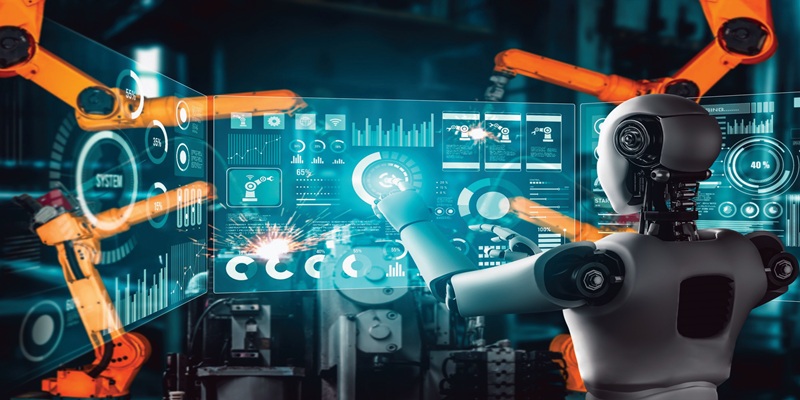
Aayaan Bery, Sales and Global Marketing Director at KSP Inc, says manufacturing efficiency now depends on automation, data visibility, workforce readiness and export competitiveness. Indian manufact..
Read moreAutomation & Robotics

ARC Forum to spotlight Industrial AI in Bengaluru
The 24th Annual ARC Industry Forum in Bengaluru will explore Industrial AI, smart manufacturing, robotics, data centres, digital twins and autonomous operations.
Read moreAutomation & Robotics
Industrial AI funding may touch $1.5 billion by 2030
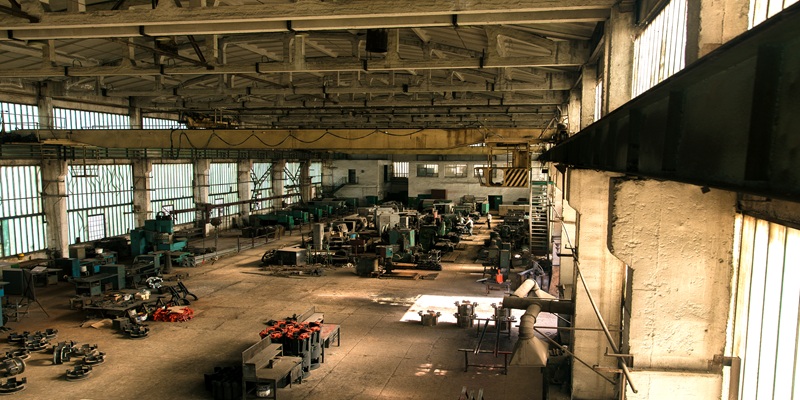
A YourNest-Praxis report says 90 per cent of Indian manufacturers are experimenting with AI, with funding expected to grow ten-fold by 2030.
Read moreRelated Products
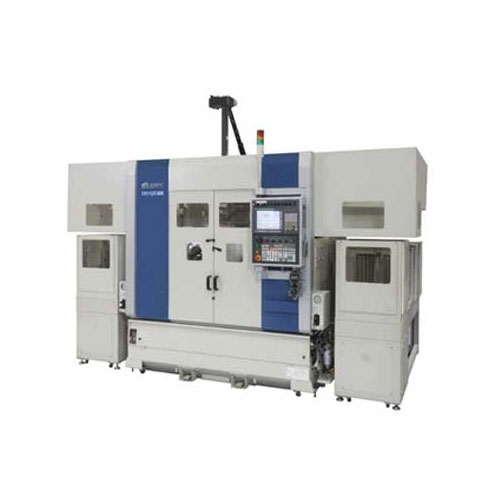
Compact Fmc - Motorum 3048tg With Fs2512
INDUSTRIAL AUTOMATION & TECHNOLOGY CONSULTANCY
Meiban Engineering Technologies Pvt Ltd offers a wide range of Compact FMC - Motorum 3048TG with FS2512.
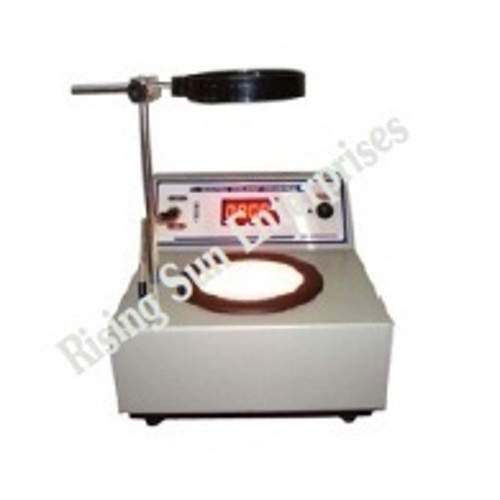
Digital Colony Counter
INDUSTRIAL AUTOMATION & TECHNOLOGY CONSULTANCY
Rising Sun Enterprises supplies digital colony counter.

Robotic Welding SPM
INDUSTRIAL AUTOMATION & TECHNOLOGY CONSULTANCY
Primo Automation Systems Pvt. Ltd. manufactures, supplies and exports robotic welding SPM.
latest News
Subscribe to iNoW

For Industry News on WhatsApp, Give a Miss Call on: +91 84228 74016