



Schedule a Call Back




Best practices to ensure safer work at heights across industries
 Articles
- Dec 02,25
As industries expand infrastructure, ensuring safe work at height is vital. Kamarajan M, Head of Education, British Safety Council, India, outlines essential measures to reduce fall risks and safeguard workers, reinforcing why a structured approach to height-related tasks is critical for modern enterprises.

As the global population continues to expand, nations are allocating significant resources to the development and upkeep of infrastructure. These projects encompass many construction initiatives, including construction and maintenance of buildings, bridges, tunnels, roads, utilities and other civil, mechanical and electrical engineering projects.
The growth in the number of such projects also means more people working at heights and a greater risk of them falling off, often even to their death.
The Health and Safety Executive -- UK’s leading public body responsible for encouraging, regulating and enforcing workplace health, safety and welfare – points out that working at height remains one of the biggest causes of fatalities and significant injuries across the world, more so in construction and real estate business.
As for India, while there are no recent statistics on the number of deaths due to falls from heights, a slightly older study mentions that the biggest reason for fatalities of India’s workers is falling from a height.
What working at heights means
According to the International Labour Organisation, ‘work at height’ means work in any place where, if there were no precautions in place, a person could fall a distance liable to cause personal injury (for example, a fall through a fragile roof down an unprotected lift shaft, stairwells). In other wards, there is no prescribed height beyond which it called as ‘work at height’.
Working at elevated heights is common across various industries, such as construction, wind energy, oil and gas, agriculture, electrical power generation and transportation. Employees in these fields are exposed to high-risk situations, often involving equipment like ladders, cranes, mobile elevated working platforms (MEWP), rope access systems and tower scaffolds.
The inherent nature of these platforms and access equipment increases the potential for workplace hazards although they are well designed and constructed to prevent accident while using them. Contributing factors for such incidents include, a lack of thorough hazard assessment, inadequate supervision (for example, failure to inspect the access equipment before using them every day), deploying incompetent workers who may misuse that equipment for different purposes for whey are not designed for, and improper use of personal protective gear.
Role of employers in minimising cases of fall from heights
Employers must ensure that work at height is carefully planned, adequately supervised, and carried out by competent individuals with the appropriate skills, knowledge, and experience. Providing the right type of access equipment for working at height considering the activities to be performed from it is also crucial in preventing incidents.
Organisations must take a pragmatic approach in considering precautions. Tasks that are low-risk and relatively straightforward will require less rigorous planning, and there might be some scenarios where, based on common sense, no specific precautions are needed. However, an informal dynamic risk assessment right on the job is a pre-requisite for every activity. This is something like taking a decision about when to merge into the traffic when you are waiting in a side road for an appropriate gap between the cars that are plying on the main road. We keep assessing the risk of collision with other vehicles mentally!
Levels of control by employer for work-at-height
Some of you may be familiar with the five-steps of “hierarchy of controls” as applied in the risk management process, viz. elimination, substitution, engineering controls, administrative controls and PPE. However, when it comes to “work at height”, we apply a slightly different approach of hierarchy as indicated below.
Elimination: The top priority for every employer should be to avoid or reduce work at height whenever possible. This may require creative planning and advanced technologies to complete tasks from the ground. Hi-mast lamps with provision for bringing the lamps to the ground level at the press of a button, to carry of maintenance or repair works is a classic example for this. Even precast concrete work and pre-assembly of structural materials are good examples of reducing the need for work at height.
Prevention: When work at height cannot be avoided, the emphasis should be on preventing falls. This can include implementing appropriate engineering controls such as using handrails, edge protections and fall restraint systems (which prevent the person from reaching the edges of the floors).
Minimisation: Minimising the distance and consequences of a fall by utilising the right equipment (safety harness, safety nets, fall arrest systems etc. are good examples) when the risk of falling cannot be prevented, should be another key focus area of employers. Although robust preventive measures exist, the fall risk cannot be entirely eradicated. When faced with such scenarios, mitigating the potential impact of a fall is crucial. This involves implementing specific administrative controls, providing suitable personal protective equipment (PPE), restricting unauthorised access and establishing protocols for emergency responses.
Collective protection measures cover equipment that remains effective without requiring the worker to act for it to be effective. Examples include permanent or temporary guardrails, scissor lifts and tower scaffolds. Meanwhile, PPE refers to equipment that relies on the individual’s actions for effectiveness. An example is correctly wearing a safety harness and the proper connection to a suitable anchor point using an energy-absorbing lanyard.
Here’s a list of specific best practices in the form of Dos and Don’ts that need to be followed by employers while keeping in mind the hierarchy mentioned above:
List of Dos
- Plan to complete as much work as feasible, from ground level.
- Prioritise using scaffolding instead of ladders for working at heights.
- Ensure that workers can access and depart their work areas at height securely.
- Confirm the equipment is appropriate, sturdy, capable of supporting the workload, regularly checked, and well-maintained.
- Take preventive measures when operating on or near fragile surfaces.
- Supply protection against falling objects.
- Think about and have emergency evacuation and rescue procedures in place.
List of Don’ts
- Don’t allow employees exceed the load carrying capacity of any access equipment. Consider the worker’s weight along with the equipment or materials being carried while designing/ choosing the access equipment. Insert a pictogram or label on the ladder depicting information about safe usage.
- Prevent employees from overreaching on ladders or stepladders.
- Place caution signs about fragile surfaces so that employees don’t rest a ladder against those surfaces, such as glazing or plastic gutters.
- Refrain workers from using ladders or stepladders for physically demanding or heavy tasks. Reserve them for light work of short duration, for example, a maximum of 30 minutes.
- Never allow someone who isn’t competent (lacks the necessary skills, knowledge, and experience) to work at height.
Importance of comprehensive work-at-height training
It is essential for anyone working at heights to undergo comprehensive training. This preparation begins with pre-assessments like health evaluations, (tests for acrophobia: fear of heights, epilepsy & vertigo) and specific role-based training for Scaffolders, Scaffold Supervisors and Scaffold Inspectors.
Adequate training provides workers the necessary skills, knowledge, and situational understanding to perform tasks safely and effectively at elevated heights.
In summary
Recognising the essence of working at elevated heights is essential, with safety being the primary concern. Employers must consider risk management, careful selection and maintenance of appropriate tools and regular inspections.
They hold a significant responsibility in nurturing a culture that holds safety as a value rather than trying to prioritise it over other aspects of business. This includes ensuring commitment from senior leaders for providing resources, providing continuous training, and always adhering to stringent safety standards.
About the author
M Kamarajan, Head of Education of British Safety Council, India, has over 43 years of global leadership experience in safety management and ISO compliance. He specialises in safety training, behavioural safety, risk management and process safety across multiple industries. He holds a BE in Mechanical Engineering, key safety diplomas, and professional memberships including Grad IOSH and SEA India. With 17 years in Dubai and work across several countries, he brings extensive international experience in training and audits.
Blurbs: (Use them if required) -- FOR PRINT
The inherent nature of these platforms and access equipment increases the potential for workplace hazards although they are well designed and constructed to prevent accident while using them.
Adequate training provides workers the necessary skills, knowledge, and situational understanding to perform tasks safely and effectively at elevated heights.
Height safety
British Safety Council
Infrastructure safety
MEWP safety
PPE
Safety Matters
Kamarajan M
India
Related Stories
Material Handling Equipment

Five Trends That Will Define the Evolution of Quick Commerce in 2026
Multi-city footprints expanded, service levels tightened, and fulfilment networks scaled from small clusters to nationwide grids.
Read moreOther Industrial Products

Knauf India doubles capacity with new metal line at Khushkhera plant
The increased production capacity is expected to improve the company’s ability to meet rising domestic demand and support a wider portfolio of drywall and ceiling solutions.
Read moreMaterial Handling Equipment

Manufacturing to Drive 46% of Industrial Leasing by 2027: JLL
JLL forecasts manufacturing leasing to reach 34 mn sq ft across top cities.
Read moreRelated Products
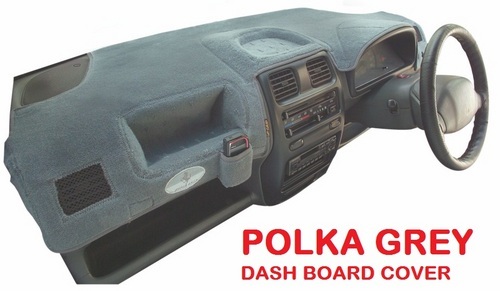
Grey Polka Dash Board Covers
INDUSTRIAL SAFETY & SECURITY SYSTEMS
Elegant Auto Accessories offers a wide range of grey polka dash board covers.
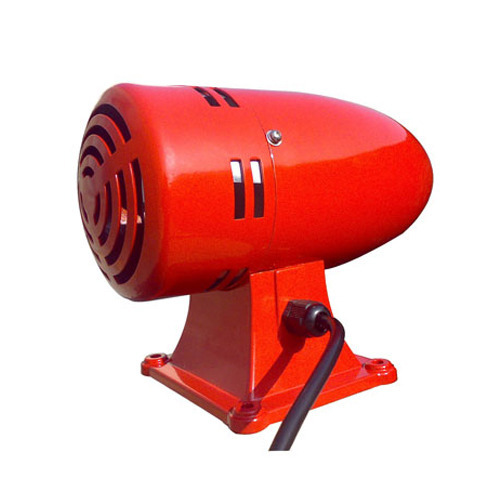
Fire Protection - Industrial Sirens
INDUSTRIAL SAFETY & SECURITY SYSTEMS
Amit Safety Enterprises offers a wide range of fire protection industrial sirens.
Read more
Fire Alarm Sysytem
INDUSTRIAL SAFETY & SECURITY SYSTEMS
Nayakson Security Systems is offering a range of fire alarm, intrusion alarm and gas alarm systems.
latest News
Subscribe to iNoW

For Industry News on WhatsApp, Give a Miss Call on: +91 84228 74016