







Schedule a Call Back


Turning industrial waste into value: A blueprint for sustainable manufacturing
 Articles
- Jun 24,26
In this article, Mahesh Babani, CMD, Privi Speciality Chemicals Ltd, highlights how manufacturers can transform industrial waste and by-products into valuable raw materials, making sustainability a driver of cost efficiency, supply chain resilience and long-term competitiveness.
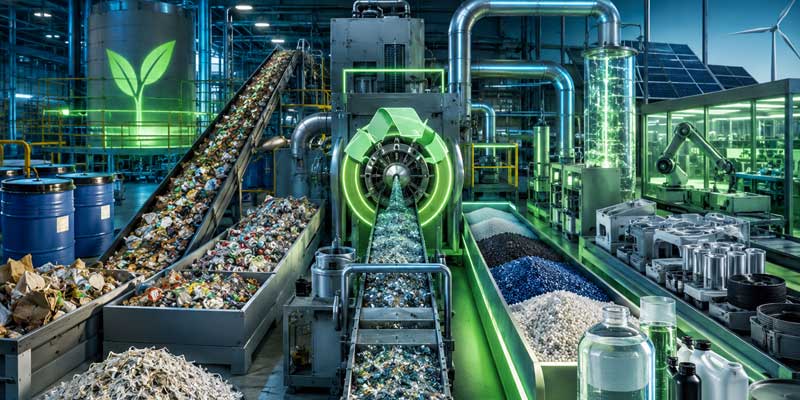
For decades, sustainable practices in manufacturing have mostly been identified with adopting alternative energy sources and responsible consumption. But now, a paradigm shift is taking place that seeks to optimize the use of waste products through reengineering industrial operations.
The aforementioned structural shift is far quieter in nature, and it is taking place within industrial ecosystems. This development is very promising in terms of environmental and economic sustainability in the years to come, especially as companies are now confronted with issues such as shortage of resources and input cost hikes.
As per data available, India generates approximately 62 million tonnes of waste each year. This amounts to only about 43 million tonnes being collected, with almost 12 million tonnes being processed in a scientific manner. However, a huge amount of waste remains unused and, at times, unprocessed. This is an indication that there are serious inefficiencies within the waste management systems, as well as an opportunity waiting to be tapped by industries.
This number is only being accelerated by factors like plastic, electronic, and hazardous waste streams. Considering that the amount of waste will reach 165 million tonnes by 2030, there is an evident need for shifting from a linear to a circular economy approach, since the amount of waste produced is exceeding the capabilities for its disposal.
The traditional linear concept of ‘take, make, dispose’ is simply no longer tenable in this context. Across the globe, more than 90 per cent of materials are single use prior to being disposed of, as stated in the Circle Economy Circularity Gap Report. It shows how entrenched these inefficiencies are within today’s systems of production.
The need of the hour, hence, is the reimagining of industrial processes, where waste is not the end product but the very beginning.
Redefining waste as a source of raw materials
There has been much attention paid to transforming waste generated by industrial processes into reusable sources, a fundamental tenet of sustainable production processes. For instance, the paper and pulp industry generate a significant number of by-products during its processes.
Internationally, this industry generates a considerable amount of by-products including lignin, tall oil, and turpentine, which, despite their chemical capabilities, remain largely underused.
The underutilization is indicative of a wider issue in industrial processes.
In the past, many of these streams have had limited downstream applications and were often treated as low-value or even as disposal challenges. With time, this equation evolved owing to the advances in specialty chemicals processing.
Specialty chemical processing technology has now reached a level where these waste products can now be converted into valuable aromatic chemicals, thus converting low-value products into usable raw materials. Waste can be rethought and turned into a resource from a liability.
By applying deep domain expertise and technological innovation, these by-products can be transformed into high-value aroma chemicals and key ingredients used across fragrances, personal care, and household products. It is all the more pertinent given that we live in a time when the global aroma chemicals industry is estimated at over $ 5 billion and growing.
By taking advantage of waste-based raw materials to meet the increasing demands of such markets, one can make positive contributions environmentally as well as economically. This entire approach will not only reduce the environmental burden but will also unlock new economic value from existing resources.
Building structural competitiveness
Most perceive sustainability as a cost center. However, when executed well and thoughtfully, it has the potential to become a source of enduring competitive advantage. One of the most advantageous and compelling aspects of converting industrial byproducts into usable and reusable materials is the impact it has on the cost structures.
By leveraging alternative feedstocks derived from industrial waste streams, manufacturers can significantly reduce dependence on volatile raw material markets. This has become increasingly relevant given the rising unpredictability of costs due to global disruption in logistics and politics, according to the World Bank. The situation arises because of greater cost predictability, accomplished via alternative sources of materials, becoming an increasingly important competitive advantage in price-sensitive sectors.
This will eventually lead to lower and more predictable input costs, enabling long-term contracts and pricing stability. In a sector where margins are often sensitive to fluctuations in raw material prices, such structural advantages can be transformative. More so, backward integration into these alternative supply chains enhances visibility and control, further strengthening operational resilience.
Collaboration between responsibility and profitability
The ultimate key to the widespread adoption of sustainable practices is, as most perceive it to be, a trade-off between environmental responsibility and economic viability. However, it is the circular manufacturing models that challenge this exact idea. When waste from one company can be reused by another, organizations will be able to cut costs, reduce emissions, and at the same time generate revenue.
This is consistent with the wider global estimates indicating that adopting the principles of the circular economy could generate economic gains worth up to $ 4.5 trillion by 2030, according to the Ellen MacArthur Foundation. This only underscores the belief that sustainability-driven models are both sustainable and scalable from an economic perspective.
With the help of this model, sustainability and responsibility are no longer an obligation; it becomes a collaboration between these two, making it a profitable way of doing business. It shows that environmental accountability is no longer a choice made at the expense of profit, but rather a catalyst for it.
Circularity builds resilience in uncertain markets
Uncertainty is looming over the global supply chain at the moment, with factors like geopolitical shifts, resource constraints, and climate-related disruptions contributing to the market volatility. Circularity becomes a safeguard against these impending risks.
When manufacturers diversify their input sources and decide to include recycled or by-product-based materials, they reduce reliance on single-origin raw materials. Such diversification serves as an essential element in reducing supply risks and maintaining continuity, especially within industries reliant upon internationally traded raw materials.
This not only mitigates supply risks but also enhances margin stability over time.
Importance of sustainable sourcing
Often invisible to the end customer, aroma chemicals play a vital role in everyday products. From soaps and detergents to the finest of perfumes, it is used in almost any and every daily-use product. As global FMCG and fragrance companies intensify their sustainability commitments, the sourcing of these ingredients is coming under greater scrutiny.
Regulations such as EPR, implemented by organizations such as the Ministry of Environment, Forest and Climate Change, are putting pressure on firms to ensure traceability and accountability during the entire life cycle of the product, thus making sustainable sourcing not just an option but a necessity.
There is a clear and growing preference for suppliers who can demonstrate environmentally responsible practices, traceable supply chains, and reduced carbon footprints. Sustainable sourcing has moved past being a simple differentiator; it is fast becoming a baseline expectation.
Worth it or not?
The transition towards sustainability in the manufacturing sector does not come without its set of challenges. It requires a lot of investment towards technology, reconfiguration of supply chains, and a willingness to rethink established practices.
Yet, in an environment where industries face pressures in terms of costs, regulations, and supply chains, such investments have come to be seen not as luxuries but as important means of gaining competitive advantages.
Although if contemplated well enough, all of these initial complexities are later outweighed by the long-term benefits of sustainable practices. It is enlightening to witness companies recognizing that sustainability and profitability are deeply interconnected.
The new world is one in which volatility reigns, and where resource limits constrain. It follows that value creation through waste is not just a luxury, in fact, it will soon be a necessity in manufacturing.
About the author:

Mahesh P Babani is the Chairman & Managing Director of Privi Speciality Chemicals Ltd. With over three decades of experience, he is the pioneer in establishing Indian aroma chemical industry.
Circular economy
sustainable manufacturing
industrial waste
waste valorisation
specialty chemicals
sustainable sourcing
resource efficiency
supply chain resilience
aroma chemicals
industrial by-products
Mahesh Babani
Privi Speciality Chemicals
Related Stories
Smart Manufacturing
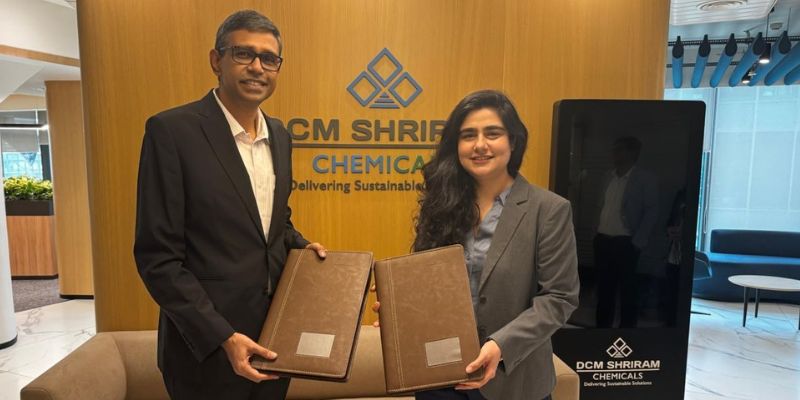
DCM Shriram Partners Serentica for 58 MW Hybrid Renewable Project
The project will supply renewable power to DCM Shriram Chemicals’ Bharuch plant and raise the company’s total renewable energy capacity to 176 MW peak.
Read moreAutomation & Robotics
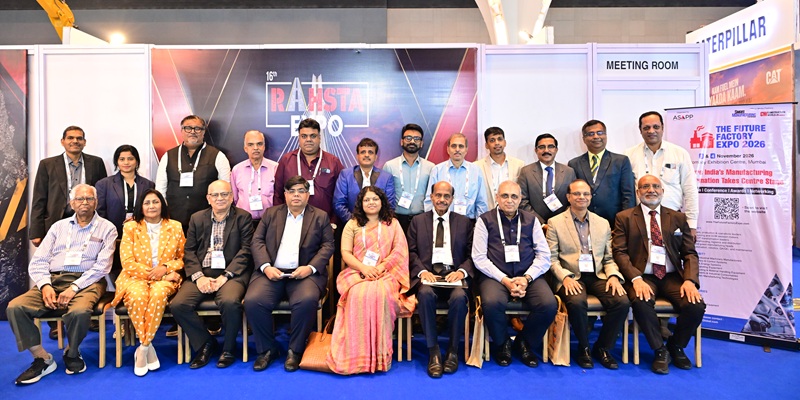
Future Factory Expo CXO Roundtable Charts Smart Transformation for SMEs
During the roundtable, hosted by Smart Manufacturing & Enterprises (SM&E) and The Future Factory Expo 2026, industry leaders outlined how SMEs can use practical digitisation, automation, skilling an..
Read moreSmart Manufacturing

Hitachi Vantara’s Norman Plant Named WEF Lighthouse Facility
Hitachi Vantara’s Norman manufacturing site has earned WEF Lighthouse status for using AI to reduce lead times, inventory and carbon emissions.
Read moreRelated Products

Fanless Industrial Pc for Smart Manufacturing
Smart Manufacturing
CONTEC Launches BX-M4600 Series - Fanless Industrial PC for Smart Manufacturing.
latest News
Subscribe to iNoW

For Industry News on WhatsApp, Give a Miss Call on: +91 84228 74016