






Schedule a Call Back


SMEs at the Automation Crossroads
 Articles
- Jun 24,26
As Indian SMEs face rising pressure on quality, productivity and traceability, automation is becoming both a challenge and a necessity, writes Ashlin Rajan.
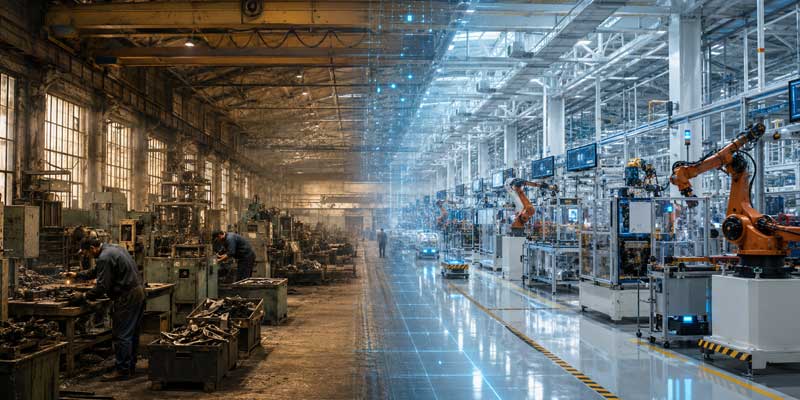
In many Indian SME factories, the most powerful machine is not always the most expensive one on the shop floor. It is often the operator who knows which sound signals trouble, which old machine needs a slight adjustment before a batch begins, which supervisor can push an order through, and which workaround keeps production moving when systems fail. For decades, this human memory has kept factories alive. It has also made them vulnerable.
That is the paradox at the heart of automation adoption in small and mid-sized manufacturing enterprises. SMEs are not unaware of automation. They are curious, interested and increasingly under pressure to adopt it. They know that customers are asking for better quality, faster delivery, traceability and transparency. They also know that competitors are investing in machine monitoring, digital quality systems, predictive maintenance, energy dashboards, sensors, robots, cobots and connected production platforms. Yet, when the time comes to act, many hesitate.
The hesitation is not always irrational. For an SME owner, every rupee invested must be justified. A new machine can immediately look like added capacity. An automation system, by contrast, may first appear to be an invisible layer of cost. Its value lies in reduced downtime, better utilisation, consistent quality, lower rejection, improved energy use, traceability and data-led decisions. These benefits are real, but they demand belief, discipline and a different way of managing the factory.
That is why automation for SMEs is not merely a technology story. It is a business story. It is a people story. It is a leadership story. And, increasingly, it is a survival story.

From manpower dependence to measurable operations
Indian manufacturing has traditionally been people-centric. Many operations have depended on individuals who carry process knowledge in their heads. One person understands a machine. Another understands maintenance behaviour. Someone else knows why a batch failed. This model works as long as operations are stable, people stay, customers remain patient and competition is manageable. But manufacturing is no longer operating in that comfort zone.
Business expansion, workforce mobility, export expectations, customer audits and demand for visibility are changing the rules. Manufacturing companies are now expected to produce with repeatability, document what happens on the shop floor, and provide evidence of quality. This is where automation and industrial IoT are beginning to matter deeply.
A younger set of entrepreneurs, directors and CEOs is entering manufacturing businesses. They are more exposed to technology, more willing to experiment and more comfortable with data-led decision-making. This has increased the pace of adoption over the past few years and is likely to make the shift even sharper in the coming years.
Automation is no longer limited to robots. The newer understanding of automation includes machine monitoring, sensors, digital quality management, predictive maintenance, AI-driven analytics, energy management, warehouse management, digital documentation and production visibility. In other words, automation is moving from being a machine-level intervention to becoming an operating philosophy.
“Automation is the foundation of smart manufacturing,” says Sunil Mehta, Assistant Vice President, Mitsubishi Electric India Pvt Ltd. This is an important distinction for SMEs. As he indicates, a smart factory is not built overnight. It begins with making the invisible visible: machine downtime, energy consumption, cycle time, quality deviation, operator dependency, inventory gaps and maintenance behaviour. Once these are measured, improvement becomes possible.
Are SMEs really slow, or simply cautious?
The common perception is that SMEs are slow to adopt automation, it has more layered reality. Some small and mid-sized manufacturers are indeed still dependent on traditional methods. Many continue to use old technologies, semi-automatic machines and legacy equipment that has been running for 20 or 30 years. They may also be unsure about available solutions, initial costs, ROI and the right implementation partner.
At the same time, size alone does not determine automation readiness. Mid-sized firms may actually be in a better position to adopt change than large enterprises. Their operations are comparatively smaller, and once a solution works, it is easier to extend it across the organisation. Large companies, by contrast, often deal with multiple plants, varied cultures and complex internal systems.
“It is not the size that decides whether a company will go for technology,” says Arvind Tilak, CEO, Ascent Intellimation Pvt Ltd. This insight matters because it reframes the debate. The real question is not whether SMEs are too small for automation. The question is whether they are clear about their pain points, ready to measure losses, willing to involve people, and disciplined enough to scale gradually.
For many SME owners, automation still appears as capital expenditure rather than a productivity investment. The fear is understandable. If a manufacturer has to choose between buying a new machine and investing in automation, the new machine looks easier to justify. It visibly increases capacity. Automation, however, asks the owner to believe that existing assets can perform better if monitored, connected and optimised.
That shift requires maturity. As Arvind Tilak observes, companies need a digital champion who can explain how digitalisation can unlock value from machines, processes and people already inside the factory.
The ROI dilemma
Cost remains one of the biggest concerns in SME automation. Sunil Mehta points out that many small and mid-sized manufacturers are confused about available technologies, the initial cost involved and the return on investment. In many cases, proof of concept projects are initiated but not taken forward because the cost appears high or the shop floor does not accept the solution. The ROI question must be framed differently. The issue is not only how much automation costs. It is also how much inefficiency costs.
Machine downtime, micro-stoppages, excess energy consumption, inconsistent inspection, poor planning, avoidable rejections, reactive maintenance and manual documentation all carry a cost. But because many SMEs do not measure them properly, these losses remain hidden. Automation becomes attractive only when these losses become visible.
Manoj Barve gives a practical example: basic IoT sensors on critical machines can track uptime, downtime, cycle time and OEE. When a plant owner discovers that a machine believed to be running at high utilisation is actually losing time due to changeovers and stoppages, the case for automation becomes easier to understand.
In many manufacturing operations, energy consumption is a major production cost. Simple power meters connected to dashboards can reveal which machines consume the most power, where non-production consumption is occurring, and where compressed air or steam is being wasted. Quality automation can deliver similar clarity. Manual inspection depends heavily on human consistency, while machine vision and inline inspection can improve repeatability, especially in sectors such as precision engineering, packaging, electronics assembly and pharmaceuticals.
In this sense, automation does not begin with robots. It begins with measurement.
Start where pain is greatest
SMEs should not begin with a grand ambition to automate everything. The practical route is to identify the area where the pain is sharpest and the outcome is measurable.
Productivity is the most common starting point. Once productivity is discussed, related themes automatically enter the conversation: machine uptime, energy use, people, quality, maintenance and output consistency. Productivity becomes the anchor because it connects directly to business results.
Maintenance is another strong starting point, many SME factories still operate reactively. A machine breaks down, then maintenance begins. But when predictive or proactive maintenance is introduced, downtime can be reduced and productivity can improve. Machine monitoring and asset maintenance, therefore, become early use cases for digital adoption.
Quality is another area where automation can deliver visible gains. An example could be an auto-component supplier integrating machine vision systems on lighting assembly lines, replacing manual visual checks and improving defect detection accuracy. Such examples are important because they show measurable business value rather than abstract technological ambition.
The role of automation in hazardous and repetitive operations. Where workers perform physically difficult, repetitive or unsafe tasks, automation can improve both productivity and working conditions. In such cases, workers are more likely to see technology as support rather than threat.
Warehouse management and logistics are also emerging areas. Automation can help small and medium industries manage inventory more efficiently. For manufacturers working with demanding customers, traceability across production and supply chain is becoming just as important as output.
The legacy machine challenge
One of the most practical challenges for SMEs is infrastructure. Many small and mid-sized factories run machines that are 20 or 30 years old. These machines were not designed for smart manufacturing. They may not easily provide data, connect to modern platforms or support real-time dashboards.
This does not mean they must be discarded immediately. Sunil Mehta suggests that retrofitment and the addition of factory automation products can help bring legacy machines into a digital environment. The first step is to study old and semi-automatic machines, understand whether data can be captured, and decide whether upgradation is possible. In some cases, machines may need to be replaced. In others, sensors, controllers or interface devices can help extract useful information.
Selecting the right automation partner is critical. SMEs are often sceptical about choosing solution providers, especially when multiple automation vendors, system integrators and start-ups are offering different products. Trust becomes a major factor. Manufacturers need partners who understand their operations, budget limitations and long-term goals. The relationship cannot be limited to installation. It must include handholding, training, maintenance and scaling.
There is also the issue of integration, automation cannot work well if it is layered over undisciplined processes. Clean data, standard operating practices, trained operators and management commitment are essential. Without these, even good technology can fail.
Upskilling, not displacement
The fear of job loss is real. SMEs often have a large worker base, and automation can be perceived as a threat. “Robotics should empower, not replace, human potential”, says Naresh Nagarwal, CEO and Cofounder, CNN Robotics. Automation should not be positioned as replacing people. It should be positioned as reducing repetitive, hazardous and low-value tasks while creating the need for higher-value skills.
This is where leadership communication becomes essential. The message from the CEO or owner matters. If employees believe automation is being introduced at their cost, they will resist. If they see that technology protects them from difficult tasks, improves quality, strengthens the company and helps retain customers, acceptance becomes easier.
Arvind Tilak stresses that companies will still need people; in fact, advanced systems require more skilled people to operate, maintain and interpret them. The current workforce must therefore be upgraded, updated and upskilled. Not everyone will make the transition, but those who do can benefit from new roles.
The workforce conversation, therefore, must be honest. Automation will change jobs. It will reduce dependence on certain manual practices. But the alternative — losing orders because the factory cannot meet modern expectations — is far more dangerous.
Leadership mindset decides the pace
In many SMEs, the owner’s mindset determines the speed of automation. Small and mid-sized companies are often owner-driven. If the owner believes in automation, the organisation moves. If the owner is doubtful, projects remain stuck at discussion or proof of concept. Top management must define the objective, allocate the budget, understand the expected outcome and involve the right teams. Without leadership clarity, automation becomes a scattered experiment.
At the same time, implementation must be bottom-up. The factory team must be involved in actual deployment, feedback and adoption. This combination, strategic direction from the top and practical execution from the shop floor, is central to success.
“Plan top-down and implement bottom-up,” says Arvind Tilak. This principle is especially important for SMEs because resources are limited. A failed automation project can create long-term scepticism. A successful small project, however, can build confidence across the organisation.
Companies should begin by asking basic questions: What problem are we trying to solve? Is it downtime? Quality rejection? Energy consumption? Labour dependency? Traceability? Inventory inaccuracy? Maintenance delay? Once the problem is defined, the investment becomes easier to justify.
Big-bang automation is the wrong route
Automation should not be treated as a one-time transformation. SMEs do not need to automate an entire factory at once. In fact, doing so may increase the risk of failure.
Automation should be treated as a continuous improvement programme. This means automation should be approached as a series of small, validated investments. Identify a pain point. Quantify current losses. Implement a pilot. Measure results. Scale gradually. Repeat.
To define the objective, allot a budget and adopt step-by-step automation or smart manufacturing solutions on the shop floor. The idea is not to chase technology for its own sake, but to build capability steadily. This is perhaps the most practical advice for SMEs. A factory does not become smart by declaration. It becomes smart when one process after another becomes measurable, connected and reliable.
A manufacturer may start with 10 critical machines instead of 100. Another may begin with energy monitoring. A third may digitise maintenance records. A fourth may introduce machine vision in one inspection area. Each success creates internal confidence and strengthens the business case for the next investment.
Affordability is changing, but awareness is still low
Automation is becoming more affordable, low-cost automation solutions are available. Modular platforms, subscription-based technologies, retrofit options and shared infrastructure models can reduce entry barriers. Yet many SMEs are not fully aware of what is possible.
Some SMEs still assume Industry 4.0 requires a fully automated factory. This misconception delays adoption. In reality, meaningful improvements can begin with basic sensors, dashboards, machine monitoring, energy tracking, digital work instructions and quality systems.
Manoj Barve also refers to cluster-based collaboration as a route to affordability. SME clusters can jointly invest in shared inspection equipment, ERP systems, prototyping facilities or testing infrastructure. This approach can reduce individual cost and improve access to technologies that may otherwise appear expensive.
Government schemes and technology upgradation programmes can also help reduce the investment burden, but awareness and accessibility remain important. SMEs need advisory support, neutral guidance and practical demonstration environments where they can test technologies before making large commitments.
Data is the foundation of competitiveness
The road to automation begins with data. Without clean, reliable data, advanced analytics, AI or machine learning cannot deliver value. This is a critical warning for SMEs that want to leap directly into advanced technologies without building the foundation.
Data must be captured from machines, quality processes, maintenance systems, inventory, energy consumption and production schedules. Paper-based records limit visibility. Manual reporting can be delayed or inaccurate. Digital systems allow management to see what is happening in real time.
“The next frontier is not just automated machines but intelligent factories — where every machine, sensor, and process generates data that drives better decisions,” says Naresh Nagarwal.
Once data is available, it can support productivity improvement, maintenance planning, quality control, energy management and supply-chain transparency. It can also help internal stakeholders see the value of automation. The shop-floor operator, supervisor, plant head and board can all work from the same reality rather than different perceptions.
Traceability is becoming non-negotiable
For many SMEs, traceability may become the biggest driver of automation. It is a critical requirement. Customers increasingly want to know how a product was made, when it was made, which batch of raw material was used, what process conditions were followed and who inspected it. This is especially relevant for automotive, auto components, pharmaceuticals, medical devices, electronics and export-oriented manufacturing.
Without digital systems, traceability becomes difficult. Manual records may not satisfy demanding customers. If a company cannot provide production visibility, quality visibility or logistics visibility, it risks losing orders to competitors who can.
Arvind Tilak makes this point strongly a customer in Europe may want to know when a part was produced in Pune, when it will be shipped, how it will move and when it will arrive. This requires supply-chain integration, not just machine automation.
Automation, therefore, is becoming a market access tool. It is no longer only about internal efficiency. It is about credibility with customers.
Productivity and quality are linked
Automation improves productivity, but its deeper value lies in consistency. Indian manufacturers may produce something very good, but the next batch may or may not be equally good. The challenge has been repeatability — ensuring that the next batch is equally good, and the batch after that too.
Automation helps reduce variation. It improves process discipline, quality consistency and reliability. It also reduces dependence on individual skill in areas where repeatability is critical.
This is important for global competitiveness, that manufacturers in India are competing with suppliers in other manufacturing economies. Quality, delivery reliability and cost must be benchmarked globally.
“The factories that will succeed in the next decade will not necessarily be those with the most robots, but those that most effectively combine people, processes, and technology,” says Manoj Barve.
This line captures the real spirit of SME automation. The goal is not to create a robot-heavy factory for appearance. The goal is to create a reliable, measurable, scalable and competitive manufacturing system.
The role of robots and cobots
Robots and cobots are part of the automation conversation, their adoption remains relatively low in Indian SMEs. This is not surprising. Robots require careful application selection, process stability, safety planning and financial justification.
Robots and cobots can help SMEs produce better quality products and improve shop-floor conditions. Repetitive operations, hazardous tasks, heavy loading, confined-space work and precision handling are potential areas. Cobots may also be easier to introduce in certain environments because they can work alongside humans.
Still, SMEs should not begin with robots just because automation is being discussed. The right sequence depends on business need. In many cases, machine monitoring, energy management, digital maintenance and quality automation may deliver faster results. Robots should be adopted where the process case is strong.
Building the right partner ecosystem
SMEs often struggle to select the right automation partner. The market has many product suppliers, system integrators and start-ups, and small and mid-sized industries are often sceptical when selecting the right partner. Some manufacturers are unsure whether to trust new solution providers. Others complete proof of concept projects but fail to move into implementation.
This highlights the need for long-term partnerships. According to Sunil Mehta, an automation partner must understand the manufacturer’s legacy machines, process constraints, budget limits and workforce readiness. The partner must also support training, integration and scaling.
For SMEs, vendor selection should not be based only on product cost. It should be based on fit, reliability, service support, domain understanding and ability to deliver measurable outcomes. A low-cost system that the shop floor does not use is still a failed investment.
The next three to five years
Indian SMEs are entering a defining period. Automation is becoming essential across sectors such as automotive, auto parts, printing, plastics, textiles, pharmaceuticals, food and beverage, water purification and distribution, data centres, electronics manufacturing and warehouse management. He also links automation adoption to India’s ability to attract manufacturing investment, particularly from Japan and Europe.
Automation is not only improving productivity and quality but also helping reduce the cost per product. It is making Indian manufacturing more reliable and competitive in domestic and overseas markets.
“Automation in today’s scenario is essential and necessary. It is now affordable and scalable,” points Sunil Mehta. For SMEs, the road ahead must be systematic, they need to define priorities, assess legacy equipment, identify measurable pain points, involve workers, choose reliable partners, allocate budgets and build data capability. They must also invest in skill development. Engineers, diploma holders, operators and supervisors must be trained to work with connected systems, dashboards and digital workflows.
India needs more industrial IoT engineers, automation commissioning specialists and manufacturing data professionals. SMEs can partner with polytechnics, ITIs and engineering colleges in their regions to create practical training pipelines. This will be essential if automation is to move beyond pilot projects.
From fear to confidence
Automation adoption in SMEs is not blocked by one challenge. Rather in different ways, it is slowed by many: cost concerns, ROI uncertainty, lack of awareness, legacy machines, workforce hesitation, poor internal data, shortage of technical skills, fear of disruption and confusion in selecting technology partners.
But none of these barriers is permanent. Each can be addressed through clarity and sequencing.
Start small. Measure the problem. Involve the shop floor. Prove the value. Scale gradually. Build skills. Strengthen data. Treat automation as a journey.
This is the path that can make automation practical for SMEs. It does not demand that every factory become fully automated overnight. It asks manufacturers to stop accepting inefficiency as normal. It asks owners to see technology as a way to unlock value from existing assets. It asks workers to move from manual dependency to higher-value skills. It asks managers to replace assumptions with evidence.
The future of SME automation will not be decided only by machines, sensors or software. It will be decided by the willingness of manufacturers to change how they think about productivity, people and competitiveness.
For Indian SMEs, automation is no longer a distant ambition. It is becoming a necessary discipline for survival, competitiveness and growth. As Naresh Nagarwal puts it, “India is no longer just a low-cost manufacturing destination; it is becoming a smart manufacturing hub. And automation is the engine driving that change.”
automation in SMEs
SME manufacturing
smart manufacturing
industrial automation
MSME automation
factory automation
Industry 4.0
Sunil Mehta
Manoj Barve
Arvind Tilak
Ascent Intellimation
Mitsubishi Electric
BVMW
Ashlin Rajan
Related Stories
Smart Manufacturing
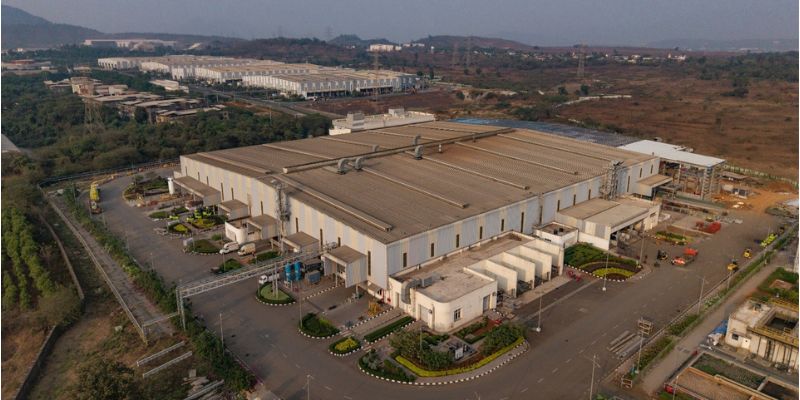
Godrej MHE begins operations at advanced Khalapur manufacturing facility
The facility will produce up to 6,000 material handling units annually, scalable to 15,000, for domestic and export markets.
Read moreAutomation & Robotics

Yaanendriya Raises Rs 150 million to Scale Indigenous Navigation Systems
The deep-tech company will strengthen R&D, accelerate product development and expand high-precision navigation systems for mission-critical applications.
Read moreOther Industrial Products
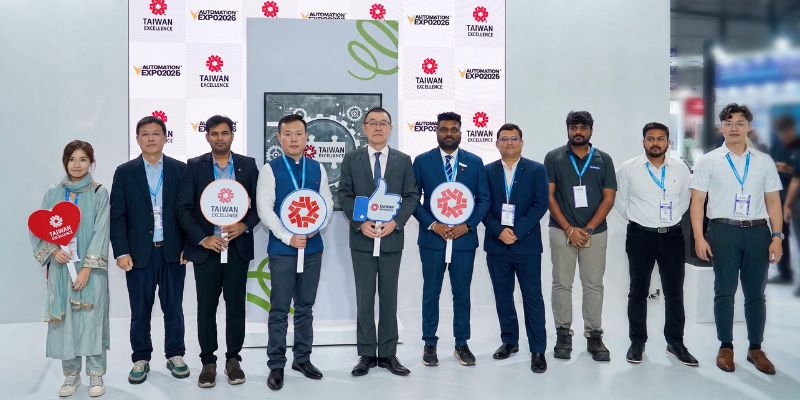
Taiwan Excellence showcases AI-powered manufacturing solutions at Automation Expo 2026
Taiwan Excellence showcased 55+ industrial innovations from 22 Taiwanese brands at Automation Expo 2026, highlighting AI-driven solutions for India's smart manufacturing growth.
Read moreRelated Products
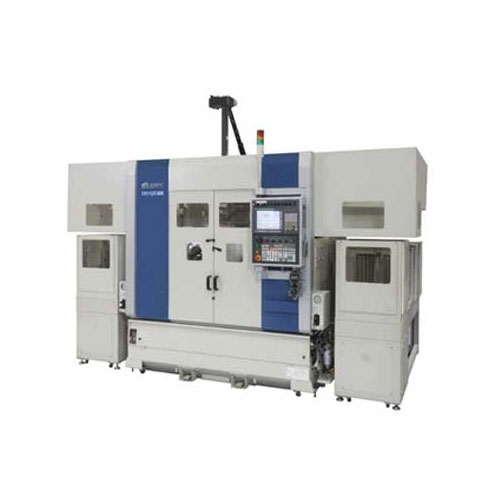
Compact Fmc - Motorum 3048tg With Fs2512
INDUSTRIAL AUTOMATION & TECHNOLOGY CONSULTANCY
Meiban Engineering Technologies Pvt Ltd offers a wide range of Compact FMC - Motorum 3048TG with FS2512.
Digital Colony Counter
INDUSTRIAL AUTOMATION & TECHNOLOGY CONSULTANCY
Rising Sun Enterprises supplies digital colony counter.

Robotic Welding SPM
INDUSTRIAL AUTOMATION & TECHNOLOGY CONSULTANCY
Primo Automation Systems Pvt. Ltd. manufactures, supplies and exports robotic welding SPM.
latest News
Subscribe to iNoW

For Industry News on WhatsApp, Give a Miss Call on: +91 84228 74016