





Schedule a Call Back


India expects more automation in measurement: Venkat Srinivasan
 Articles
- Jun 25,26
India’s test and measurement industry is moving towards automation, analytics and local manufacturing, Venkat Srinivasan, COO, Trimaster Metrology Group, shares key industry insights with Ashlin Rajan.
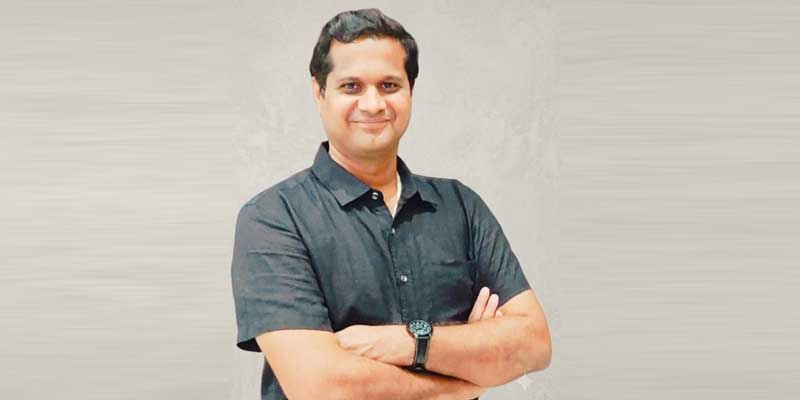
Can you give us a brief overview of the company, the key test and measurement solutions you offer, and the growth of these areas?
The company is part of the Trimaster Metrology group and offers various high-precision measurement solutions. Traditionally, many of these products were imported, as India often played second fiddle in the highest precision measurement technology compared to some countries abroad. However, as of this year, in collaboration with Aberlink UK, we have started manufacturing one product line in Pune.
Trimos India, is our oldest company. It is a separate joint venture with Trimos of Switzerland, which is a world leader in certain classes of measuring equipment. For most of the companies we represent, we function as a master distributor for India. Since this is very high-precision equipment, we also provide complete lifetime support. Most of this equipment lasts 15–20 years at the client’s site, and we maintain full support for the product throughout that period.
What are the main types of tests your equipment supports, and how do they help manufacturers improve product quality?
Primarily, we specialise in dimensional inspection. Measurement can include various parameters such as dimensions, temperature, pressure, force and brightness, but our focus is on dimensional measurement.
Dimensional measurement is essential across manufacturing. Every product that is manufactured requires some level of dimensional verification. For instance, in a vehicle, the wheel sits on an axle. The diameter of the axle and the diameter of the bearing on the wheel must be precisely matched for the wheel to function as designed. If this is not controlled properly, it could result in a rough ride or, in the worst case, have catastrophic consequences.
Even in something as simple as a pen, the cap snaps onto the pen because of dimensional control. Every manufactured product we touch, see and use in day-to-day life involves some form of dimensional verification. We build precision measuring instruments, and the equipment that our company supplies, manufactures and maintains is used across almost all sectors of manufacturing.
Which quality parameters are most critical for manufacturers today, and how does your equipment help measure them?
When it comes to dimensional measurement, there are basic parameters such as the size of a hole or the distance between two features. In addition to these, geometric dimensioning has become very important over the last 30–40 years.
Another area that has developed tremendously is Industry 4.0. Today, customers want data analytics from measuring instruments. Earlier, an instrument would have a screen, the measurement would be taken on the machine, and the reading may have been noted down on paper. Today, customers want that data transferred to a server or mobile device. They also want analytics and statistical information built on that measurement data.
How are automation and AI being used in your testing systems, and what impact do they have on speed, accuracy and efficiency?
When it comes to automation, there are different classes of measuring instruments. There will always be a place for simple, non-automated measuring instruments because they have a certain simplicity and are also low cost. The basic digital vernier caliper will never go out of fashion because, for some things, it is still the quickest way to take a measurement.
One example is the coordinate measuring machine, or CMM. There are manual CMMs and automatic CMMs. With CNC automation, the machine can control the motion speed of the probe much better than a human can. This tremendously improves the repeatability of measurements. With manual systems, there can be slight deviations in measurement, but with automated systems, the results are much tighter.
Another aspect of automation is online error correction. There is also automation in terms of simple pick-and-place systems. Sometimes, there is a lot of effort involved in loading and unloading components on instruments. In high-volume scenarios, customers find it valuable to automate component handling.
When it comes to AI, I would say that in metrology and measurement, AI is still very much at an early stage. Implementation is just beginning. It is more about imagining the next wave of instruments.
Looking ahead, I believe that in the next 15–20 years, the basics of measurement may remain the same, but the way users interact with measuring instruments will change completely. Today, if you want to program a CMM, you have to open the software, go through menus, click various options and follow certain procedures. In the future, I envision that users will be able to talk to a CMM and give it voice instructions. The machine would understand the instruction, carry out the scripting in the back end and build the code automatically.
Today, measurement reporting is quite complex and requires experts who understand design, engineering drawings, manufacturing science, dimensioning and tolerancing. Report generation is also a time-consuming task in manufacturing plants.
How are your solutions different from others in the market?
Many measuring instruments in the market are sold by companies that are primarily based abroad. For a complex instrument, it is critical to have handholding, assistance and training so that customers can get the best value from the machine.
One of the ways our company has made a difference is through our presence. We have a presence that is arguably larger than any other measuring instrument company in the country. We are present in 16 cities, from Coimbatore in the south, with customers as far south as Tuticorin, to Ludhiana in the north, and from Rajkot in the west to Jamshedpur in the east. We have engineers residing close to customer sites.
One of the key differentiators for our company is the service support and technical support we provide, which extends the life of the instrument.
What industry trends are currently increasing the demand for test and measurement equipment?
One major trend in India is the growing expectation of automation in measurement. The other is the growing expectation around data analytics related to measurement data. These are the two broad trends: demand for automation from customers, and demand for analytics and reporting related to quality measurement data.
Historically, India was viewed as a low-cost labour country, so automation was not considered very important. People would rather spend on more people to handle a process manually than invest in automation. But that is changing now. Our labour costs are slowly increasing, and we are no longer as low-cost as we were 20 years ago. For all these reasons, there is growing demand for automation, as well as for analytics and reporting related to quality measurement data.
What sectors are you focusing on, how do you serve them, and which sectors are seeing the fastest growth and demand?
We are privileged to represent some of the world’s leading products in India, including companies such as Trimos, Vert and Silvac. These products are used in almost every sector of manufacturing.
In the automotive sector, we have customers from Tata Motors and Mahindra to Tier 3, Tier 4 and Tier 5 suppliers, as well as small SMEs that are just starting to supply to the automotive sector. We also have a presence in aerospace and in the growing defence sector. Several ordnance factories, HAL and DRDO labs use our equipment. We cater to pharma-related manufacturing as well in manufacturing of capsules, syringes and other discrete equipment related to medical and pharmaceutical applications.
We also serve the energy sector, where there is manufacturing related to valves, compressors. In the construction sector, we work with companies that manufacture earthmoving equipment, mining equipment and related products.
The fastest-growing sectors for us in the last two to three years have been mobile phone-related manufacturing, aerospace and defence procurement. Semiconductors are also slowly becoming an area of focus for the Indian government, and we are working on how to cater to that sector.
How do you see your company’s growth in the coming years? Are there any expansion plans?
We are a growing company. I would say we will be able to grow at least 20–25 per cent year-on-year for the next three to four years. That is our vision.
We have a very strong growth forecast because there is tremendous growth in Indian manufacturing. New products are coming, and we have also grown our portfolio in terms of products that are in demand right now.
Step by step, we have been growing our infrastructure. We have just set up a new experience centre and plant in Pune. We are in the process of setting up a new experience centre in Bangalore. Delhi and Ahmedabad are the next stops. We are actively investing in all these areas, both in infrastructure as well as team growth.
We have also set up a new software business venture, and that unit will look at some of the AI opportunities in measurement. That is another area where we will be making investments.
Dimensional measurement
Precision metrology
Test and measurement
CMM automation
Data analytics
Industry 4.0
Quality inspection
AI in metrology
Venkat Srinivasan
Trimaster Metrology Group
Trimos India
Ashlin Rajan
Related Stories
Automation & Robotics
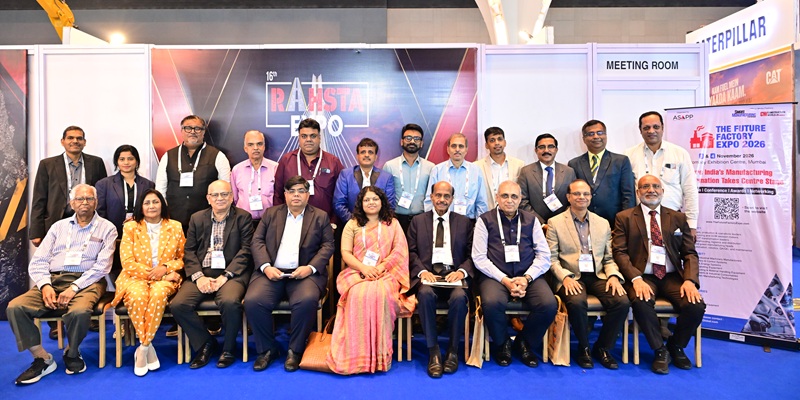
Future Factory Expo CXO Roundtable Charts Smart Transformation for SMEs
During the roundtable, hosted by Smart Manufacturing & Enterprises (SM&E) and The Future Factory Expo 2026, industry leaders outlined how SMEs can use practical digitisation, automation, skilling an..
Read moreAutomation & Robotics
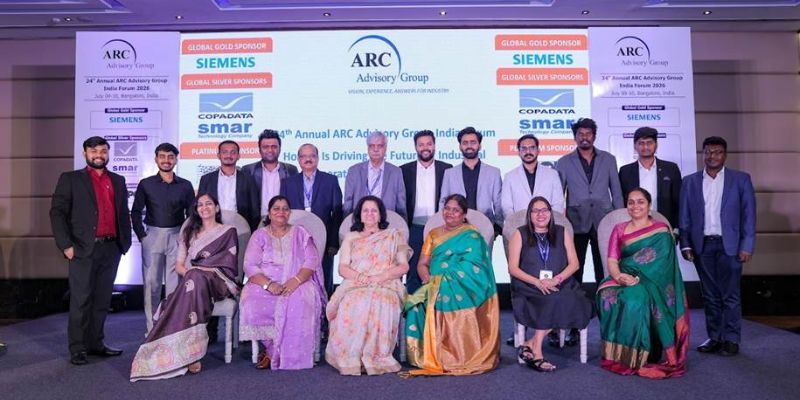
ARC India Forum Spotlights AI-Led Industrial Transformation
ARC Advisory Group’s 24th India Forum brought together 300-plus leaders to examine how AI is transforming industrial operations, manufacturing and supply chains.
Read moreSmart Manufacturing
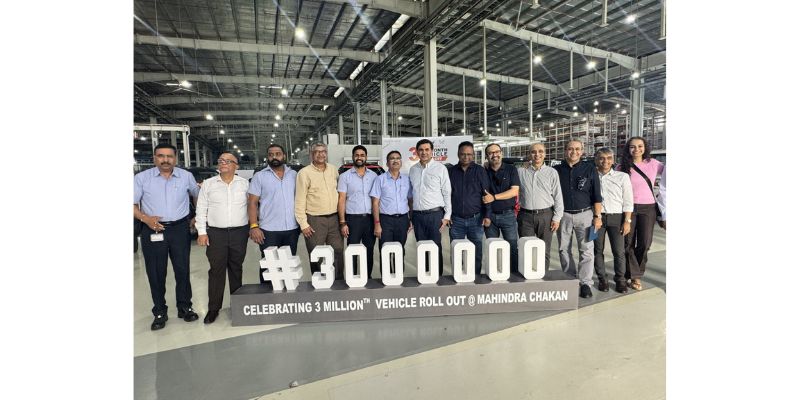
Mahindra’s Chakan Plant Crosses 3 million Vehicle Milestone
Mahindra’s Chakan facility has crossed three million vehicles, with the BE 6 marking its evolution into a flexible, digitally enabled hub for ICE and electric mobility.
Read moreRelated Products

Relay Test Plug
TEST & MEASURING INSTRUMENTS
JVS Electronics Pvt Ltd offers a wide range of relay test plug- JRTP
Read more
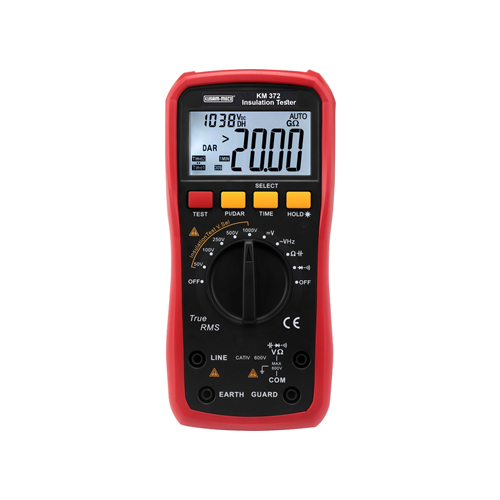
Kusam-meco” 1000v Dc Hand Held Digital Insulation Resistance Tester - Model- Km 372
TEST & MEASURING INSTRUMENTS
Kusam-Meco has added a new hand-held digital insulation resistance tester cum digital multimeter for the convenience of electricians.
Kusam-meco” 1000v Dc Hand Held Digital Insulation Resistance Tester
TEST & MEASURING INSTRUMENTS
Kusam Electrical Industries Ltd offers Kusam-Meco” 1000V DC hand held digital insulation resistance tester - Model- KM 372.
latest News
Subscribe to iNoW

For Industry News on WhatsApp, Give a Miss Call on: +91 84228 74016