



Schedule a Call Back


For the foreseeable future, multiple fuels will coexist and grow: Farrokh Cooper
 Articles
- Dec 19,25
In this conversation with Rakesh Rao, Farrokh Cooper, CMD, Cooper Corporation, shares his views on manufacturing, technology and the road ahead.
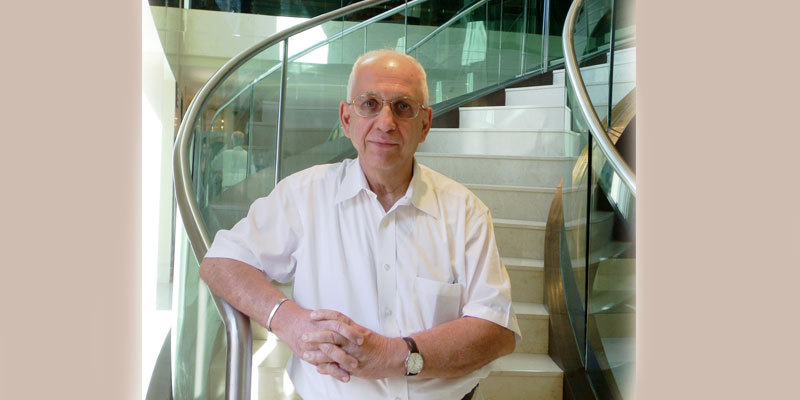
Cooper Corporation Pvt Ltd (established in 1922) has evolved from a Satara-based foundry with agricultural roots into a diversified manufacturer of components, engines, gensets and tractors with a strong export footprint. With Farrokh Cooper, Chairman & Managing Director, at the helm since 1968, Cooper Corporation has witnessed an unprecedented growth in the last more than five decades. Despite geopolitical uncertainties, he remains confident about India’s competitiveness, technology adoption and talent base. In this conversation with Rakesh Rao, Farrokh Cooper shares his views on manufacturing, technology and the road ahead.
Cooper Corporation has a legacy of over 100 years. What were the strategic decisions that helped your company to become a global engineering brand?
People often ask how this journey happened. It has really been a combination of instinct, hard work, ambition and, importantly, working with good people. Integrity and financial discipline have been critical. You must move with the times, know what you do not know, and bring in people who do.
Our major milestones include entering exports, developing our own engines and, more recently, launching tractors. I am an agriculture graduate who moved into engineering, so it was natural for us to build on our long-standing reputation in the agricultural sector.
My grandfather, Sir Dhanjishah Bomanji Cooper, was the first Prime Minister of the Bombay Presidency in 1937 and was manufacturing diesel engines and iron ploughs as early as 1922. That legacy meant our name was already known in farming circles. We grew first as an auto ancillary, then decided to stand on our own feet by developing both components and finished products.
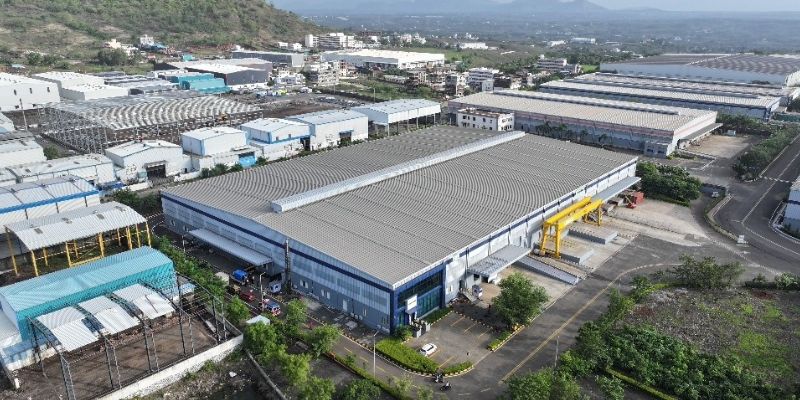
Today we operate 12 factories in Satara, including four foundries and multiple machine shops. Rural development remains a priority for the government, and agriculture will never be neglected because, without farmers, the country cannot function. That fundamental truth has supported our growth in engines, gensets and now tractors.
When did you enter tractor manufacturing, and what is unique about your offering?
We entered tractor production with the inauguration of our manufacturing plant in Satara in February 2025. The tractor has been developed in collaboration with leading global engineering firms: Magna Steyr for design, Ricardo UK for engine development, Carraro for transmission and Mita for hydraulics.
The Cooper tractor is tailored for Indian farming conditions and is designed to offer superior fuel efficiency, lower service and operating costs, and reliable performance. It reflects our belief that we must offer something different and better than the competition if we want to sustain long-term growth.
R&D has always been one of your strengths. How has it helped you build the company?
You have to continuously challenge your assumptions and stay ahead of technology. R&D is about implementing technology in a way that gives customers something they are not getting elsewhere—whether in a component, an engine, a genset or a tractor.
If you can offer a tangible advantage over your competitors, you will always find a place in the market. That is the guiding principle behind our investments in design, testing and manufacturing capability.
What are your current priorities in R&D and new product development?
We are focusing on developing more tractor variants, new-generation engines and higher-value components. Our aim is to build highly robotic factories and to work with different fuels.
We have a partnership with Sinfonia Technology of Japan to manufacture the ‘Daimon’ genset, India’s first CPCB IV+ certified 10 kVA LPG genset, for both Indian and global markets. We have already entered the American market with our products. India is a large country with strong demand, a sizeable pool of skilled yet cost-competitive labour and many favourable factors. Those who genuinely want to build something here can do so.
How do components, engines and tractors contribute to your revenues?
Components currently form the largest share of our business. Engines also contribute significantly, and tractors are a newer but growing line. Our aim is eventually to have components and engines contributing roughly equally, with all three segments—components, engines and tractors—growing together.
Cooper Corporation is a key player in diesel engines. How do you see the future of diesel, given the rise of electric and other alternatives?
Diesel will remain, petrol will remain, gas will remain and electric will also grow. There is space for all of them. No single technology is going to eliminate the others.
Electric has its advantages, especially in urban environments, but there are questions around how clean it truly is once you consider power generation, as well as battery disposal and charging infrastructure. In a large country like India, with frequent disruptions such as floods, availability of power for large-scale charging is a real issue.
Electric vehicles will certainly help reduce pollution in big cities and will add a new dimension to the market, but they will not completely replace conventional fuels. Hydrogen is also a promising fuel, although we are not yet manufacturing hydrogen engines. For the foreseeable future, different fuels will coexist and grow.
What are your main export markets, and how important are exports to Cooper Corporation?
We export primarily to the UK, Europe and the United States, and we are now entering the Japanese market. Exports account for around 50–60 per cent of our business.
Regarding recent US tariffs on certain Indian goods, they are very specific in terms of product categories. Our current product portfolio is not affected by these measures.
Given global uncertainties—political, economic and trade-related—how do you manage export-related risks?
Some of the business that was going to China is now shifting to India. That is a major opportunity. If you have the latest technology, sound management and integrity, you can succeed even in uncertain times.
Uncertainty will always exist. What matters is whether you choose to magnify the negative factors or focus on the positive opportunities. There are always challenges, but there are always solutions as well.
How has the manufacturing landscape in India changed over the last decade, especially on the shop floor?
Earlier it was more difficult to operate. In recent years, the government has provided strong encouragement to industry and infrastructure, creating a very different environment.
On the shop floor, we now have more than 100 robots, and much of the material handling and other physically demanding work is mechanised. New technology has reduced hard manual labour and improved productivity. There is a lot that is positive in the system; everything is not negative, contrary to what you might imagine from reading the news.
Automation is increasing across Indian manufacturing, and we are investing heavily in it. AI is also becoming useful in optimising processes and decision-making.
Skill availability is often cited as a challenge. Do you face such issues in Satara?
We do not face a shortage of skilled manpower. We have a large number of long-serving employees, and being based in a rural region, we provide employment to people from the surrounding areas.
There are plenty of ITIs, diploma institutes and engineering colleges in and around Satara, so sourcing skilled workers is not a problem for us. In fact, the greater challenge is saying “no” to people because many want to work with us.
What emerging trends do you believe will shape the future of manufacturing, and is India ready to tap these opportunities?
AI, digital and computerised technologies will be central to making life easier and more productive for people. Aspirations and living standards are rising, and people want a better quality of life.
India is fully capable of tapping these opportunities. We are becoming a strong competitor to other countries as more work moves here. In many respects—including in sectors such as healthcare—India offers services that are competitive with, or better than, those abroad.
Defence manufacturing is a key emerging area. What is your presence in this segment?
We have a significant presence in defence. A large number of our engines are supplied to various defence applications, and our products are used by the Army, Navy and Air Force. The defence forces themselves select our engines based on their requirements.
What are your growth plans for Cooper Corporation over the next five years?
Our growth will come from all three pillars—engines, tractors and components. We prefer not to publicly share detailed projections, but we are targeting healthy growth in the range of 30–40 per cent.
We are expanding into new markets, including Japan, and we are a debt-free company that ploughs back its profits. I am 81 years old and have been working for 60 years; experience teaches you to stay optimistic. There is a saying: you smile and the world smiles with you; you weep and you weep alone. We choose to keep smiling and building.
Cooper Corporation
Farrokh Cooper
Rakesh Rao
Engines and tractors
Indian manufacturing
Automation and robotics
Diesel and alternative fuels
Defence engines supplier
Export-driven engineering
Related Stories
Automation & Robotics
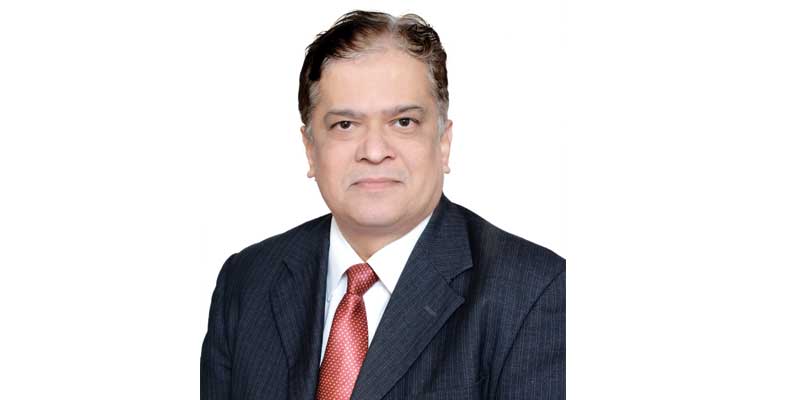
Next 3–5 years will define Indian manufacturing: Manoj Barve
Manoj Barve, Head - BVMW India, highlights how automation is helping Indian manufacturers move from labour-intensive operations to data-driven, globally competitive factories by combining people, pr..
Read moreAutomation & Robotics
The workforce must be upgraded, updated and upskilled: Arvind Tilak
In this interview with Ashlin Rajan, Arvind Tilak, CEO, Ascent Intellimation Pvt Ltd, explains why automation is no longer a large-company privilege, how mid-sized manufacturers can adopt it practic..
Read moreAutomation & Robotics
Robotics should empower, not replace people: Naresh Nagarwal
In this interaction, Naresh Nagarwal, CEO and Cofounder, CNN Robotics, discusses how automation, robotics, AI and smart manufacturing are helping Indian manufacturers improve quality, productivity, ..
Read moreRelated Products

Automotive Oil Pump
AUTO COMPONENTS & ACCESSORIES
Kalpak Auto Pvt Ltd offers a wide range of
automotive oil pump.
Tata Motors unveils facilities for development of Hydrogen propulsion tech
AUTO COMPONENTS & ACCESSORIES
Tata Motors, India?s largest automobile company, unveiled two state-of-the-art & new-age R&D facilities for meeting its mission of offering sustainable mobility solutions. The unveilings constitute of Read more
Tata Motors plans petrol powertrain for Harrier and Safari SUVs
AUTO COMPONENTS & ACCESSORIES
Tata Motors is in the process of developing a new petrol powertrain for its premium sports utility vehicles, the Harrier and Safari, as confirmed by a senior company official. Currently, these models Read more
latest News
Subscribe to iNoW

For Industry News on WhatsApp, Give a Miss Call on: +91 84228 74016