








Schedule a Call Back


Automation is the base for smart manufacturing: Sunil Mehta
 Articles
- Jun 24,26
With Mitsubishi Electric’s experience in factory automation, Sunil Mehta, Assistant Vice President, Mitsubishi Electric India Pvt Ltd, speaks to Ashlin Rajan on how automation is reshaping Indian manufacturing and enabling MSMEs to scale smartly.

How is automation reshaping operations across Indian manufacturing today?
Automation is changing the way Indian manufacturing companies operate. It is increasing productivity, improving quality and consistency, and reducing the cost of production.While earlier automation was primarily adopted to improve productivity, today manufacturers are investing in automation to build resilience, enhance flexibility, and remain globally competitive. One of the most significant shifts we are witnessing is the movement beyond isolated machine automation towards integrated, digital manufacturing ecosystems. Manufacturers are increasingly connecting shop-floor equipment with software platforms through Industrial IoT, edge computing, SCADA systems, AI-driven analytics, and cloud-based monitoring solutions. This is enabling real-time visibility into production, predictive maintenance, energy moni toring, and faster, data-backed decision-making.
Adoption is also broadening across sectors. While industries such as automotive and electronics have traditionally been early adopters, automation is now seeing rapid uptake in segments such as pharmaceuticals, food & beverage, logistics and warehousing, water treatment, data centres, textiles, and plastics. Policy initiatives are playing a crucial role in accelerating this transformation. Government programmes such as Make in India, Production Linked Incentive (PLI) schemes, the National Policy on Electronics, and the broader push towards Industry 4.0 are encouraging both domestic and global manufacturers to establish advanced manufacturing facilities in India. These initiatives, combined with investments in industrial corridors and semiconductor manufacturing, are creating strong momentum for technology-led manufacturing growth.
At the same time, automation adoption in India is evolving pragmatically. Rather than pursuing full-scale automation, many manufacturers are adopting a phased approach—focusing first on high-impact areas such as quality improvement, traceability, energy efficiency, and workforce safety. This approach allows organisations, particularly SMEs, to achieve measurable returns while gradually building digital maturity.
Are SMEs and MSMEs still slow in adopting automation and smart manufacturing technologies? What are the key reasons behind this slower pace?
Adoption of automation and smart manufacturing among SMEs and MSMEs is growing, but the pace varies across businesses. Key factors include awareness of available technologies, investment priorities, integration considerations, and the need for a clear ROI. As many SMEs are owner-led, technology adoption is often influenced by the leadership's long-term vision. Encouragingly, as automation solutions become more accessible and scalable, more SMEs are recognising their value in improving productivity, quality, and competitiveness.
Historically, many SMEs have relied on proven manufacturing practices and incremental improvements to drive growth. However, as customer expectations evolve and manufacturers increasingly participate in global value chains, there is a growing need for higher levels of precision, consistency, traceability, and operational agility. As automation solutions become more scalable and accessible, SMEs are increasingly viewing automation not as a cost, but as a strategic investment to enhance competitiveness, improve quality, and support sustainable growth.
For most manufacturers, the quickest gains from automation are typically seen in machine monitoring, productivity improvement, and energy management. Simple automation solutions that provide real-time visibility into machine performance, downtime, and production output can significantly improve operational efficiency with relatively low investment.
Automation is also particularly valuable in tasks that are repetitive, physically demanding, or involve hazardous working conditions. By automating such dull, dirty, and dangerous operations, manufacturers can enhance workplace safety, reduce operator fatigue, and enable employees to focus on more skilled and value-added activities.
Energy management is another high-impact area, as automated monitoring helps identify inefficiencies, optimise consumption, and reduce operating costs. Traceability is also becoming increasingly important, particularly in industries such as automotive, pharmaceuticals, and electronics, where complete visibility across the production process is critical.
Additionally, automation in logistics and warehouse operations can improve inventory accuracy, material movement, and overall supply chain efficiency. For SMEs and MSMEs, starting with these focused applications often delivers quick returns while laying the foundation for broader smart manufacturing initiatives.
How can manufacturers make automation more affordable, scalable and practical?
Manufacturers can make automation affordable, scalable and practical by adopting a phased and outcome-driven approach rather than pursuing large-scale transformation projects from scratch. The first step would be to identify specific business challenges, and prioritise areas where automation can deliver quick & measurable returns.
Many manufacturing facilities continue to operate legacy equipment that was not originally designed for smart manufacturing environments. In such cases, retrofitting existing machines and integrating modern automation technologies can provide a practical and cost-effective pathway to digital transformation. The first step is to clearly define the business objectives and identify the desired outcomes.
Equally important is selecting scalable and interoperable technology platforms that can expand as business requirements evolve. By implementing automation in phases and partnering with experienced technology providers, manufacturers can minimise disruption, optimise investments, and gradually build connected and scalable manufacturing operations.
What are the key challenges manufacturers face while adopting automation, and how can these be addressed?
Manufacturers face several challenges when adopting automation, with workforce readiness and change management being among the most important. While today's workforce is increasingly familiar with digital technologies in everyday life, adapting to new tools and automated systems on the shop floor often requires targeted training and support, continuous upskilling and reskilling, and the development of new technical competencies.
Another challenge is managing the transition from established conventional processes to more connected and data-driven operations. Many experienced shop-floor employees possess valuable domain knowledge, and it is important to involve them throughout the automation journey. When employees and supervisors are engaged early and become active participants in the transformation process, adoption tends to be smoother and more effective.
Integration with legacy equipment can also pose challenges, particularly in brownfield facilities where existing machines may not have been designed for digital connectivity. In addition, organisations need a clear vision, well-defined objectives, and strong leadership commitment. A phased implementation approach, aligned with business goals, can help manage investments and demonstrate measurable value. Post COVID SMEs and MSMEs appreciate event more the value that automation can add to their businesses. Today, automation technologies are becoming increasingly accessible and scalable, making them a viable option for manufacturers of all sizes. As businesses focus on improving productivity, quality, flexibility, and resilience, automation is increasingly being viewed as a strategic enabler of long-term growth.
How can companies ensure that shop floor workers embrace automation instead of seeing it as a threat to their jobs?
Successful automation adoption depends as much on people as it does on technology. To ensure that shop floor workers embrace automation, organisations need to foster a culture of transparency, inclusion, and continuous learning. Employees should understand that automation is designed to augment human capabilities, improve workplace safety, reduce repetitive tasks, and enable them to focus on higher-value activities, rather than simply replace jobs.
A strong top-down commitment is important, but equally critical is involving operators, supervisors, maintenance personnel, and engineering teams from the early stages of the automation journey. Engaging employees during planning, pilot projects, and implementation helps build trust, encourages ownership, and ensures that valuable shop floor insights are incorporated into the solution.
Clear communication is also essential. Organisations should explain the business objectives behind automation, the expected benefits for productivity, quality, competitiveness, and long-term growth, and how these improvements can create new opportunities for employees through upskilling and career development. Sharing practical examples of successful automation initiatives can further help build confidence and reduce resistance to change.
When automation is positioned as a tool that empowers people and strengthens the organisation's future competitiveness, employees are far more likely to view it as an opportunity rather than a threat.
What steps should Indian manufacturers take over the next three to four years to build efficient, transparent and globally competitive factories through automation?
Automation is the foundation of smart manufacturing. Manufacturers looking to enhance productivity, quality, flexibility, and competitiveness should view automation as a strategic enabler rather than a standalone technology investment. The journey begins with clearly defining business objectives, identifying priority areas, and developing a phased roadmap aligned with operational and financial goals.
Many manufacturers continue to operate legacy equipment that may not have been designed for today's connected manufacturing environments. In such cases, retrofitting existing assets, integrating modern automation technologies, and leveraging data collection solutions can provide a practical and cost-effective path toward digital transformation. Even where equipment cannot be fully upgraded, capturing machine and production data can significantly improve operational visibility and decision-making. Today, a wide range of proven automation technologies—including PLCs, HMIs, variable frequency drives (VFDs), thermal management systems, CNC controllers, industrial robots, and collaborative robots (cobots)—are readily available from established technology providers. These solutions can be deployed individually or as part of an integrated automation strategy, depending on the organisation's specific requirements and stage of digital maturity.
Smart manufacturing is not about transforming an entire facility overnight. Organisations can achieve meaningful results through a phased approach, focusing on areas such as productivity improvement, quality enhancement, energy optimisation, predictive maintenance, and real-time operational visibility. As companies progress, they can further leverage advanced technologies such as artificial intelligence, machine learning, robotics, and analytics to drive continuous improvement and operational excellence.
Successful transformation also requires collaboration between technology providers, leadership teams, and shop floor employees to ensure that automation initiatives deliver sustainable business value. With automation solutions becoming increasingly accessible, scalable, and cost-effective, manufacturers of all sizes have an opportunity to build more resilient, efficient, and globally competitive operations.
Automation in Indian manufacturing
smart manufacturing in India
SME automation
MSME manufacturing technology
Factory automation solutions
shop floor automation
industrial automation India
robots and cobots in manufacturing
Ashlin Rajan
Related Stories
Auto & Auto Components

India’s EV Opportunity Moves Beyond the Showroom
With EV sales rising and component demand set to multiply, India’s next mobility phase will depend on localisation, technology ownership, policy execution and the strength of domestic manufacturin..
Read moreSmart Manufacturing
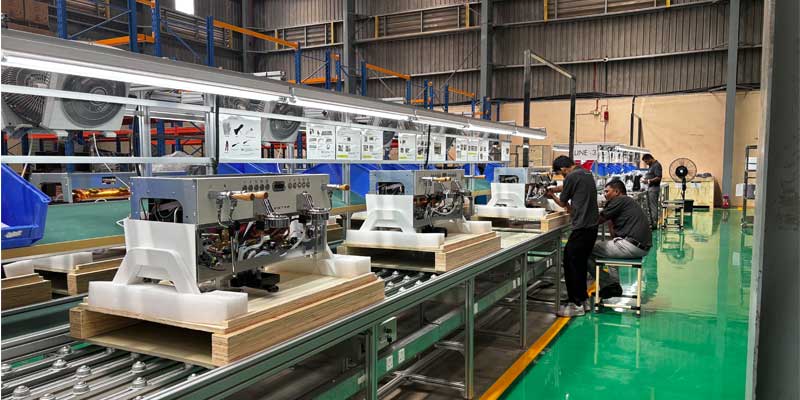
How Trufrost & Butler Is Building India’s Foodservice Equipment Base
A flexible factory, a localisation roadmap and an export ambition define Trufrost & Butler’s manufacturing bet, writes Ashlin Rajan.
Read moreAutomation & Robotics
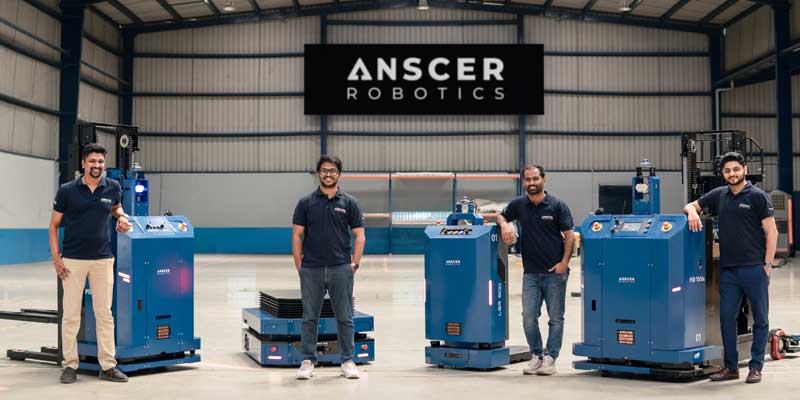
Building Robots for India’s Factory Floor
ANSCER Robotics journey reflects India’s ambition to build globally relevant automation from local industrial realities, writes Ashlin Rajan.
Read moreRelated Products
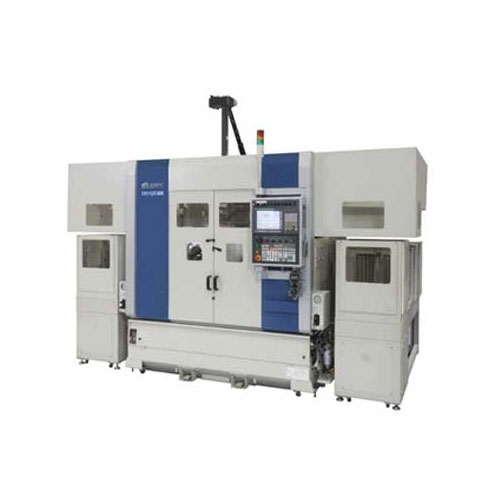
Compact Fmc - Motorum 3048tg With Fs2512
INDUSTRIAL AUTOMATION & TECHNOLOGY CONSULTANCY
Meiban Engineering Technologies Pvt Ltd offers a wide range of Compact FMC - Motorum 3048TG with FS2512.
Digital Colony Counter
INDUSTRIAL AUTOMATION & TECHNOLOGY CONSULTANCY
Rising Sun Enterprises supplies digital colony counter.

Robotic Welding SPM
INDUSTRIAL AUTOMATION & TECHNOLOGY CONSULTANCY
Primo Automation Systems Pvt. Ltd. manufactures, supplies and exports robotic welding SPM.
latest News
Subscribe to iNoW

For Industry News on WhatsApp, Give a Miss Call on: +91 84228 74016