








Schedule a Call Back


Analysing India’s clean energy goals: Kumar Shivam
 Articles
- May 13,25
India's clean energy ambitions are among the most aggressive globally and success in this arena is not only crucial for the country’s own sustainable development but also pivotal for global climate change mitigation, says Kumar Shivam, Area Sales Manager, Axitec Energy India.

India, one of the world’s fastest-growing economies, has
been at the forefront of the global clean energy transition. With ambitious
targets under its Nationally Determined Contributions (NDCs), India aims to
achieve 500 GW of non-fossil fuel-based capacity by 2030, including 280 GW from
solar energy alone. However, recent trends indicate a worrying slowdown in
clean energy project tenders and auctions, which could significantly hamper
progress toward these goals.
Declining momentum with tender and auction slowdown
Tenders and auctions are the primary mechanisms through
which renewable energy projects are allocated in India. These competitive bidding
processes have helped drive down costs and attract private investments.
However, data from the Ministry of New and Renewable Energy (MNRE) and Bridge
to India indicates that renewable energy tenders issued in FY 2023-24 fell by
nearly 35% compared to the previous year, and auctions witnessed a drop of
nearly 50% in capacity awarded.
This decline stems from a combination of regulatory
uncertainty, land acquisition challenges, grid integration issues, and
financial instability among distribution companies (DISCOMs) such as:
·
Delayed PPAs and payment defaults - DISCOMs often delay
signing PPAs or make delayed payments, affecting the financial viability of
projects.
·
Ceiling tariffs and policy uncertainty - Arbitrary
ceiling tariffs imposed by the government reduce profitability, discouraging
bidders from participating.
·
Grid constraints - Lack of adequate transmission
infrastructure results in bottlenecks, especially for large-scale solar and
wind projects.
Implications for India’s clean energy goals
The slowdown in auctions and tenders has direct
implications for India’s clean energy targets. According to a 2024 IEA report,
to stay on track for its 2030 targets, India needs to add around 40–45 GW of
renewable energy capacity annually. However, the current rate is hovering
around 15–20 GW per year, indicating a significant shortfall.
If this trend continues this may cause the following:
·
India may fall short of its 2030 commitments under the
Paris Agreement, undermining global climate goals.
·
Private and international investors may shy away due to
increased policy and financial risks.
·
Delayed expansion in renewables can force reliance on
coal and imported fossil fuels, increasing vulnerability to global energy price
shocks.
·
The renewable energy sector was projected to create
nearly 1 million new jobs by 2030. A slowdown could stall employment growth in
this critical sector.
Way forward and addressing core issues
To reverse the decline in tenders and auctions and steer
the country back on track, systemic reforms are essential:
·
Strengthening DISCOMs -
Financially empowering distribution companies through reforms, debt
restructuring, and improved collection efficiencies is crucial to ensuring
timely payments and signing of PPAs.
·
Transparent and investor-friendly
policies - Removing tariff ceilings and offering greater predictability in
policy frameworks can restore investor confidence. The introduction of Green
Open Access Rules (2022) was a step forward, but broader policy coherence is
needed.
·
Accelerating transmission
infrastructure- Investments in green energy corridors, especially under the
GEC-II scheme worth INR 12,000 crore, must be fast-tracked to accommodate the
surge in renewable energy supply.
·
Decentralised and hybrid
models - Encouraging rooftop solar, floating solar, and hybrid renewable models
(wind-solar-storage) can help diversify generation sources and ease land
acquisition challenges.
·
Digitalisation and forecasting-
Using AI and smart grids for better demand forecasting and integration of
renewables can reduce curtailment and improve efficiency.
India's clean energy ambitions are among the most
aggressive globally and success in this arena is not only crucial for the
country’s own sustainable development but also pivotal for global climate
change mitigation. However, the recent declines in renewable energy tenders and
auctions signal a red flag that needs immediate attention. Without swift
corrective measures, India risks derailing its energy transition and
compromising long-term climate commitments.
The coming years will be critical in determining whether
India can transform its clean energy vision into reality. Political will,
regulatory clarity, and infrastructure readiness must converge to reignite
momentum, ensuring that the world’s third-largest emitter turns into a leader
in the green energy revolution
---------------------------------------------------
About the author:
Kumar Shivam serves as the Area Sales Manager at Axitec
Energy India, where he oversees solar energy solutions, business growth, and
sales strategy across North India. With an M.Tech in Solar and Alternative
Energy and over five years of experience in the renewable energy sector, he
brings a strong blend of technical expertise and strategic sales acumen to his
role. His core competencies include PV system design, solar technologies, energy
storage, grid and off-grid solutions, feasibility studies, and solar policy
frameworks.
-----------------
Photo credit: FREEPIK
Related Stories
Electrical & Electronics
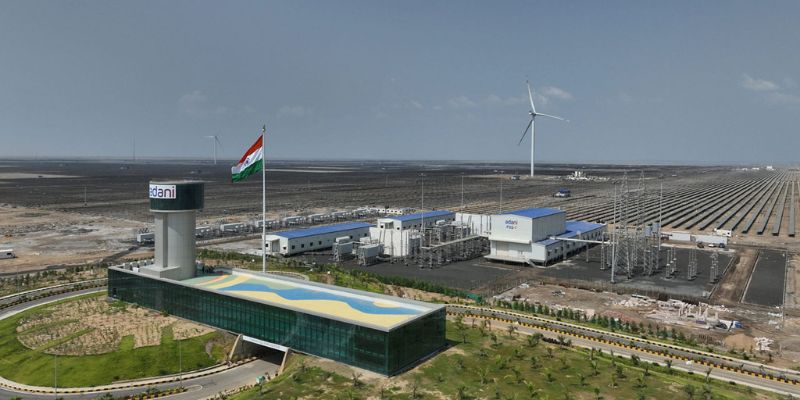
Emerson SCADA supports Adani Green’s 3.55 GWh BESS project
Emerson’s Ovation Green SCADA software is supporting Adani Green Energy’s 3.55 GWh battery storage project at Khavda, Gujarat, delivered within 10 months.
Read moreSmart Manufacturing
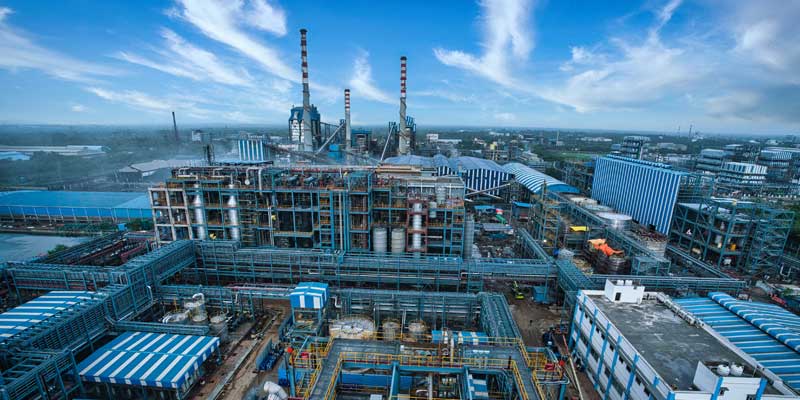
DCM Shriram Chemicals’ Jhagadia Site: A Lighthouse of Smart Manufacturing
DCM Shriram Chemicals’ Jhagadia site, recognised by the World Economic Forum’s Global Lighthouse Network with Distinction in Productivity, showcases how Industry 4.0 is transforming chemical man..
Read moreAutomation & Robotics

Igus launches unsupported energy chain for compact industrial robot applications
Igus has introduced a new unsupported twisterchain energy supply solution designed to address cable guidance challenges in compact industrial robots and palletising robot fifth-axis applications.
Read moreRelated Products
Kusam-meco Handheld Thermal Camera Model- Km 300
ELECTRICAL & ELECTRONIC EQUIPMENT
KUSAM-MECO, the innovators of new products in the Test and Measurement field, have added a new Thermal Imager with Camera.
Read more
Ultra-slim Humidity/temperature Indicator With Large 4” Display
ELECTRICAL & ELECTRONIC EQUIPMENT
Countronics offers a wide range of ultra-slim humidity/temperature indicator with large 4” display – Model 7100-4W.
Read more
Integrated Electric Gripper S Series
ELECTRICAL & ELECTRONIC EQUIPMENT
IBK Engineers Pvt Ltd offers a wide range of integrated electric gripper S series.
latest News
Subscribe to iNoW

For Industry News on WhatsApp, Give a Miss Call on: +91 84228 74016