





Schedule a Call Back


Low-cost drones defeat costly military assets: Arth Chowdhary
 Interviews
- May 08,26
In this interaction Arth Chowdhary, CEO, InsideFPV says, low-cost drone warfare in West Asia is driving urgent demand for domestic drones, counter-drone systems, localisation and next-generation defence technologies in India.

How are conflicts in West Asia reshaping global demand for drones and counter-drone systems, and what does this mean for India’s defence preparedness?
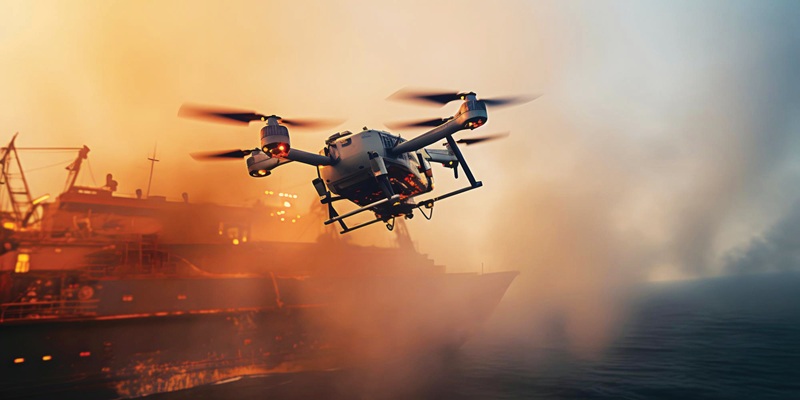
What West Asia has made very clear is that low-cost drones can now defeat extremely expensive military assets. That has forced every defence establishment in the world to rethink how they spend their procurement budgets.
For India, this hits close to home. We share borders with adversaries who have serious drone capabilities. The Galwan Valley incident in 2020 was an early signal for us, and everything that has unfolded in West Asia since has only reinforced it. The conversations happening inside India's defence ecosystem today around FPV drones, loitering munitions, and counter-drone systems are completely different from what they were just two years ago.
The demand is real and it is growing fast. Government schemes targeting this category have multiplied and the armed forces are actively looking for capable domestic solutions. That shift is creating genuine opportunity for Indian companies willing to build serious technology.
How dependent is India still on imported drone components, and what will it take to build a stronger domestic supply chain?
The honest answer is that the dependency is still significant. Estimates within the industry suggest around 20 to 30 percent of critical components by value are still imported, with the hardest areas being high-performance electronics, chipsets, cells.
Progress has happened on multiple parts of drone hardware and basic electronics but the deeper component stack remains a challenge. At InsideFPV we design and build our own frames and flight controllers, stack, esc, battery, software, BMS, storage systems, bag pack which reduces our exposure to the most strategically important parts. For the rest, localisation is genuinely a 2 to 10 year journey if done properly.
The PLI scheme is starting to attract investment into domestic component manufacturing which is encouraging but the industry needs sustained government support over many years to move the needle meaningfully.
What are the major bottlenecks slowing India’s drone industry today, and how is InsideFPV working to overcome them?
The first is component dependency. Most critical drone parts still come from China and Taiwan. The industry is working on this but it takes time and consistent investment. At InsideFPV we have focused on developing our own flight controllers and stacks since that is the most strategically sensitive component in any defence drone.
The second is talent. Specialised engineers in embedded systems and autonomous flight are hard to find.
We have built our own training infrastructure and trained close to 800 soldiers this year.
The third is testing infrastructure. India simply does not have enough certified testing ranges for serious drone development. This slows everyone down and it needs to be addressed at a national level rather than left to individual companies to solve on their own.
Which policy reforms and government schemes have had the biggest impact on India’s drone and defence ecosystem so far?
The Drone Rules 2021 were the most important structural change. Before that, even basic test flights involved a regulatory process that was disproportionately complex. Simplifying that gave the industry room to actually build and iterate.
The Drone Import Policy created real market space for Indian manufacturers by restricting fully assembled imports. It was a bold call and it sent the right signal to investors.
The PLI scheme and the recently introduced Rs 1.8 billion scheme for FPV and kamikaze systems show that the government now understands where the strategic need lies. iDEX has also been genuinely valuable in connecting defence startups with the procurement system in a way that simply did not exist before.
What still needs work is faster BVLOS certification, shared testing infrastructure, and skill development at the ITI and polytechnic level. The talent pipeline cannot be built only at the top of the education system.
Which breakthrough technologies are expected to define the next generation of drones in defence and strategic operations?
First is autonomous navigation without GPS. On a modern battlefield, GPS can be jammed. Drones that can navigate using onboard sensing and mapping are far more operationally reliable and this technology is moving quickly from research into real deployment.
Second is swarm coordination. One operator managing multiple drones simultaneously, with the drones sharing information and making decisions together, is a fundamentally different capability. The demand for this from the defence side is very clear.
Third is terminal guidance under jamming conditions. Electronic warfare is the main countermeasure against kamikaze drones. Systems that can still hit their target even after being jammed in the final phase of flight are becoming essential rather than optional.
This year we developed and patented
At the forefront, Proprietary telemetry module, Electronics proprietary system for drone, Kamikaze initiation mechanism developed & certified, SLAM, Autonomous stack, Dual frequency communication module, Battery charging storage system (A to Z system) & Lot more of design upgradation to our current systems, 30+ Patents filed in total, 8 Granted
What are the growth opportunities ahead for Indian drone companies, and how is InsideFPV positioning itself for them?
The biggest opportunity is the formalisation of tactical FPV and kamikaze systems as a standard procurement category in India's armed forces. This is now happening at the policy level and the demand from multiple army commands is consistent. Companies that have been building in this space for several years are well positioned.
International markets are the second opportunity. Countries in South Asia and Africa are looking for capable, cost-effective drone solutions from reliable partners and Indian companies are increasingly competitive on both counts.
Industrial inspection is the third area. Drones for monitoring power lines, pipelines, and infrastructure are still early-stage in India but the economics are compelling and adoption is picking up.
At InsideFPV we are scaling our manufacturing capacity, continuing R&D on new platforms, and expanding into international markets. We have also signed an MoU with an Israel-based drone company which strengthens our technology exposure. Our long-term target is an IPO by 2030 and we are building toward that steadily.
India drone industry
counter-drone systems
defence drones
FPV drones
drone localisation
autonomous drones
drone manufacturing India
InsideFPV
Arth Chowdhary
Related Stories
Aerospace Defence
Wings, Wars, Wealth
West Asia conflicts have exposed the power of low-cost drones. Ashlin Rajan examines how this creates a major manufacturing opportunity for India, but success will depend on scaling components, tale..
Read moreAerospace Defence
Low-cost drones defeat costly military assets: Arth Chowdhary
In this interaction Arth Chowdhary, CEO, InsideFPV says, low-cost drone warfare in West Asia is driving urgent demand for domestic drones, counter-drone systems, localisation and next-generation def..
Read moreAerospace Defence

India’s drone future needs scale, reliability, localisation: Vamsi Vikas Ganesula
In this interview Vamsi Vikas Ganesula, Founder and Managing Director, Raghu Vamsi Aerospace Group outlines how conflicts, localisation, emerging technologies and policy support are reshaping Indiaâ..
Read moreRelated Products
Troop Comforts revolutionises military gear with indigenous innovations
Aerospace & Defence
Troop Comforts Ltd (TCL), a state-owned defence corporation, has recently received a request for proposal (RFP) from the Northern Command of the Indian Army for its indigenously developed military gea Read more
latest News
Subscribe to iNoW

For Industry News on WhatsApp, Give a Miss Call on: +91 84228 74016