






Schedule a Call Back


The SEZ Story Good Idea, Weak Narrative
 Technical Articles
- Sep 12,13
NULL

When the SEZ equation was first drafted and implemented in India, the booming economy led to a huge interest from India Inc. However, down the line, problems with land acquisition and taxation levied by the government have burst the bubble. Now, the government is going all out to revive the flagging scenario. A report by Huned Contractor.

A little over a year ago, concerned about the fact that special economic zones (SEZs) weren't really living up to expectation, the government had stated that it would come out with new guidelines to revive export hubs and SEZs which had lost sheen after imposition of certain levies and the proposal to take away tax incentives. It may be recalled that the government had imposed Minimum Alternative Tax (MAT) and Dividend Distribution Tax (DDT) on SEZs in 2010-11, which were earlier exempted from almost all levies. Admitting that due to imposition of MAT and DDT there was a "visible slowdown" in growth of export from SEZs, Commerce and Industry Minister Anand Sharma had promised to make the SEZ policy more buoyant.
The latest update on this issue is that in July this year the government has finally commissioned a study by economic think tank ICRIER, which will look into issues that affect free trade agreements on these zones. "We have asked ICRIER to look into the various facets of SEZs, including how free trade agreements are affecting these zones," Rajeev Arora, Joint Secretary, Commerce Ministry, is reported to have said at a recent function. The study will also look at the various schemes available for exporters outside the SEZs. This is in wake of the demand by SEZ developers and units that want the export promotion schemes to be extended to the units in these enclaves as well. According to Arora, manufacturing activities in these zones are declining because of the overall deceleration in the sector. He also said infrastructural bottlenecks are impacting the zones besides issues related with land acquisition. "Many of the SEZs have not fulfilled the contiguity norms, which is an important factor to set up any zone," he said, adding that the commerce ministry will again take up a few matters with the finance ministry to enhance the interest of foreign investors. "We would also see in what way we can help units to get better finance from different institutions," he said. In April, the government unveiled a package of reforms, including easing of land norms to revive investments in SEZs, but refrained from accepting a major demand of developers for MAT waiver due to fiscal constraints. Meanwhile, exports from SEZs grew by about 31 per cent year-on-year to Rs 4.76 lakh crore during 2012-13. Shipments from these zones stood at Rs 3.65 lakh crore in 2011-12.
The Journey So Far

India was one of the first in Asia to recognise the effectiveness of the export processing zone (EPZ) model in promoting exports, with Asia's first EPZ set up in Kandla in 1965. With a view to overcome the shortcomings experienced on account of the multiplicity of controls and clearances; absence of world-class infrastructure; an unstable fiscal regime; and with a view to attract larger foreign investments in India, the Special Economic Zones (SEZs) Policy was announced in April 2000. This policy intended to make SEZs an engine for economic growth supported by quality infrastructure complemented by an attractive fiscal package, both at the Centre and the State level, with the minimum possible regulations. SEZs in India functioned from November 1, 2000 to February 9, 2006 under the provisions of the Foreign Trade Policy and fiscal incentives were made effective through the provisions of relevant statutes.
To instil confidence in investors and signal the government's commitment to a stable SEZ policy regime and with a view to impart stability to the SEZ regime thereby generating greater economic activity and employment through the establishment of SEZs, a comprehensive draft SEZ Bill was prepared after extensive discussions with the stakeholders. A number of meetings were held in various parts of the country both by the minister for commerce and industry as well as senior officials for this purpose. The Special Economic Zones Act, 2005 was passed by the parliament in May 2005 which received presidential assent on June 23, 2005. The main objectives of the SEZ Act are:
- Generation of additional economic activity;
- Promotion of exports of goods and services;
- Promotion of investment from domestic and foreign sources;
- Creation of employment opportunities; and
- Development of infrastructure facilities.

It was expected that this would trigger a large flow of foreign and domestic investment in SEZs, in infrastructure and productive capacity, leading to generation of additional economic activity and creation of employment opportunities.
However, as per a report prepared by KPMG India, despite the fact that the existing SEZ Act and FDI policies for SEZs are very lucrative, the rationale behind the rapid economic and industrial growth of the Indian SEZ policy is being questioned. "Almost six years later, with the change in the global economic scenario, coupled with unstable policy, the SEZ story is dying a slow death. While the SEZ scheme has been a phenomenal success in terms of export promotion and employment generation, there seems to be a wide gap in the number of SEZs coming into operation as against the number of new proposals getting approvals. While 587 SEZs have been formally approved, only 380 have been notified while only less than half the notified SEZs are exporting," the report points out.
Today, SEZs like Mahindra World City SEZs in Chennai and Jaipur, which boast of a clientele of BMW, CapGemini, Infosys Technologies, Renault-Nissan, TVS Group and Wipro, among others, are facing issues getting clients for their SEZs. This is primarily as a result of the government going back on its promises on the tax incentives that attracted the companies to SEZs. "Rolling back the policy would become a huge issue. Investors today are looking at cash flows and a stable policy. In order to attract foreign and other investors, the GOI would have to make the policy stable and stick to the promises made by it," the report states. The GOI did realise this reality two years ago and the ministry of commerce and industry floated a discussion paper in October 2011 to work with the stakeholders to identify and remove the shortcomings in the conception and implementation of the SEZ policy framework.
One of the main reasons for the downfall of the SEZ policy was highlighted as the lack of resources to create the adequate infrastructure. Some of the factors listed in the study were as follows:
- Geographical concentration of SEZs: Six states, viz., Andhra Pradesh, Kerala, Maharashtra, Gujarat, Karnataka and Tamil Nadu account for a major proportion of SEZs and 92 per cent of total exports from them.
- Urban-centric growth of SEZs: Even within these six states, SEZs are largely concentrated around existing urban agglomerates, leaving the hinterland virtually untouched.
- Sectoral dispersion of SEZs: There is a pre-dominance of IT SEZs in the sector, and multi-sector SEZs are few and far between.
- Skewed export pattern: IT/ITES SEZs and the petroleum sector contribute to the roughly two-thirds of SEZ exports. Non-petroleum manufacturing contributes the balance minority share.
- Inadequate progress of manufacturing activity: As reflected in the points above, the SEZ sector has not fully addressed the concern of boosting the manufacturing sector in India.
Finding Solutions
To tide over the land problem, in particular, the commerce department has proposed not just cutting the minimum area requirement but also changing the rules for contiguity. If the department's proposal goes through, a multi-product SEZ could be built over 250 hectares instead of the minimum floor area of 1,000 hectares at present. In case the zones are planned in the special category states, which include the North East and the hill states, the minimum area requirement is proposed to be cut from 200 hectares to 50 hectares.
In addition, there is concession planned for IT SEZs too with the commerce department suggesting that the minimum land requirement of 10 hectares be done away with. Also, the requirement of one lakh square metres of built-up area would be insisted upon only if the IT or ITES zone is in Delhi (NCR), Mumbai, Chennai, Hyderabad, Bangalore, Pune and Kolkata. In case of 15 category B towns, this requirement is proposed to be fixed at 50,000 square metres and 25,000 square metres for all other cities.
"If the proposals go through it would be a much needed relief to SEZs in India. Further, bringing in more stability to the SEZ policy and taking necessary measures to correct the inefficiencies identified earlier would add to the much needed impetus for the revival of SEZs in India," comments S Vaidyanathan, CEO, Action Technologies. He is among the many who is awaiting the emergence of a clear picture on the SEZ scenario in order to make the necessary investment for capacity expansion of his various products, including controllers used for X-ray machines.
Looking Outwards
But even as the SEZ status within the country remains a blur, India has offered USD150 million of credit for project exports to set up a SEZ in Myanmar and has expressed hope that the neighbouring country would permit Indian banks to set up branches there. The issues came up for discussion during the recent three-day visit of Commerce and Industry Minister Anand Sharma to Nay Pyi Taw and Yangon. For the SEZ project, the Myanmar government will provide suitable land for the purpose. "India has offered USD 150 million of credit for project exports for establishing a SEZ at Sittwe in Myanmar," an official statement said.
Sharma called for greater cooperation in the banking sector and appreciated the Myanmar government's approval to allow Indian banks like United Bank of India to set up a representative office in the neighbouring country. "He expressed hope that the two public sector banks viz., Bank of India and State Bank of India, who have also expressed interest, would also be permitted to operate in Myanmar," the statement said. "Even setting up a joint venture state-owned bank with India and Myanmar sharing equity would strengthen ties in banking and commerce between the countries," Sharma said. Besides, the minister discussed ways to increase cooperation in the energy sector too.
Boosting Confidence Levels

Since the biggest nagging factor for the development has been land acquisition, the West Bengal Minister for Commerce, Industry and IT, Partha Chatterjee, has sought to allay fears by requesting potential investors not to be apprehensive about acquiring land in the state since the government has enough land to offer to the industry. Talking at an IT seminar organised by CII, Chatterjee said there have been several media reports recently where industrialists have expressed their apprehension about acquiring land in the state. "We will cooperate fully with the industry in whatever way it is required. I request all industrialists to approach the government if they find it difficult to acquire land or find the pricing steep," he said.
The government has recently allotted 15 acres to ITC Infotech at Rajarhat and lots of small and medium enterprises are coming to the state, Chatterjee said. "There are a lot of top companies who are present here in this seminar and we strongly seek their support to invest in the state," he appealed. To reiterate, West Bengal government has recently been under severe criticism from the industry challenging the state's land policy, which advocates investors to acquire land on their own without any government support. In fact, Infosys' S Gopalakrishnan too had requested the state to help in land acquisition. "The state government should act as a facilitator for land acquisition. The industry needs government help if it has to buy large tracts of land because in such cases land title is a major problem," he is reported to have said.
Infosys' proposed project in the state of over 50 acres in Rajarhat -- which was allotted by the erstwhile Left Front government -- is stuck with the West Bengal government refusing to allot it the special economic zone status. Infosys has indicated that it was ready to start the project if the government offered alternative benefits equivalent to an SEZ.
Meanwhile, to end on a positive note, Infotech major Tata Consultancy Services (TCS) has started start developing its facility at Indore on 100 acres of land at the SEZ from August 10. The foundation laying ceremony and construction of the facility has begun in 'super corridor' area on the outskirts of Indore city. The decision was taken after a high-level meeting chaired by Madhya Pradesh Chief Minister Shivraj Singh Chouhan at the Indore Airport. Chouhan directed officials to ensure availability of all facilities for the construction of the TCS facility. Under the first phase, the company will develop its premises with an investment of Rs 550 crore within two years. After the completion of the first phase, 5,000 people will get direct employment and 15,000 others will get indirect employment at the facility.
The Madhya Pradesh government has provided 100 acre of land to TCS at concessional rates on the super corridor with an agreement that 50 per cent of jobs would be given to people from the state. Commenting on this development, Rajesh Shah, CEO of Pune-based engineering firm Lecmec Private Ltd., says, "Ultimately it all boils down to the allotment of land. Indian industry has already shown willingness to make huge investments provided there are no hiccups in the other procedures. Also, given the state of the economy right now, there should be further burden of taxation or removal of subsidies. Only then will the SEZ formula work right."
Related Products

Hittco SOLID Carbide End Mills
MACHINE TOOLS, POWER & HAND TOOLS
Hittco Tools Ltd offers a wide range of Hittco solid carbide end mills.
Read more
Smoke Tube Horizontal Package Steam Boilers
BOILERS, FURNACES & HEATING ELEMENTS
Hittco Tools Ltd offers a wide range of Hittco solid carbide end mills. Read more
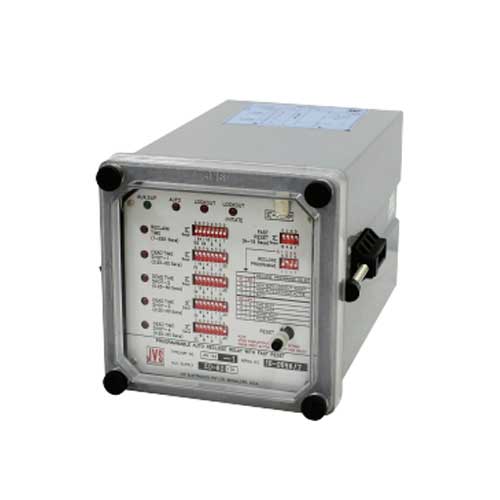
Auto Reclose Relay with fast reset
Switches and Relays
JVS Electronics Pvt Ltd offers a wide range of auto reclose relay with fast reset - JRV 142.
Read morelatest News
Subscribe to iNoW

For Industry News on WhatsApp, Give a Miss Call on: +91 84228 74016